25 Feb 2026 - {{hitsCtrl.values.hits}}
 Yoga may also be understood as a science of the nervous system. Through breath regulation and meditation, it reduces emotional turbulence, improves patience and builds resilience
Over the course of the training, I observed improved confidence, better engagement, and a beautiful sense of unity among participants from different backgrounds

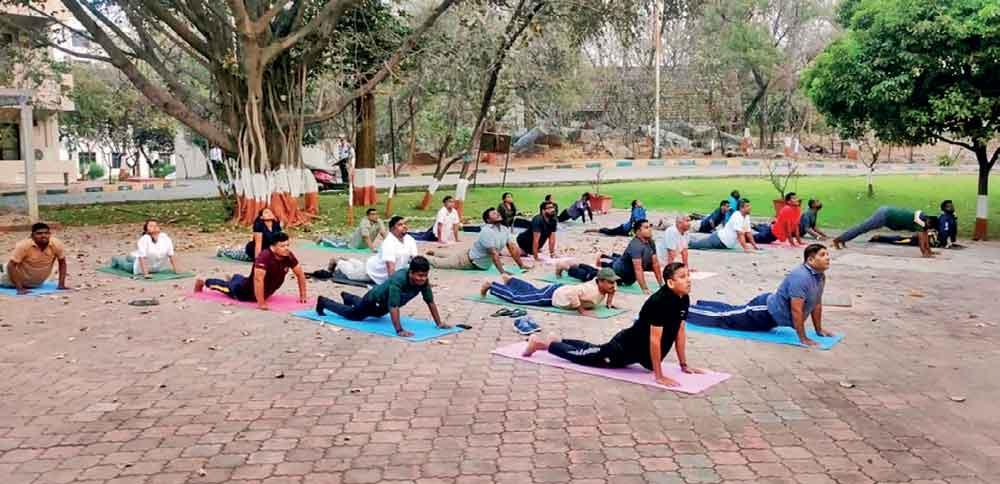
 As dawn breaks over Dr. MCR HRD Institute of Telangana in Hyderabad, participants gather on the lawn for a ritual that has become an integral part of the institute’s academic culture, daily morning yoga.
Far more than a fitness routine, the sessions are woven into the official training schedule, offering local and international participants a holistic start to the day through asanas, pranayama and meditation, nurturing physical vitality, mental clarity and spiritual balance.
Among those embracing this practice were thirty Sri Lankan journalists who recently took part in the “Specialized Training Programme on Media Management for Journalists & Media Professionals from Sri Lanka” in Hyderabad.
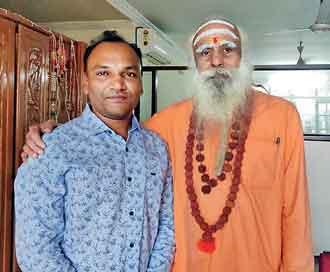
In this context, the Daily Mirror spoke with Krishna Prasad, a professional yoga teacher (Yoga Acharya) at the institute, to gain deeper insights into the philosophy, benefits and practical applications of yoga and how similar initiatives could be meaningfully introduced in Sri Lanka.
Excerpts of the interview.
 Q What inspired you to become a yoga teacher, and how long have you been involved in teaching yoga to international groups?
I began my professional journey in the IT industry, but life had a deeper calling waiting for me. In 2013, inspired by my father, I chose to pursue a Yoga Diploma course, a decision that gently transformed the direction of my life. What began as a step of curiosity and respect for his guidance soon became my life’s purpose.
Since then, I have been serving as a Yoga Teacher, and I consider it a true blessing. Over the years, I have had the privilege of reaching people from different countries, cultures, and backgrounds. For the past two and a half years, teaching international groups has been a profound experience, each session reflecting a beautiful sense of collective oneness beyond borders.
QFrom your experience, what are the main physical and mental health benefits that regular yoga practice offers?
Drawing from over a decade of teaching and engaging with practitioners across all age groups, one consistent observation emerges: yoga does not merely improve flexibility. It improves adaptability. With sustained practice, the body becomes more resilient and responsive, while the mind grows steadier and clearer. The transformation is not sudden or dramatic rather, it unfolds gradually shaping how individuals move think and respond to life’s demands.
Physically, regular yoga practice produces measurable and lasting benefits. Practitioners experience improved mobility and ease of movement, along with increased flexibility that supports daily activities. Joint function becomes smoother, posture and body alignment improve, and muscle strength and endurance steadily develop.
Over time, yoga also supports bone stability and density, enhances balance and coordination, and improves circulation. Many practitioners report sustained energy throughout the day and noticeably better sleep quality indicators that the body is functioning in a more balanced and efficient manner.
The mental and emotional benefits are equally profound. Consistent practice cultivates mental calmness and emotional stability, allowing individuals to approach situations with greater clarity and focus.
Overthinking and mental restlessness gradually diminish, while cognitive function improves. Practitioners often find themselves better able to regulate emotions, experience reduced anxiety levels and maintain a more stable mood. Increased self-awareness and stronger stress resilience become natural outcomes, accompanied by a growing sense of inner stillness that supports overall well-being.
Many people view yoga purely as a form of physical exercise. However, its deeper dimensions extend far beyond movement. At its core, yoga is a practice of inner awareness. It trains individuals to observe how they breathe, think, react and feel.
This cultivated awareness slowly transforms daily life, encouraging conscious responses instead of impulsive reactions. In this sense, yoga becomes a practical tool for emotional balance and self-regulation.
Yoga may also be understood as a science of the nervous system. Through breath regulation and meditation, it reduces emotional turbulence, improves patience and builds resilience. Spirituality in yoga does not necessarily refer to religious practice; rather, it reflects emotional maturity and inner stability. It is about understanding oneself more deeply and responding to life with greater balance.
Beyond the mat, yoga evolves into a lifestyle. It encourages discipline, ethical living, moderation in food and habits, and the maintenance of a balanced routine. The practice influences how one speaks, eats, works and relates to others. Yoga continues in everyday actions, shaping character and conduct.
At its essence, the word “yoga” means union the alignment of body, breath and mind. It is a journey from scattered attention to inner coherence. When these elements move together harmoniously, clarity increases, confusion decreases and inner peace becomes natural.
In simple terms, exercise may make the body fit, but yoga makes the person balanced. It begins with the body, moves through the mind, and ultimately refines the way one lives and connects more deeply with the inner self the Atman and, in a broader philosophical sense, with the universal consciousness, often described as Brahman. Through this progression, yoga reveals its deeper spiritual roots and its enduring connection to the infinite energy that sustains life.
Q What are some common misconceptions about yoga, especially among beginners or people from different cultural backgrounds?
Many people believe Yoga is only about stretching, but it is much more than physical exercise. You do not need to be flexible to begin. Flexibility develops with regular practice. Yoga is not tied to any one religion; it is a universal science of breath, awareness, and balance. Some think Yoga is too slow to be effective, yet it strengthens the body and regulates the nervous system.
It is not meant only for relaxation; it also builds focus, resilience, and mental clarity.
Yoga is not limited to older people. It benefits children, professionals, athletes, and elders alike. Results may not be instant, but they are steady and long-lasting. Yoga is not about complex poses; it is about mindful movement and conscious breathing. It is not a trend, but a sustainable lifestyle practice.
Above all, Yoga is a holistic path that supports physical health, emotional stability, and inner balance for everyone.
Q How can yoga be integrated into a busy modern lifestyle, particularly for professionals?
Yoga can fit into a busy professional life without needing extra hours just small, consistent habits. Start your day with 10–15 minutes of simple breathing, stretching, and quiet sitting instead of screen time.
Use slow, deep breathing between meetings to reduce stress and improve clarity.
Take short mobility breaks during work to release neck, shoulder, and back tension.
Practice mindful breathing while commuting or walking to reset your mind. Spend 5–10 minutes in the evening with gentle stretches and relaxation to improve sleep.
Dedicate a slightly longer session on weekends to deepen flexibility and strength.
Focus more on breath awareness than complex postures. Consistency matters more than intensity or duration. With small daily efforts, Yoga helps professionals manage energy, focus, and stress effectively.
Q What are your observations about the Sri Lankan participants who joined you during the training programs organized by the Indian government?
I was truly impressed by Sri Lankan participants for their punctuality, dedication, and sincere approach toward learning and practicing Yoga. Even with minor language barriers, the group maintained excellent coordination, mutual respect, and smooth communication throughout the program.
Many Sri Lankan participants showed special interest in customized Yoga programs addressing stress, anxiety, weight management, and women’s health concerns. There was a genuine eagerness to explore the deeper aspects of Yoga, including breathwork, mental balance, and lifestyle practices. Over the course of the training, I observed improved confidence, better engagement, and a beautiful sense of unity among participants from different backgrounds.
Overall, the program reflected not only physical practice but also shared learning, respect, and holistic growth.
QIs the promotion of yoga part of a broader government policy in India to encourage wellness and cultural exchange?
The Government of India actively promotes Yoga as a tool for holistic health and preventive wellbeing, not just physical exercise, through national programs and outreach campaigns.
India leads the annual International Day of Yoga on June 21, an event supported by Indian embassies and missions worldwide to foster cultural exchange and global wellness. The Ministry of Ayurveda, Yoga & Naturopathy, Unani, Siddha, and Homoeopathy (AYUSH) and other government departments organize widespread Yoga activities, workshops, and campaigns at community levels to raise awareness.
Recent regional policies, like the Uttarakhand Yoga Policy 2025, aim to build Yoga into educational, economic, and tourism frameworks, creating international hubs for wellness.
Yoga is used in diplomacy to strengthen cultural ties and promote India’s ancient wellness heritage on the world stage.
These efforts reflect a long-term vision of integrating traditional wellness practices into modern lifestyle, public health, cultural identity, and global cooperation.
In essence, India’s policy promotes Yoga as a holistic wellness practice and cultural bridge connecting communities globally.
Q In your view, how can yoga contribute to stress management and mental resilience in high-pressure professions?
Yoga exerts a profound influence on the autonomic nervous system, which governs the body’s stress and relaxation responses. Through slow, regulated breathing and mindful movement, yoga activates the parasympathetic “rest-and-restore” system while reducing over activation of the sympathetic “fight-or-flight” response.
For professionals working in high-pressure environments, this physiological shift supports calmness, steadiness and clearer thinking even during demanding situations.
Regular practice also helps reduce stress hormones, particularly cortisol. Elevated cortisol levels over long periods contribute to chronic stress, fatigue and eventual burnout.
By lowering this hormonal stress load, yoga not only improves immediate well-being but also protects long-term physical and mental health, making it a sustainable tool for maintaining professional performance.
Meditation and breath awareness further enhance emotional regulation by strengthening activity in the prefrontal cortex, the area of the brain responsible for decision-making, impulse control and rational thinking. As this region becomes more active and balanced, individuals are better equipped to respond thoughtfully rather than react impulsively.
This capacity is especially valuable in leadership roles and crisis situations where measured responses are critical.
Research also indicates that yoga improves cognitive performance, including attention span, working memory and executive functioning. These abilities underpin effective leadership, strategic planning and sound judgment. By sharpening mental clarity and focus, yoga contributes directly to improved productivity and decision-making quality.
Importantly, yoga builds psychological resilience. When practitioners repeatedly cultivate calm breathing and focused awareness during mild physical challenges on the mat, the brain learns to maintain stability during real-life stress. Over time, this enhances adaptability and speeds recovery from setbacks. In simple terms, yoga trains the brain and nervous system to remain stable, clear and composed even in the most demanding environments.
Q What advice would you give to someone who wants to begin practicing yoga but feels they lack flexibility, time, or confidence?
For beginners, the most important principle is to start where you are embracing Ahimsa, or non-violence toward yourself. Yoga is not about forcing the body into difficult postures or competing with others. It is about respecting your current capacity and progressing safely. Growth begins with self-acceptance rather than comparison. When practitioners honour their limits, they not only prevent injury but also cultivate inner confidence and self-trust.
Consistency matters more than intensity. Even 15 to 20 minutes of daily practice can produce meaningful results. Regular engagement gradually builds strength, flexibility and discipline. Over time, these qualities extend beyond the mat into professional life, supporting better focus, reliability and sustained performance. Small, steady efforts often lead to deeper and more lasting transformation than occasional intense sessions.
Beginners are also encouraged to focus on the breath first. The breath serves as the bridge between body and mind. Learning to regulate breathing patterns enhances emotional stability, improves clarity in decision-making and strengthens stress management. When the breath becomes steady, the mind naturally follows, creating a sense of calm alertness that benefits both personal and workplace environments.
Yoga is ultimately about progress, not perfection. It is a journey of gradual improvement rather than instant achievement. As the body grows stronger and more flexible, the mind becomes calmer and more resilient. This steady internal development enhances overall well-being and positively influences professional performance. The goal is not flawless execution of poses, but continuous growth.
Finally, yoga should be embraced as a lifestyle rather than viewed solely as exercise. Yogic awareness can be carried into daily actions through mindful communication, balanced routines and healthy habits. This holistic approach supports physical vitality, mental clarity and sustained professional growth. Flexibility, time and confidence are not prerequisites; they are natural outcomes of steady practice. Begin gently, remain sincere and allow the transformation to unfold organically.
Q How do you see the future of yoga globally, and what role can countries like Sri Lanka play in promoting holistic well-being through yoga?
That’s an inspiring question. I see the future of Yoga moving beyond being just a fitness trend and becoming a core tool for preventive health, emotional balance, and conscious living.
In the coming years, Yoga will be integrated more into schools to help children develop focus and emotional stability. It will become part of corporate wellness programs to manage stress and improve clarity in leadership.
Hospitals and healthcare systems may increasingly use Yoga as a preventive and supportive therapy. Scientific research will continue to validate its impact on the nervous system, mental health, and chronic lifestyle diseases.
The future of Yoga is not about more complex postures. It is about mental resilience, inner stability, and sustainable wellbeing in a fast-changing world.
The Role of Sri Lanka in Promoting Holistic Well-Being. Sri Lanka has a unique opportunity to play a powerful role.
Cultural and spiritual foundation
With its strong heritage in meditation and mindfulness traditions, Sri Lanka naturally aligns with the deeper philosophy of Yoga. This cultural foundation can support authentic and holistic Yoga education.
Tourism and wellness integration
Sri Lanka can develop wellness tourism combining Yoga, Ayurveda, meditation retreats, and nature-based healing experiences. This can position the country as a global hub for holistic living.
Education and youth programs
Introducing Yoga in schools and universities can help young people manage stress, build confidence, and improve concentration.
Community health promotion
Simple Yoga programs at community centres can support physical health, emotional wellbeing, and social harmony, especially in fast-urbanizing regions.
The future of Yoga globally will depend on how responsibly we preserve its essence while making it relevant to modern needs.
Countries like Sri Lanka can lead not by commercializing Yoga, but by living its values balance, compassion, discipline, and inner peace and sharing them with the world.
21 Jul 2026 3 hours ago
21 Jul 2026 4 hours ago
21 Jul 2026 4 hours ago
21 Jul 2026 4 hours ago
21 Jul 2026 6 hours ago