Reply To:
Name - Reply Comment
 During the last few months it seems apparent that the government has lost the tight grip it had on the macro stability
Stability doesn’t mean growth. It doesn’t mean creating jobs. Stability doesn’t mean you can create wealth
|
|
 |
 |
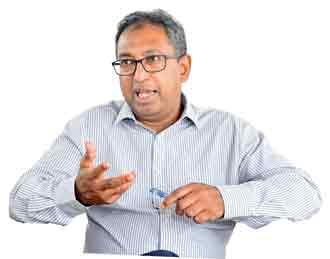
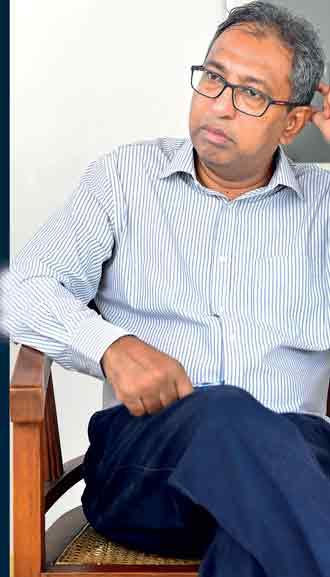
Samagi Janabalawegaya MP Harsha de Silva in an interview with Daily Mirror said that Sri Lanka’s economy is stabilised because AKD’s government is following previous government’s stringent economic policies. He further stated that Sri Lanka needs to build bridges with other countries without being isolated. De Silva also stated that he is strongly opposed to government’s anti-democratic practices such as going after politicians who are politically opposed in the guise of fighting corruption.
Q It looks like Sri Lanka has made progress in stabilising the economy and the government is reiterating this fact. Do you agree?
Yes I agree. The data clearly suggests that the situation at the end of 2025 and beginning of 2026 was different from time we went into a crisis. Two things, one is that stabilisation came because of the fiscal discipline and monetary discipline that was established by legislation- during 2023 essentially. Three are pieces of important legislation. One is Central Bank’s independence which stopped the government from holding the CBSL hostage and getting it to print money to spend and fill the hole and the government to print money to spend on their projects. To fill the hole that was created by the low collection of tax revenue. When you do that, inflation rises and instability is created. That was one of the biggest issues. So that way you brought monetary discipline and what I call the fiscal dominance of monetary policy was completely removed. Which means politicians cannot tell dominate CBSL and force them to print money. That’s a key change.
I have been arguing for this for the last 25 years. It started happening first in places like New Zealand and countries have adopted. The second piece of legislation is Public Finance Management Act. The first one was in terms of monetary policy of CBSL and second one is bringing fiscal policy. Meaning deficits. Where the expenditure of the government has been limited. The difference between revenue and expenditure has to be what you call primary balance. Meaning revenue minus expenditure less debt repayment. Meaning all capital and all interest. That has to be a positive number. Which used to be a negative number. In other words the government must bring enough revenue to pay files operational expenses besides interest. The government can only spend 13.5% of GDP. These are strict laws that were introduced to stabilise the economy and make our debt sustainable over the long term.
Third a very important piece of legislation is creation of the Public Debt Management Office. Which now controls all debt whether local or foreign debt, what type of analysis you do before you take this debt, how do you ensure that this debt could be repaid. We go into a difficulty because we couldn’t pay debt. These were the rules that were imposed by legislation during RW’s presidency. Because the JVP government did not keep to its promises. Instead stuck to previous governments’ stringent fiscal and monetary discipline. The planned stability had arrived before AKD became President. By the time he became the President the stability had arrived here, inflation had come down to negative. Therefore, stability continued.
So those are the two reasons. Reason one because of the laws and reason two because AKD followed previous governments’ path.
Q What do you see as the biggest challenge to sustain this recovery?
To your earlier question I said the first quarter of this year because currently I see a little bit of disturbance here. Because the rupee that was 297$-390$ is now 335,340$. Interest rates that were 7-8% are now at 12-13%. Inflation which was almost zero now and now it’s close to 7%. During the last few months it seems apparent that the government has lost the tight grip it had on the macro stability. So the challenge for the government is to ensure that they are able to maintain the stability. Stability doesn’t mean growth. It doesn’t mean creating jobs, it doesn’t mean you can alleviate poverty. Stability doesn’t mean you can create wealth.
 The JVP government did not keep to its promises. Instead stuck to previous governments’ stringent fiscal and monetary discipline. The planned stability had arrived before AKD became President. By the time he became the President the stability had arrived here, inflation had come down to negative. Therefore, stability continued
Stability means you are just there. Being there and balancing just moving along is not what we need. What we need is growth. What we need is people being taken out of poverty, creation of wealth and creating a dynamic economy. Stability is a prerequisite for growth.
Our objective is growth. When you have growth, it means you expanded up high and that means that there is resources to be allocated to those who need them. There’s more jobs, can spend more of health. Education and others. So growth is our objective.
Q What are the vital economic reforms or economic changes you believe that should receive attention to in the next two, three years?
There’s a fundamental ideological consensus that the government must come to. Because in my view Sri Lanka’s growth depends on how well we become a part of a global enterprise. I believe that our markets must be much bigger than the 20 million people who live here with the modest 5000$ per capita GDP. If we are to create the type of wealth we need to create in this country, expanding of the markets become critical.
I have been saying to break down walls around this country and build bridges to the world. I believe that is our path to progress. When you build a bridge those bridges allow people to enjoy goods and services to travel both ways. There cannot be a one way bridge. There need to be two way bridges. How to do this, what kind of economic trade investment all those will become apparent when you are ideologically aligned with what I am saying. We must not fear the world. There are two reasons why this is important. If we got an attitude of erecting tariff walls around the country to protect domestic industries, and by doing that, we will never succeed. People will say the countries are becoming more protectionist. We have to become more protectionists ourselves; we got to look after ourselves in this world of people looking after themselves.
In my view Sri Lanka’s growth depends on how well we become a part of a global enterprise. I believe that our markets must be much bigger than the 20 million people who live here with the modest 5000$ per capita GDP. If we are to create the type of wealth we need to create in this country, expanding of the markets become critical
It is in the face of this adversity that we must break out and leverage the opportunity that’s coming in the next two to three decades.
The engine of global growth will be in our neighbourhood, particularly in India. Europe and the West have grown and they will grow slowly. But Asia is where the fast road is and rapid accumulation of wealth is going to happen. We got to think Sri Lanka as the centre of the Indian Ocean. If we are so, the dynamic growth story is going to happen at the borders or the literal states of the Indian Ocean. Then it is logical to believe that we can benefit the most. The other component of this argument is that global production methods have changed. No longer are goods produced in one country, and rather they are produced in a combination of sovereign jurisdictions due to various reasons. In such a mechanisms if you are not a part of the grouping you will be left out. It is like a club. Members of a particular club enjoy the benefits of being members of that club. You cannot stay outside the gate and say I am not benefitting from club. You have to become a member and got to adhere to the rules of the club. This is why building bridges is important.
This means logistic support. We have the most efficient port in the Indian Ocean. It is not leveraged sufficiently.
Q You have continuously advocated for digital transformation. What are your views about the progress we have made so far with the initiation of GovTech Lanka pvt. Ltd and digitising efforts?
You see, I mean, we are so far behind, for various reasons. We haven’t still been able to get the unique ID. SLUDI, Sri Lanka, unique digital identification. Which is similar to the Adhar number in India. This is what you call a foundational platform. All what you do is to authenticate a person. That is all the foundation platform will do. Meaning, all my data will be stored somewhere. And thereafter, for any service that needs to identify me, the foundational structure, the SLUDI, will say, yes, this is Hans. At the moment that happens, Enormous possibilities, become viable. So, once the government established GovTech, then we can build what is called a Sri Lanka’s stack on that. So, entrepreneurs can create all kinds of apps, whether it is a ride sharing app or a beauty salon app or anything. That will create efficiency. That will improve the productivity of our people. It’ll help us to compete in the global arena. They started sometime back, right? They should have been finished by now. But it is not.
This government is almost 2 years into office. It hasn’t moved an inch. They are saying it’s happening. I hope, finally, this is happening and that’s positive. But the other side of the point is very, very scary. As the chairman of the committee on public finance, I have been privy to the digital systems in government. And I am appalled at how susceptible, they are. To Cyber crime and all the other things that are in the other side of this coin. You cannot run a Ferrari body in a Morris minor engine. It may look good from the outside, but doesn’t move. So, I think the issue with the treasury is a 2.5 Million dollar fraud, and NDBs, LKR 13.5 Billon fraud have exposed how vulnerable our systems are to infiltration, to crime, to fraud, if you look at the number of people that are getting arrested for scams. Sri Lanka is fast, getting notorious for the scam capital of the world. We don’t want that. You can be our pompous and say, look, we have, this enterprise and all that. We should not be sort of, you know, being fooled by all these big names and people. We must have the real fundamental systems, the governance structures, the awareness, to run these things.
So these are the two sides. I’m very critical about something. And I have been probably the only person talking against this in Parliament. They are going to spend money to purchase a particular type of a card. You don’t need those. When you have the SLUDI, you don’t need a physical card. That costs money. When I asked in Parliament from Hans Wijesuriya whether you need a card, he said, no. But, people in this country have an ID card or NIC. They had to carry an NIC during the war. So people feel they must have a card. I emphasised it’s not necessary and people must switch to the new technology. If somebody’s trying to purchase unnecessary plastic cards then I see a massive governance problem where there is borderline corruption.
Q Be it environmental disaster, excess rain or drought, wars in foreign seas, our economy has been a victim during almost every external and internal shocks. Why do you think our economy is so vulnerable?
We must have buffers. What is a buffer? A buffer is to withstand a shock. So recently, you have a buffer. You have grain buffers, meaning you have stored wheat or paddy. If there is a drought, you can release the paddy to the people. So that’s the buffer. Similarly, you can have a foreign exchange buffer it means you have reserves. So if there are short-term volatilities in the market, you can release those dollars into the market to sort of manage the pressure, which is why Central Bank has to build a foreign exchange buffer, originally planned for $14 billion. Now brought down to about $11 billion.
Then you need to have a fiscal buffer. That means you have to have some cash in your bag, when, there is a problem or crisis. People need to be looked after. You can release some of that money during such needs. A country running without buffers would certainly be subjected to external shocks,
So from an economics point of view, you need to have fiscal buffers, foreign exchange buffers, you need to have food, for food security. These are things we need to strive for, and we are better off now than we were some years ago because of the new laws. People are very simplistic to say, you know, this government, that government did that. Actually, no, it is the laws that are forcing, stick to those stringent laws. So that’s the thing, no buffers.
Q In your view, what reforms are needed to improve transparency and accountability in government?
The improvement of transparency and accountability again goes back to laws that are passed during the previous government. Strengthening CIABOC transparency of transactions, asset declarations, public, access details of tenders, about various incentives given to people, tax subsidies, duty waivers, given to people, all those things, built the real foundation of this economy’s progress, and transparency from the time Mr. Karu Jayasuriya wanted to bring in the Right to Information Act. It has come a long way. And there is, I think, a very good amount of transparency now in the books; it is the application of those implementations of those that now matter.
So there is one angle, another angle, like what I have found myself. I serve a committee on public finance. I have made a decision to have transparency in those discussions. It’s up to the chairperson to stand up for what must be determined. My entire committee has agreed with me. So there are people who now understand, people see what’s happening in Parliament. People look at these debates. And they comment, they discuss and they write to us. So in my small way, I’ve brought in transparency I on the fiscal side, with the Central Bank, you know, how decisions are made? To be able to participate in it. So, I think that’s good and it’s happening.
Q Sri Lanka is no longer a party to open government partnership. Do you think leaving such an association would be detrimental to maintaining our foreign relations?
I was unaware that we had left that partnership. Open government is a commitment that we made in 2015 or 2016. I, was in Mexico City for thefor the inauguration. With the change in government, there are so much of renewed hope, but us as a nation the government must be open to our citizens.
So I am disappointed that we are no longer a member. Actions matter more than words. If you’re closing some of those windows through which the citizens could see inside, which is what open government is, they’re no longer open. The closed government. The government should, stick by its promise for transparency, Since2015, all these new laws were introduced. Particularly in 2023 and 24, a lot of the transparency related bills were introduced into the legislation, so there is a more legally transparent, mechanism. Having said that, the open government is a global partnership and I think we should get back into it.
Asia is where the fast road is and rapid accumulation of wealth is going to happen. We got to think Sri Lanka as the centre of the Indian Ocean. If we are so, the dynamic growth story is going to happen at the borders or the literal states of the Indian Ocean. Then it is logical to believe that we can benefit the most. The other component of this argument is that global production methods have changed
Q There are so many arrests of politicians and those connected with former governments. The opposition members have interpreted these arrested as political revenges or retributions. As a prominent member of the opposition what are your views?
Justice cannot be selective. It must be done equitably, and, it must be seen to be equitable. There are so many allegations against those currently in government, with nothing really happening. While you see many prominent opposition politicians have been arrested and put behind bars. Sometimes for minor allegations. Therefore it is not unfair by the opposition to point out, not all, some arrests have been politically motivated.
I want to go further than that. The government now goes ahead, affirming to extend the retirement age of the judges in the superior courts. That sends a bad signal. Even though it may not be the objective, the perception is clear that this is been done as a political move, you scratch my back, I scratch yours. In the judicial process, perception also matters. I believe, as much as the real activity. You have to be seen to be equitable. You have to be seen to be fair. What about consultant, doctors, or what about university professors? What about senior civil servants? Why not them? If you are living longer, everybody is living longer, right? So, when this, is so, there is an opposition to this, uh, by the, the bar association themselves, the legal fraternity, itself, has been questioning these moves, to make a constitutional change. And that gives a validity to those who have been, vociferously arguing that the government is attempting to use the judiciary to go after their political opponents. Which is not good,
Because, let’s fight corruption. We are all 100% for it. But in doing so even if the intentions are pure, this brings a very bad taste, because it is already and will be, framed as a politically motivated place. So, I am opposed to it, and I think, let the status quo stand. Let us do it the right way.
Q The recent arrest of former justice minister’s son is a clear example for that. So being an experienced politician, how do you see this?
You know, a person is innocent until he is proven guilty. That is our law. You can make a person guilty in social media. You can have various people who are mouthpieces for the government, making people guilty. That is not the country I want to live in. I want to help create a country that abides by rules that are established and observed in good faith, if anybody has done something criminal, the law enforcement authorities, determine whether they are guilty or innocent. But the media making these people guilty or making other people innocent, I don’t accept it. I’m not speaking on behalf of any person. You must control social media. And if you can now control various arms of this democracy, then you can do whatever you want. That is not the country I want to be in. I want to live in a democracy where people are free. This is completely contrary to what the people’s beliefs are, when we call it a democracy. Political capture of the state cannot happen. That is an authoritarian enterprise. You have a clear demarcation. While I’m giving credit to them for doing things that is helping stability in the economy. I am absolutely, disappointed at some of these anti-democratic practices that they are being followed to try and control society. You can’t go after people who are politically opposed in the guise of fighting corruption. Use laws that we have to fight corruption.