28 Aug 2025 - {{hitsCtrl.values.hits}}
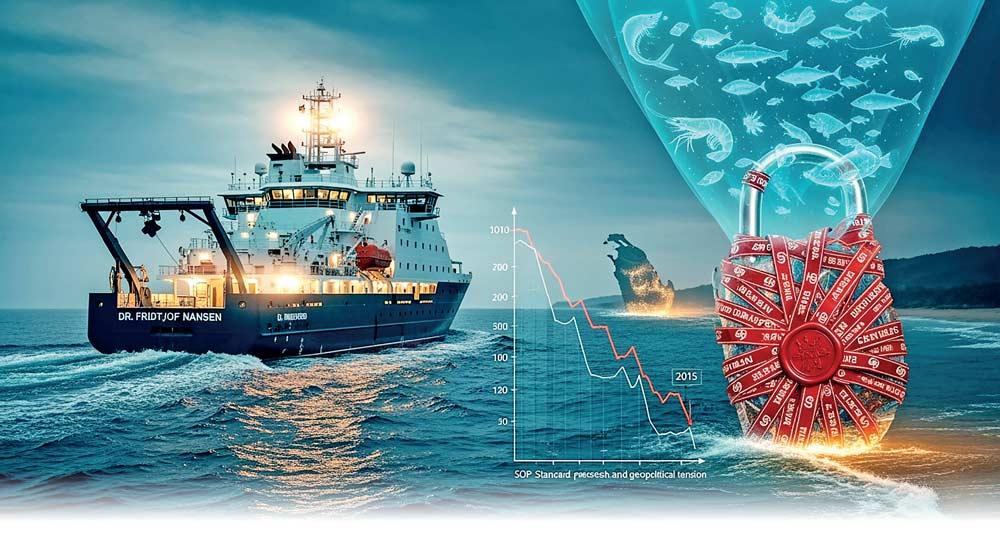
 Sri Lanka’s marine catches have dropped from 450,000 tonnes in 2015 to around 300,000 tonnes today.
Comprehensive marine ecosystem surveys are crucial for sustainable fisheries management.
Development of a Standard Operating Procedure (SOP) is seen as vital amid geopolitical tensions in the region.
It is difficult to say exactly what the economic loss is. But the loss, scientifically, is an overview of the marine ecosystem and the fish resources in the economic zone of Sri Lanka.
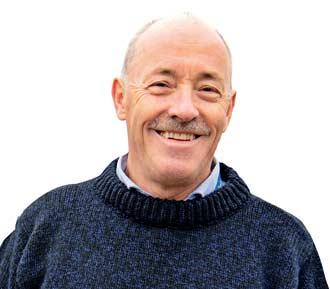 The UN’s Food and Agriculture Organization (FAO) research vessel ‘Dr Fridtjof Nansen’ made a port call in Sri Lanka recently before it proceeded to Bangladesh for research activities. It initially sought permission for such work in Sri Lankan waters, but permission could not be granted for it because of delay in the bureaucratic process. The ship belongs to the Institute of Marine Research (IMR) in Norway. In an interview with Daily Mirror, IMR’s Special Advisor – Sustainable Development Ole Arve Misund said that there will be future cooperation with Sri Lanka.
Excerpts:
QThe FAO ship was denied research activities in Sri Lankan waters. What is the economic loss for Sri Lanka in your view?
It is difficult to say exactly what the economic loss is. But the loss, scientifically, is an overview of the marine ecosystem and the fish resources in the economic zone of Sri Lanka. This is needed in a time when we see the marine resources in Sri Lanka have diminished a little over many years now. Since 2015 when we have the highest catches in Sri Lankan waters, it has declined from 450,000 tonnes totally to now around 300,000 tonnes. So, a survey of the type is needed for sustainable management of Sri Lankan marine resources- fish resources.
QDid you express your concern to the Sri Lankan authorities?
Yes, we did. But, I mean, it was a bureaucratic process that was beyond our control and caused them not to permit. They were working on a procedure for allowing foreign vessels to enter the economic zone of Sri Lanka to carry out research activities at large. And, because of that procedure, they couldn’t give it a go.
QAre you interested in carrying out research activities in Sri Lankan waters in the future?
Yes, we are. Yes, definitely we are. We are working on finding a solution so that we can come here with a ship, maybe late next year or early 2027. That’s a possibility. We are working on that through various channels- diplomatic channel and the FAO system. The FAO system in Rome determines prioritization of the vessel, where it shall go and what type of research it shall carry out.
QFor a country like Sri Lanka, we are now in a tricky situation because of geopolitics involved in marine research activities. Sri Lanka is developing a standard operating procedure (SOP). How important is it for a country like Sri Lanka to have it?
I think that is very necessary. Now, it is there in many countries. Our country- Norway- has Standard Operating Procedures to give permits or to find out whether ships should be given permits to do any activity in our waters.
It is just very timely that Sri Lanka is developing such a mechanism because of geopolitical tension.
*You see, many nations are positioning themselves for future resource exploitation. According to experience, how have the countries avoided those geopolitical tensions?
Countries have to respond to the geopolitical situation and have operational procedures to decide on countries to cooperate with, how to do it and so on. That’s very important.
QWhen the countries are suspicious of each other, then it is challenging. So, do you have any experience in the world?
In that respect, I would like, for instance, to highlight the cooperation we have with Russia. This cooperation is well-functioning, even in these times. It is carried out through formal bureaucratic channels.
We cooperate on the resources in the various ecosystems. These resources are shared more or less equally between Norway and Russia. We both do research.
We combine the research into a holistic assessment to estimate the scale of these resources and determine how much can be sustainably fished. We have a joint commission, which meets every year to decide the costs. It is very important.
QHow big is the size of the blue economy for Sri Lanka?
I don’t know the details here, but I know that part of the GDP of the fisheries has declined from two percent to just one percent. But the Sri Lankan waters are productive. You have valuable resources like tuna and big fishes. You have prawns, lobsters and so on. So, I think the blue economy is important for a country like Sri Lanka. With the blue economy, fisheries is one part, aquaculture is another part.
I have seen the manifesto of the National People’s Power (NPP - A Thriving Nation, A Beautiful Life. I see they want to increase the shrimp production and so on. So, this is to strengthen the national economy. You have maritime activity- shipping. You are in the central part of international marine traffic and so on. Probably the blue economy is an area that should be focused for the years to come.
QSri Lanka is facing another problem with India at the moment because of poaching activities in Sri Lankan waters by Indian fishermen. What is the best way for Sri Lanka to resolve such issues?
It is not easy for me to come up with a definite solution on such an issue. Referring to the relation we have with a large nation like Russia, we, as a small nation, can mention the experience of having joint commissions. Sri Lanka already has joint commissions with India. It is through the dedicated work of these commissions that such issues can be effectively addressed. Through this mechanism, both sides can agree to allow reasonable fishing activity in the northern waters of Sri Lanka.
QApart from fisheries, what do you think of the development of petroleum resources?
I don’t know the geology of Sri Lanka. But I am coming from a country that has developed oil resources and become prosperous because of them we found in the North Sea from the mid-1960s and up to now.
We have the largest investment fund in the world because of revenue from the oil sector. It is the major income in our country. But it is done in a very professional way to minimise pollution and so on. It is very important for the economy.
QBut at the same time there is an argument that countries should not focus on the discovery of petroleum resources because the whole world is moving towards renewable energy. What is your view?
I know that we are also working very hard to contribute to the green shift when it comes to energy- with offshore and on-shore windmills. We have a lot of hydroelectric power. At the same time we see that this transition takes time and our offshore oil and gas are sought by other nations.
We continue with production, but from a climatic perspective, the reality is undeniable. I recently met with the Norwegian Polar Institute, and having visited both the Arctic and Antarctica, I have witnessed the shrinking ice and the melting ice first-hand. Climate change is real, and a green shift is necessary.
So, instead of focusing very much on exploration of oil and gas, I think it is much better to focus on green energy sources. Here, you have the possibility of solar power for instance. We don’t have that for a large part of the year because we receive little sun in the winter time.
QHow did you interact with Sri Lankan authorities during your stay here?
I am working with fisheries, so it’s the only authority I met.
QIn the world, what will be the future of the fisheries sector?
The coastal fishery is very important for the population. I think the importance of fisheries will increase in the years to come. It’s very healthy food. If you operate fisheries in a sustainable manner, it is a source of food that is renewed every year. Both coastal and offshore fisheries resources are very healthy. The offshore fisheries are for creating income for the nation.
QYou mentioned that Sri Lanka’s fish stocks have dwindled. From your observations, what do you see as the main reasons for this decline?
Maybe the fishing activity is a little too large, but this needs to be investigated further. In its manifesto, your government is also seeking sustainable management of the fisheries. This is something that your research institutes have to respond to. And we are here to cooperate in that respect.
QSri Lanka is now focusing on developing local capacity in this area. How crucial is it for a country like Sri Lanka to strengthen its local capabilities?
That’s very valuable. This is done in a cooperative way with the local communities and so on. It’s very necessary.
Q How can Sri Lanka get assistance from the world, UN and all that?
Norway has continued cooperation with Sri Lanka. Now it is the third phase of this bilateral project. So I will be here for the next four years. I will come regularly.
QHow is the impact of climate change on Sri Lanka?
I am not a specialist when it comes to the impact of climate change on Sri Lanka.
Probably, it is warmer and drier. In Norway, it is warmer and wetter and windier. We see that glaciers in the North are reducing very much.
21 Jul 2026 6 hours ago
21 Jul 2026 7 hours ago
21 Jul 2026 7 hours ago
21 Jul 2026 7 hours ago
21 Jul 2026 9 hours ago