21 Jul 2025 - {{hitsCtrl.values.hits}}
 Progress on investments according to capital expenditure allocations in current budget not adequate
Tariff talks progress smoothly
ETCA to be revisited
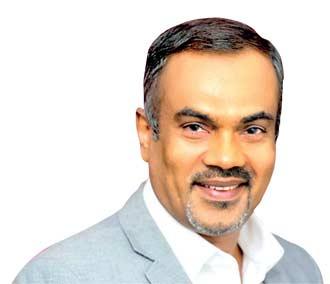
Dr. Anil Jayantha Fernando, Minister of Labour and Deputy Minister of Economic Development, takes questions from Daily Mirror on the current status of Sri Lanka’s engagement with the US on tariff reduction and the current status of the economy. Excerpts:
 Q How is the current status of the government’s engagement with the US on the tariff issue?
There was a virtual meeting recently. Discussion has reached the final phase. The next step is to agree on certain things and streamline the final version of the document. We need not pay a visit to the US. But if it is necessary in the future, there may be one for signing the agreement.
I am really coordinating and connecting the team. I am not a member of the team.
Q Sri Lanka has managed to get it reduced to 30 percent at the moment. We are trying to get it reduced further. Sri Lanka too has to make certain compromises to reduce the trade gap, to accommodate US interests. How are we going to do that actually?
There is discussion regarding the ways in which we can reduce the trade gap - the removal of tariff, para tariffs and the ways of further increasing our imports and investments. It is really reciprocal .
Q What are the most cost-effective imports which we can make from the US?
 International trade should happen in a very democratic, free and fair manner. What we import basically, are the things that we want, but cannot produce because of higher costs. Strategically, sometimes, in order to connect with the global supply chain, there are different ways of importing.
We prefer that kind of imports- just let the market determine what to be imported in line with our national priorities and agendas. Since this particular issue has now arisen, we can discuss the possibility of importing oil. We do not import oil from the United States at the moment otherwise.
It does not mean that we simply disregard the other tender processes. The cost is a matter for us to consider. While addressing this particular issue , we need to purchase them at a cost, which is similar to the current cost. If that requirement is met, we can do it. Initially, we discussed this. If we want to go for unsolicited or government to government purchases, we have Ceylon Petroleum Corporation. But in the case of the United States, there is no such government entity to sell oil. The entities are private there.
Q For purchasing oil under a government to government agreement, there is a barrier there, it means?
We have a government entity, but they don’t. But if they can make certain arrangements for this thing or facilitate it, it will be possible.
Q There is one US company already present in Sri Lanka- RM Park. Have you discussed with them a possible arrangement?
No, we have not discussed that in detail. Initially, we are discussing the removal of tariffs.
Q How far have we compromised on tariffs ?
These things are being discussed - item by item or for a group of items. We can bring it down to zero in certain cases or likewise. Or it can be the removal of para tariffs in a reciprocal way.
The other way is just broadening the space for imports from the United States. We cannot forcefully say that we have to import that and this unless we have a need. So, now there is a need anyhow.
So, monthly $ 300 -400 million is utilised for oil imports. When we import it, does it happen on a contract basis? In purchasing oil from the US under a new arrangement, unless our cost increases, we can consider it. We can channel it for the US.
Q President Anura Kumara Dissanayake said Sri Lanka cannot compromise its sovereign rights in this case. Does the US demand certain restrictive measures against China?
The President did not say specific things like that. When a bilateral agreement or any agreement is signed, there can be a situation. We never know. That is what the President said. Here, as far as trade and investment are concerned, we can discuss technical aspects.
Every country in this world has its own sovereignty. No country will compromise it, not only us.
Even America also wants to maintain its sovereignty and independence. That is what we said in some discussion. In every negotiation, there are constraints.
But as of now, I would like to highlight the fact that things are moving smoothly.
Q Do we have a specific target to get tariffs reduced?
We can't say a specific target.
If we just want to say the specific targets, the target would be zero. When we go for negotiation on reciprocal tariff reduction, the targets would really link to the objective. The objective of the United States is to reduce the trade gap.
They come out with their own proposals.
Q What is our objective?
Our objective is not to reduce the trade gap, but to protect our industries. So, in pursuit of doing this thing, this particular trade gap may be reduced. It's okay as long as our objective is achieved. So, that is quite possible because we do not want to have any situation that hampers Sri Lankan manufacturing and exports. We are in the process of expanding investments, promoting investments and aiming to increase exports with diversification.
Q Is there any proposal by the US for us to purchase some aircrafts like Boeing?
No, I do not know. As far as the team explained, the detailed items were not just mentioned. They are discussing. The list of items is with them.
Q When we secure any concession on tariffs, it should be competitive with other countries. If the countries competing with Sri Lanka get tariffs reduced at a better rate, it will have an impact. How do you look at it?
When we think of our strategy, we should not look at the others because that is a wrong comparison. If you are thinking of others and trying to strike a deal with them, it will not be successful.
What we have to do is to have a very straightforward bilateral agreement. The same way, in the meantime, other countries also have their sovereignty or right to deal with them. We should not be happy that another country will be given a higher rate than us.
We do not worry if a particular country would get zero. It is okay. That is their right, their ability. We are not happy that another country will be charged more than us. We don't have that mentality. What we need to get is to get our rate reduced as much as possible.
That would help industries to continue their businesses and keep their margin, protecting employment. As long as that trade happens, we do not worry about what other countries.
Secondly, assuming that , according to your argument, we get a particular rate that is relatively higher than the rates given to other countries, we need to think of some other different strategies later on.
Q All over the world, in the wake of this US policy, the countries are exploring opportunities for expansion of their trade or diversification of markets. Now, how far have we progressed in our plans to access markets like China, India, and expedite free trade agreements with them?
That is happening. It is not because this particular global trade issue arose. Once we took power, one of our economic priorities is to expand exports. Even this did not happen.
We are the ways and means of diversifying our markets and products. So, as a result, we explore the opportunities in Europe, the Middle- East, and even in the sub-Saharan African region. Global trade is rapidly changing. It has reached a particular level.
Most of the things are happening through global supply chains, not through the traditional mode of production. We are exploring the opportunities and promoting exporters, investors to go and secure their place in the global supply chain. That is the more sustainable way of expanding our exports as we highlighted in our manifesto.
Q How are you going to proceed with the Economic and Technology Cooperation Agreement (ETCA) with India?
Of course, that is another type of agreement we need to revisit.
QAt the moment, has the government given in mind to start talks?
Not specifically pertaining to this agreement. With India, we have a very close connection, being our neighbour and a very big economy. We have to have bilateral trade. We are not specifically thinking that the ETCA is the only way, but exploring all possible opportunities to promote both trade and investments. So, therefore, the namesakes can change. When we deal with names, there is a risk that the media, instead of bringing out the substance of that particular agreement, will misinterpret it. We look at the substance of this transaction and how best that could give benefits to both sides.
Mutual benefit, win-win situation should be there. But in the past, certain fishy things were there. So, that is the reason why even people may suspect that. So, our government is not going to do anything that really jeopardises the sovereignty of this country or the livelihood of our people.
We act in accordance with the mandate given to us. Why should we fear talking with India? While we are talking with India to expand trade and investment, we are talking and negotiating with China, Europe, even the UK, United Kingdom. The United Kingdom has already announced that Sri Lankan exports can be given zero tariff since the conditions are already met. That is a good opportunity.
We are very open and discuss with Europe and the Middle East, Sub-Saharan Africa, even the Americans .
Q But not under the garb of certain terminologies like ETCA or whatever?
We prefer to go for mainly regional trade agreements if possible.
QLike the Regional Comprehensive Economic Partnership (RCEP)?
We'll see. We have not initially discussed it . There is no harm because this is the way forward- the bilateral agreements or regional agreements.
Q In principle, does the government accept this liberalisation of trade as much as possible?
No, it should be interpreted again. If I just say in principle, yes, it would be a mistake. What do you mean by liberalisation?
Q I mean, the market forces prevail with minimal government intervention?
It is highly subjective because no free trade takes place in the world, no liberal. So, some may talk about trade liberalisation. Just tell me a single example where trade liberalisation takes place! In America, the biggest country in the world, global trade happens in line with certain global, liberal principles and national agendas and their strategies, mutual understanding, discussions, cooperation, collaborations etc. So, in such a situation, being a small country, we do not say that we , in theory or principle, liberalise everything and the market forces only operate.
Even in theory, even in practice, it is not happening. So, we are very open to work with market principles. We are very open to work with democratic principles. We are very open to work with dialogues, cooperation, and collaborations.
QThe economic growth, according to the World Bank's forecast, will be 3.5 percent. It will drop further next year. In that case, now, how are we going to expand our economy, the size of our economy so that we are better positioned to start debt servicing in 2028?
That is a fact. But the economic growth does not depend on the forecast. The forecast is done by various institutions based on the best available information and certain assumptions. What drives the growth is not those assumptions. What drives the growth is what you really do. So, according to our government policies, we have prioritised our economy, the strategies.
We have to think of our resources available, our constraints. So, we work within this framework at its maximum level by increasing our efficiency. So, we are constrained with certain limitations of expenditure.
The primary expenditure should be 13 percent of GDP, forecast GDP. So, what is our task then? We should not worry about others’ forecasts. We should look at how best we channel this 13 percent into productive primary expenditure. Of it, what matters most is the capital expenditure that is the government’s investment.
So, we are trying hard to channel that amount for required targeted investment, mainly to promote investment. We want to have a conducive environment with good infrastructure facilities. We are doing them- road connectivity, telecommunication, digitalisation etc.
We are ready to spend money for this thing with the budget space or with the project-specific funding or even broad funding.
If we have some bottlenecks, we address them. We regularly meet, discuss, and expedite things.
Q What is your assessment and experience about this capital investments based on allocations made in the current budget
According to the time passed, the progress, as of now, is not adequate. We admit that fact. It is not because of any other issue of the project or the allocation of funding.
It is due to an inherent reason. The budget was passed in March. Therefore, the fund allocation technically happened starting from April.
Already, we happen to sacrifice three months. That is one of the reasons. Again, we have to go through proper public financial management channels. So, now we have to maintain this financial discipline. We need to maintain proper order, good governance.
So, these are new things that the previous government also did not have. So, therefore now, since we are very carefully navigating the thing, some delays are there. That is the reason why the president holds regular meetings with the authorities, secretaries, ministries to expedite things.
We are hopeful that we would be able to channel the rest of the allocation. But there is a challenge.
21 Jul 2026 8 hours ago
21 Jul 2026 8 hours ago
21 Jul 2026 9 hours ago
21 Jul 2026 9 hours ago
21 Jul 2026 21 Jul 2026