16 Dec 2025 - {{hitsCtrl.values.hits}}
“From our perspective, corruption in Sri Lanka really is a macro-critical issue. It affects fiscal stability, distorts how public money is invested, and ultimately erodes citizens’ trust in government.”
Anti-corruption drive has become a political topic in Sri Lanka for years now. The political parties have been used to campaign for decades on the plank of eradication of corruption and frauds upon return to power. In fact, it was a major topic discussed by the People’s Alliance under the leadership of former President Chandrika Bandaranaike Kumaratunga even way back in 1994. She sought a mandate to end what she called the corrupt 17-year rule by the United National Party (UNP). Also, it was a key campaign slogan in the run up to the 2015 presidential election. The National People’s Power (NPP) has now received a mandate. Governance improvement by rooting out corruption is one of the salient points made by President Anura Kumara Dissanayake ahead of the 2024 presidential election. However, the question remains whether Sri Lanka makes a holistic approach to create a corrupt -free system. At the moment, arrests are being made, and former politicians taken to task. Does this suffice in addressing the problem? What else should the government do to improve the system leaving no room for corruption and frauds? In search of answers to such pertinent questions, Daily Mirror spoke to World Bank Governance Specialist based in Sri Lanka Till Hartmann. In an interview with the newspaper, he said corruption in Sri Lanka really is a macro-critical issue. Excerpts:
QHow serious is the level of corruption in Sri Lanka?
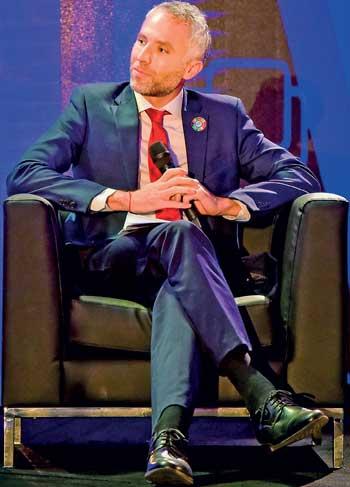 |
| Till Hartmann |
From our perspective, corruption in Sri Lanka really is a macro-critical issue. It affects fiscal stability, distorts how public money is invested, undermines public services, and ultimately erodes citizens’ trust in government. So yes, the problem is serious. But the good news is that Sri Lanka now has an opportunity to change this. And we fully support the government’s commitment to address it—it’s absolutely the right priority.
The real question then becomes: how do you address it effectively? Because corruption is not just about individual wrongdoing; it’s about the systems and incentives that either allow it to happen or make it difficult. What we see in Sri Lanka—and in many countries we work with—is that the root causes sit in the way public institutions function: how decisions are made, how processes are designed, how much discretion exists, and how transparent the processes are, and whether data is openly available. When you fix those systems, you shift the governance equilibrium towards integrity—by tightening constraints on corruption and, importantly, by reducing the opportunities for corruption.
QHow effective are legal approaches in curbing corruption?
 Legal action and prosecutions are of course important. You need credible enforcement; otherwise, you end up signaling that wrongdoing has no consequence. But legal action mostly deals with the symptoms of corruption rather than the root causes. What we observe around the world is that many countries with high levels of perceived corruption already have strong laws and several anti corruption bodies. The challenge is often not the absence of rules but making those rules work in practice. That is why our approach focuses on strengthening the administrative systems. When administrative processes are slow, complex, and opaque, even the best laws cannot stop misuse of public resources. But when you simplify and digitize those processes, you automatically reduce discretion and opportunities for corruption.
Take public procurement for example. When tenders are run online and the data is published, it becomes much harder to manipulate outcomes. Sri Lanka has a very capable civil society and research community that can use such data to monitor government decisions. The same applies to public financial management—how budgets are executed, how funds are tracked, and how payrolls are controlled. Strong systems shrink the space for corruption.
Another promising step is Sri Lanka’s move toward beneficial ownership transparency. Recent changes to Sri Lanka’s Companies Act will require companies to declare who really owns and controls them. Once the register is operational, it will add a new layer of transparency that can help prevent hidden conflicts of interest and illicit enrichment.
QHow practical is asset recovery for Sri Lanka?
Asset recovery is possible—and the World Bank has supported Sri Lanka in this area for quite some time. From 2017 and 2019, Sri Lanka was a focus country at the Global Forum on Asset Recovery (co-hosted by the US and UK and organized by the Stolen Asset Recovery Initiative, or StAR—a partnership between the World Bank and the United Nations Office on Drugs and Crime). Through this platform, StAR worked closely with Sri Lankan authorities, including CIABOC and the Special Presidential Task Force, which was mandated to coordinate the country’s asset recovery efforts. Our support included building the capacity of investigators and prosecutors on asset recovery to advise on the asset-declaration framework and drafting legislation related to proceeds of crime. A lot of groundwork was done, but the engagement paused with the change in government in 2019. It has now been revived. CIABOC has recently asked for renewed support, and a StAR team has visited Sri Lanka this month to look at how we can resume our support.
That said, asset recovery is complex and almost always involves cooperation with foreign jurisdictions. So, it’s important for Sri Lanka to be realistic. Cases can take years, not months, so it’s not something a government can rely on for quick revenue. What it does achieve is deterrence. It shows that corrupt officials cannot enjoy the benefits of their crimes and that safe havens are scarce. That message alone has real value—corruption is not profitable.
QCan you share examples from other countries on asset recovery?
Yes, successful asset-recovery cases do exist, but the journey to the finish line is long and can involve the efforts of many jurisdictions and practitioners. There have been successful asset recoveries in Nigeria, Malaysia, Uzbekistan, Algeria, Zambia, and Ukraine in recent years, many of them connected to the Global Forum on Asset Recovery Action Series, organized by StAR with partners like the International Anti-Corruption Coordination Centre (IACCC) and the International Centre for Asset Recovery (ICAR).
StAR and its partners are supporting several jurisdictions under the framework of this global initiative exactly on these kinds of cases right now. What these cases show is that success depends on strong domestic laws, close coordination with foreign authorities, persistent investigations, domestic cooperation, and robust judicial processes. Even in the best circumstances, progress tends to be gradual; large, quick wins are rare.
For Sri Lanka, the more realistic way to look at asset recovery in the short to medium term is not as a way to fill budget gaps, but as an opportunity to strengthen the rule of law. When a country actively pursues stolen assets, it demonstrates that corruption has consequences and that there is no permanent impunity for those who try to hide illicit proceeds overseas. That builds public trust and international credibility—powerful outcomes that support broader governance reforms.
21 Jul 2026 6 hours ago
21 Jul 2026 7 hours ago
21 Jul 2026 7 hours ago
21 Jul 2026 7 hours ago
21 Jul 2026 9 hours ago