18 Feb 2025 - {{hitsCtrl.values.hits}}
|
Anura Kumara Dissanayake
|
Sri Lanka yesterday introduced a national budget aimed at balancing fiscal discipline with economic revival, while addressing the gap between the struggling households and long-term growth ambitions.
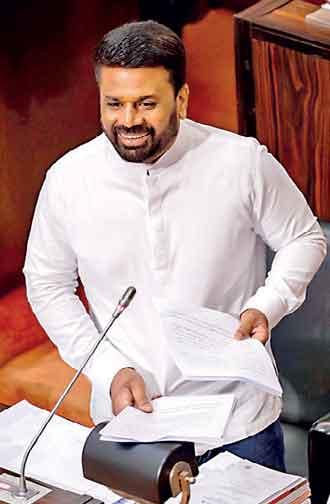
Calling it a “historic budget”, President Anura Kumara Dissanayake delivered a two-and-a-half-hour speech, outlining proposals largely aligned with the expectations of the International Monetary Fund (IMF), which will be looking at the document before approving the third review next month.
He emphasised that the budget lays the foundation for fulfilling the people’s aspirations for economic transformation by steering the economy towards sustainable growth and development. The primary focus is on inclusive economic growth, ensuring that all citizens have greater access to economic opportunities and the benefits are distributed fairly across society.
“Growth for the sake of growth has little value to society, unless it is a means to uplifting the lives of all members of society. For several decades, economic activity and economic benefits have been concentrated amongst the few,” Dissanayake stated.
“What is needed going forward is for a greater democratisation of the economy, where economic opportunity is more fairly distributed. Mass struggles and last year’s election saw people asserting their political rights. What is necessary is for economic rights to be similarly asserted. This is the philosophy of this budget,” he added.
For 2025, the government aims to generate revenues of Rs.4,960 billion, approximately 14 percent of GDP, with Rs.4,590 billion expected from taxes. This marks an increase from the Rs.4,031 billion revenue target set for 2024. A significant portion of the revenue boost is anticipated from the recent liberalisation of motor vehicle imports.
The other key revenue measures, already announced in Parliament in December 2024, include raising the tax-free threshold for personal income tax, adjusting the second income tax slab and removing the value added tax (VAT) on fresh milk and yoghurt.
The controversial imputed rental income tax, agreed upon by the previous administration, will not be implemented. However, to offset the revenue losses, the new measures include imposing the VAT on digital services, corporate income tax on service exports and increased corporate taxes on cigarettes, liquor and gaming.
Dissanayake asserted the government’s commitment to improving tax administration and compliance.
On the expenditure side, the proposed budget allocates Rs.7,190 billion, up from Rs.6,131 billion in 2024. The recurrent expenditure is estimated at Rs.5,886 billion. Sri Lanka will maintain a primary surplus of Rs.750 billion and a budget deficit of Rs.2,200 billion. The total gross borrowing requirement is projected at Rs.4,000 billion.
The estimated budget deficit for 2025 stands at 6.7 percent of GDP, exceeding the IMF target of 5.2 percent. This deviation is driven by the total expenditure reaching 21.8 percent of GDP, compared to 20.3 percent recommended by the IMF.
“A budget is not just a set of revenue and expenditure proposals for the upcoming year; it is also a reflection of the government’s approach to building the economy and overall policy,” Dissanayake asserted.
21 Jul 2026 3 hours ago
21 Jul 2026 4 hours ago
21 Jul 2026 4 hours ago
21 Jul 2026 4 hours ago
21 Jul 2026 6 hours ago