Reply To:
Name - Reply Comment
By Nishel Fernando
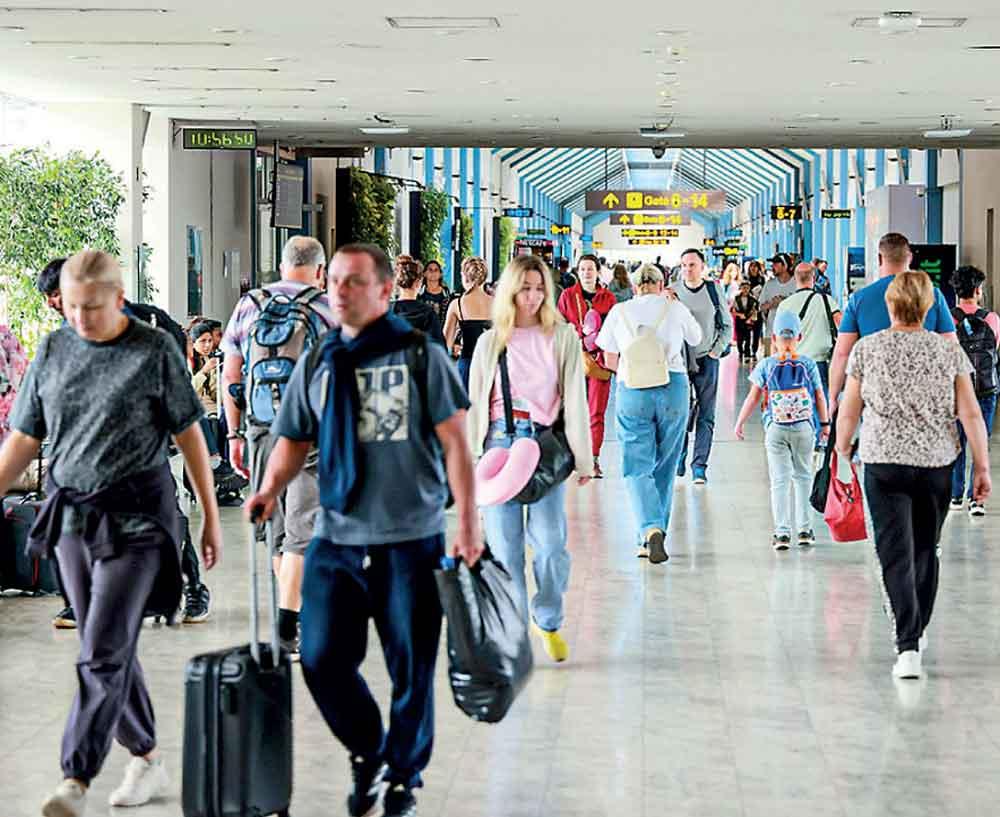
Two competing structural pressures are reshaping the financial arithmetic of Sri Lanka’s inbound tourism, with the latest data from the Sri Lanka Tourism Development Authority showing that neither trend has resolved in the island’s favour.
The vital Gulf air corridor that feeds the country’s high-spending, long-haul European markets remains severely depleted, despite a recent ceasefire, which itself has begun to fracture over the past week, due to the renewed military flare-ups near the Strait of Hormuz.
Simultaneously, India’s low-cost giant IndiGo has aggressively capitalised on its expanded direct entry into Colombo, eroding the market dominance of the national carrier SriLankan Airlines on the island’s single largest source route.
The geopolitical disruptions in the Middle East, triggered by the extensive airspace closures earlier this year, continue to exert a direct drag on the arrival volumes. In June 2025, the combined hubs of Dubai, Abu Dhabi, Doha and Sharjah accounted for nearly a third of all tourist departures to Sri Lanka. By June 2026, their collective share had plummeted to
just 21.34 percent.
On the carrier side, the market share of major Gulf airlines—including Emirates, Etihad and Qatar Airways—shrank from roughly 32 percent to 22.65 percent over the same period, despite Qatar Airways overtaking Emirates as the leading
regional hub operator.
This ongoing transit squeeze has severely undermined the island’s broader recovery goals.
Total tourist arrivals for the first half of 2026 reached 1,146,573, representing a 1.8 percent contraction compared to the same period in 2025. This deficit complicates the government’s ambitious full-year target of three million arrivals, which is now revised down to
2.5 million arrivals.
While Sri Lanka recently fast-tracked a visa-free scheme for 40 countries to boost the numbers, the persistent volatility across the Middle Eastern flight corridors suggests that the industry will face an uphill task securing a robust,
uninterrupted third quarter.
While the long-haul corridors struggle, regional traffic from India has expanded to account for 34.9 percent of all arrivals in June 2026, up from 27.4 percent a year earlier. However, the commercial benefit of this influx is being fiercely contested.
Within the specific India-origin corridor, IndiGo’s passenger share surged from 38.08 percent to 53.34 percent between June 2025 and June 2026. In stark contrast, SriLankan Airlines’ share within the same route network fell from 33.63 percent to 25.09 percent, even as the national carrier managed to keep its headline global market share relatively flat at 27.53 percent. IndiGo’s aggressive market penetration stems from the launch of high-frequency direct services from major tier-one Indian hubs, triggering an intense fare compression estimated at 15 percent to 25 percent. In response, SriLankan Airlines plans to scale its weekly Indian frequencies from 90 to 100 flights by the end of the year and add Ahmedabad as its tenth destination.
The national carrier maintains that its volume erosion is confined to highly contested city pairs rather than its entire network, which is critical, given that the Indian market drives nearly 30 percent of its total passenger traffic.