19 Feb 2025 - {{hitsCtrl.values.hits}}
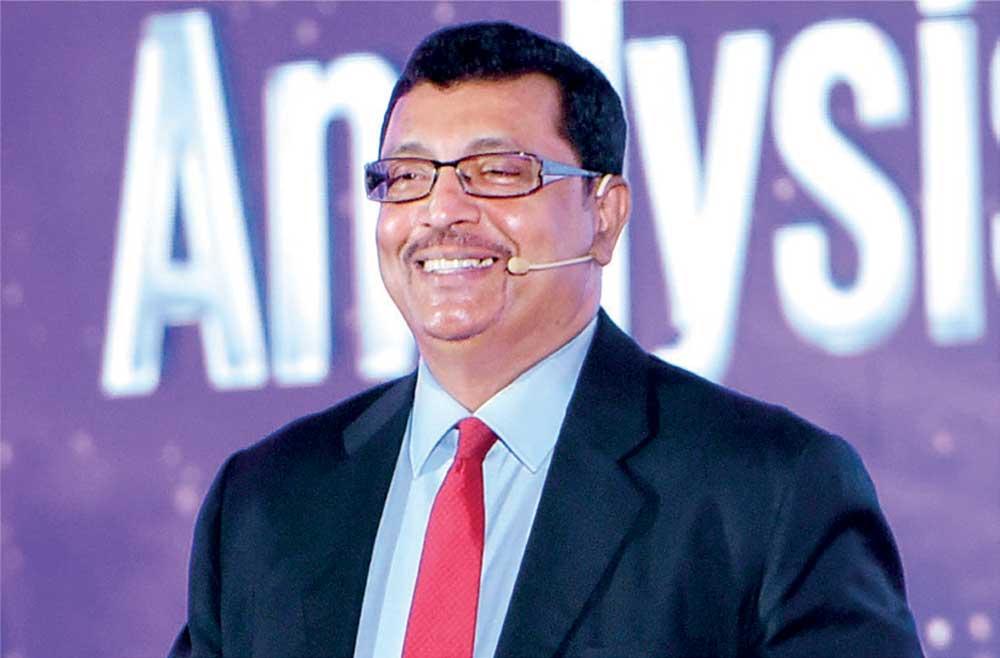
Suresh R.I. Perera
Pic by Kushan Pathiraja
By Nishel Fernando
Sri Lanka’s 2025 budget doesn’t introduce major tax changes but includes a few welcome adjustments. However, a tax expert points out that the budget still lacks a scientific approach, highlighting the need for a dedicated tax unit to advise the Finance Minister.
KPMG in Sri Lanka Principal - Tax and Regulatory Suresh R. I. Perera noted that this budget is a very simple budget and there isn’t much change overall. However, what has happened is that certain tax statuses have undergone tweaks; some have been given administrative portions, and some have been changed “here and there”.
But what lacks in Sri Lanka’s tax system is some science being brought into it, he said, while stressing that the country requires a dedicated unit to research and propose reforms for the tax system.
They will do the cost-benefit analysis of the tax proposals and inform and that’s what we don’t have. Not having that tax unit reporting to help the Finance Minister with regard to the tax balance in Sri Lanka is the root cause of the tax problems in Sri Lanka,” said Perera while sharing his thoughts on the 2025 budget during the KPMG Budget Forum held in the evening of the budget reading in parliament.
Perera welcomed the move to abolish the Statement of Estimated Taxes (SET form) with effect from the Y/A 2025/2026 in terms of simplifying income tax compliance.
He opined that the SET form, introduced by the new Inland Revenue Act of 2018, increases complexity in income tax compliance, which was not the practice under the old Inland Revenue Act.
He also pointed out that the calculation methodology for quarterly installment payments has been changed to a preceding-year basis, which was the rule under the old Inland Revenue Act, thus abolishing the current-year basis applicable under the new Inland Revenue Act.
“Calculation of the installment using the preceding-year basis under the old Revenue Act is a simpler method of calculating the quarterly tax payment,” he said.
Meanwhile, Perera highlighted that the budget has been favourable to senior citizens. Under the 2025 budget, senior citizens earning less than Rs. 1.8 million per year from all sources of income would not be subject to Withholding Tax (WHT) on their deposit interest income, provided they make a declaration to financial institutions.
In addition, senior citizens will be permitted to file their income tax returns manually, effective from Y/A 24/25, which is due on or before 30 November 2025.
Meanwhile, non-senior citizens earning less than Rs. 1.8 million from all sources of income, who are subjected to WHT on their deposit interest, would also be granted a refund under the current scheme applicable to senior citizens. However, Perera expressed his dissatisfaction with this proposal, suggesting that a more efficient solution would be to introduce the “Direction Mechanism,” which is not currently available in the law.
Furthermore, Perera also expressed his reservations regarding the proposal to abolish the Simplified Value Added Tax (SVAT) scheme and introduce a new risk-based refund system.
“There is a reference to a pilot system being an operator also, but I have my reservations,” he said. He warned of the potential impact on stakeholders, including exporters.
Additionally, he shared his concerns about the budget proposal to preclude the admission of certain evidence and issues before the Tax Appeal Commission (TAC). He expressed reservations about the proposal to disallow the admission of evidence and issues not raised during the assessment process at a hearing before the TAC.
«However, if this evidence and these issues have not been taken up at the hearing before the Administrative Review, there may be a justification for the preclusion,” he said.
21 Jul 2026 3 hours ago
21 Jul 2026 4 hours ago
21 Jul 2026 4 hours ago
21 Jul 2026 4 hours ago
21 Jul 2026 6 hours ago