Reply To:
Name - Reply Comment
Victims of any natural disaster are in a state of shock, panic, stressed out and helpless. They live with trauma. Women and children are often vulnerable in this context and face many discomforts, especially those relating to sanitary facilities and living conditions. In an attempt to find out what life is like in the aftermath of a natural disaster, the Daily Mirror spoke to victims of the Meeriyabadda landslide.
“We live in a world where humanitarian crises extract mounting costs from economies, communities and individuals. Wars and natural disasters make the headlines, at least initially. Less visible but also costly are the crises of fragility, vulnerability and growing inequality, confining millions of people to the most  tenuous hopes for peace and development” – Shelter from the Storm
‘Shelter from the Storm’ - A transformative agenda for women and girls in a crisis-prone world - a report that was recently released by the UNFPA state of world population 2015 throws light upon the many millions of victims who have faced crises across the world and how they have been affected directly and indirectly. It reveals that more than 100 million people are in need of humanitarian assistance, 29 million of them being women and adolescent girls of reproductive age.
According to the report, while the number of natural disasters tripled during the past 20 years, for each person who dies in a disaster, there are a hundred more affected by it. Although only 44% of the disasters have taken place in developing countries, 68% of deaths have occurred there. Those who undergo such adversities are left homeless, separated from families, orphaned, diseased and have limited opportunities of living their usual lives again.
It is certainly true that women and children are the most vulnerable. As Shelter from the Storm demonstrates, while men are much more likely to be directly affected, women die or are otherwise harmed more often of indirect causes. Females have a higher tendency to be internally displaced persons and refugees, and are often subjected to gender-based violence.
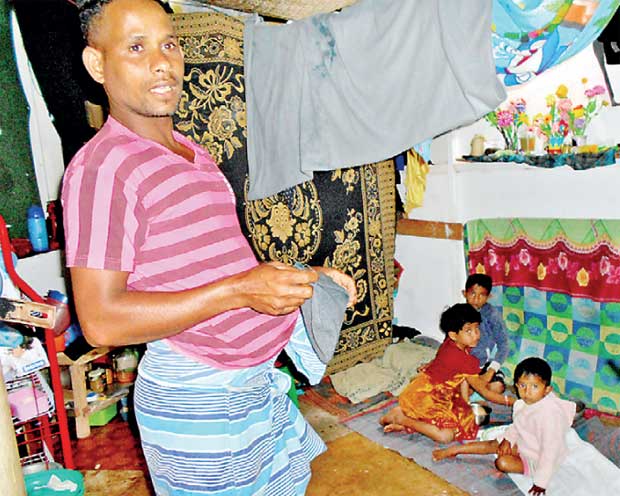
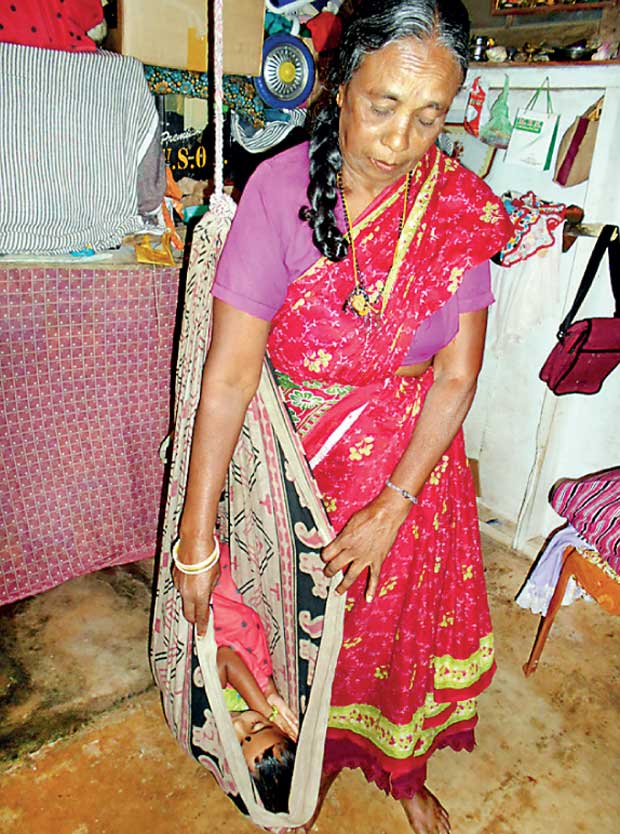

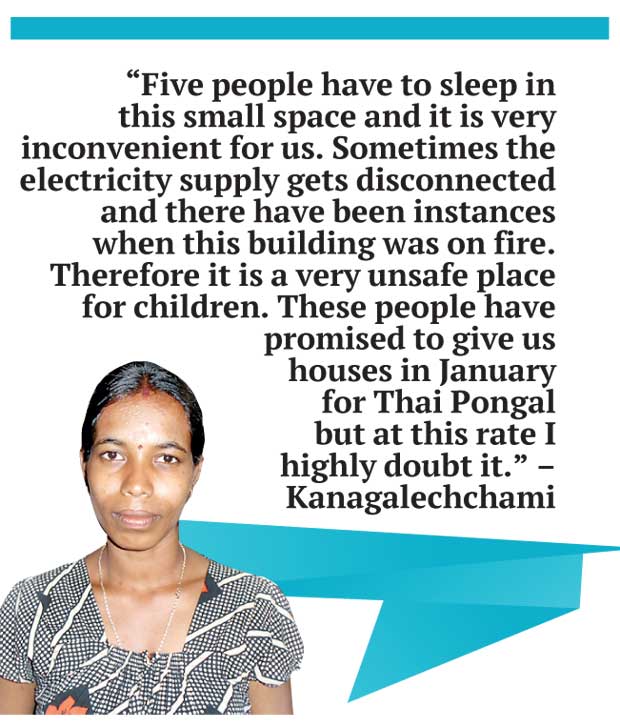
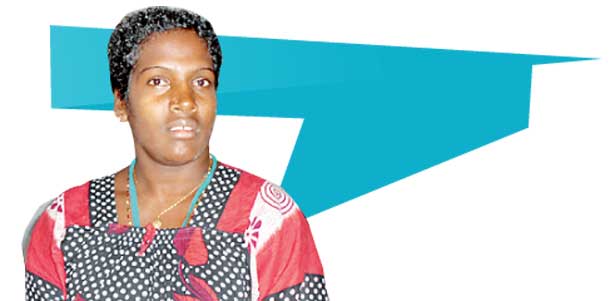 “There are 6 people in my family; at the time of the disaster I was abroad. However I came back within 20 days and found my family. We were treated badly from the beginning. Today, although we live here we are facing many problems. For example the toilet pits are overflowing and the children have to live in very unhygienic conditions. After some time the owner of the estate was diagnosed with dengue and then the Public Health Inspectors (PHIs) came here and went on a full inspection. We also contracted diseases such as chicken pox, flu and other illnesses but not a single PHI came here initially. But everybody gets royal treatment except for us. The weekly coupon is also not sufficient for us at times. For those doing a job this may not be critical, but many of us are unemployed.” – S. Kalaimagar |
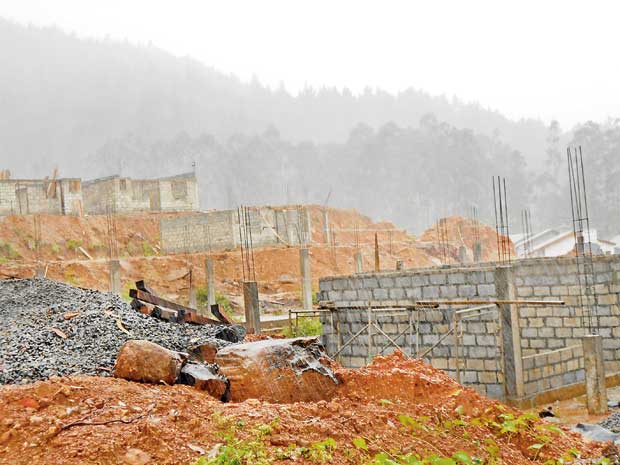
So far we haven’t received any complaints: Nimal AbeysiriIn order to find out what action has been taken to relocate these victims, the spoke to Daily Mirror Nimal Abeysiri, the District Secretary of the Badulla district. In his comments, Mr. Abeysiri said that these victims obviously have to go through many hardships. “We are doing everything within our capacity to  provide them with good living conditions. Actually speaking, the facilities and aid they receive at the camp are far better than what they had. The people involved in politics who give many promises leave them with high hopes. There is so much we can do. We are only coordinators and we do our best. So far no one has come to us complaining about anything.” Having asked about the delay of the resettlements, Mr. Abeysiri told that the constructions are not easy, especially in these areas. They have been delayed due to reasons that are beyond our control. The boulders have to be cracked in order to make space for the construction, and that should be done using chemicals and huge machines. It is a long process. We have completed building 47 houses. Hopefully by March 2016, the resettlements will be complete. These houses are luxuries compared to what the affected people had because they comprise of tiled bathrooms, double rooms, kitchens, proper water supply and other amenities.” provide them with good living conditions. Actually speaking, the facilities and aid they receive at the camp are far better than what they had. The people involved in politics who give many promises leave them with high hopes. There is so much we can do. We are only coordinators and we do our best. So far no one has come to us complaining about anything.” Having asked about the delay of the resettlements, Mr. Abeysiri told that the constructions are not easy, especially in these areas. They have been delayed due to reasons that are beyond our control. The boulders have to be cracked in order to make space for the construction, and that should be done using chemicals and huge machines. It is a long process. We have completed building 47 houses. Hopefully by March 2016, the resettlements will be complete. These houses are luxuries compared to what the affected people had because they comprise of tiled bathrooms, double rooms, kitchens, proper water supply and other amenities.” |
We need to consider more about the sanitary facilities of women and children: Shamila DaluwatteSpeaking to the Daily Mirror, Attorney-at-law and women’s rights activist Shamila Daluwatte said that in 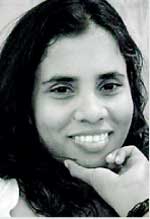 most instances women and children have to face many inconveniences when it comes to a natural disaster. “While distributing lunch packets and other relief items, people should also consider about the sanitary facilities available to women and children. Therefore, other items such as sanitary napkins, towels and clothes should also be distributed. When these people are displaced they often have to stay together in a hall or other place until they are relocated. This is another situation that we need to look at. Sometimes both men and women will have to use washrooms in close proximity and also take a bath from a common well. This in turn will increase the chances of women being vulnerable to sexual harassment. In addition to that they should be given access to clean water and other needs in order to ensure that they are under good living conditions.” most instances women and children have to face many inconveniences when it comes to a natural disaster. “While distributing lunch packets and other relief items, people should also consider about the sanitary facilities available to women and children. Therefore, other items such as sanitary napkins, towels and clothes should also be distributed. When these people are displaced they often have to stay together in a hall or other place until they are relocated. This is another situation that we need to look at. Sometimes both men and women will have to use washrooms in close proximity and also take a bath from a common well. This in turn will increase the chances of women being vulnerable to sexual harassment. In addition to that they should be given access to clean water and other needs in order to ensure that they are under good living conditions.” |