Reply To:
Name - Reply Comment
.jpg) Education can only thrive in a context of examinations. Those who deny this must probably have ignored the practical realities, behind the teaching situation in schools, examinations serve a function for society at large in attesting to standards of academic performance.
Education can only thrive in a context of examinations. Those who deny this must probably have ignored the practical realities, behind the teaching situation in schools, examinations serve a function for society at large in attesting to standards of academic performance.
Our examination system is the most notorious aspect of education in Sri Lanka. The incessant blunders of examinations have caused a whirlwind of confusion and chaos. The worst troubles were in the Department, where considerable confidence, was badly shaken. There were recriminations of course, as newspapers, politicians and parents, bemoaned it as a national disgrace. A barrage of scepticism and criticism has cast doubts about examinations.
In response to this perceived vendetta, a vicious circle of anger of gross-misconduct in examinations has led the public having little faith in the examination system. It has subjected teaching to examinations, making it virtually impossible to provide true education, and to develop genuine interest in expanding educational horizon and has created temptation to cheating, corruption and favouritism. The obsession to obtain by hook or by crook a place in the University has overshadowed the good aims and purposes of education which a good examination should aim at.
To bring some order into this chaos, there is an urgent need for an up-to-date account of the scientific procedures now available for constructing psychological tests and for assessing and interpreting the results so obtained. Examinations rightly designed and intelligently used can be a useful factor in the educational process. The introduction of a sound system of examinations with the necessary modifications and adaptation will prove a great service to Sri Lankan Education.
How then is to decide whether or not a particular test will serve the purpose of a test. This is one of the chief questions, one must set out to answer. The answer is unequivocal, everything depends on the way the test has been constructed and validated. As for validity, as long as examinations, remain as unreliable, as most still are, validity must, be of course remain low.
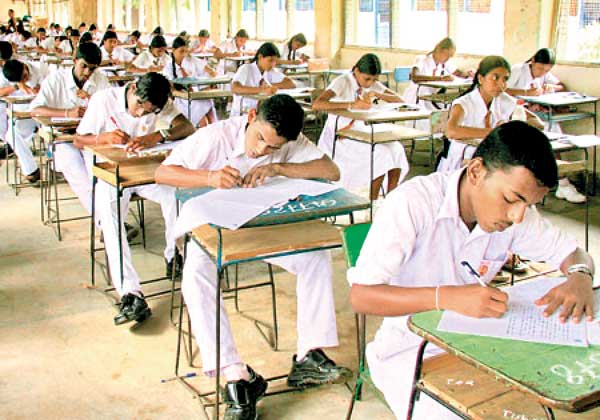
Indeed most teachers and examiners, when required to set a question paper, sit down, jot down their problems and dispatch them to the printer. Few realise that, the task of drafting an efficient test is a highly stalled affair, it calls, not only for a fertile imagination and first hand experience, and also for repeated pilot trials, special techniques to assess the results, and usually a long arduous research.
Unfortunately most of the popular discussions of the problem, and indeed of the whole subject of testing, arise from a sheer misunderstanding of the terms employed and the objects in view-that is partly due to Sri Lanka’s peculiar history. Perhaps we should also get the needed impetus for better research, on testing on a much larger scale, which alone can improve existing measures and reduce the error inherent in all scientific measurement. Without the help scientific tests advancement into better educated groups will be barred to many children from disadvantaged families, thus bringing to the top a large number of mediocre ability.
Considerable publicity in the press and on television has been given to certain test items, which were undeniably shockingly bad. Equally important and more valid is the criticism that the tests have been poorly made. Sometimes the test constructor did not know the concept of scientific testing. It is a failure to realise that devising new tests is a skill process, requiring considerable fertility of imagination, elaborate experimental trials, and much hard work.
They are not scientifically constructed based on the findings on psychological and psychometrics.
Cyril Burt the eminent psychometricion says “Here I cannot hope to do much more than convince the would be test constructor that there is a theory of test construction and that the only way to secure good results is to observe well established principles and rules, which are as technical as those for constructing an aeroplane or building a ship.”
A test should have the following characteristics.
_DM-9(23).jpg)