Reply To:
Name - Reply Comment
(4).jpg)
.jpg)
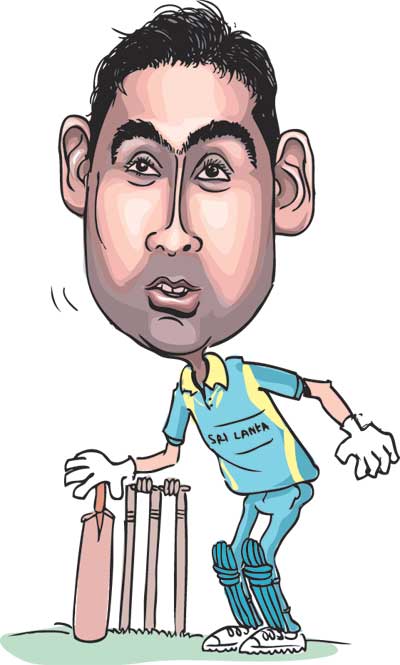
The holiday mood in the country may have pushed political issues off the front pages only to give way to that other favourite pastime of Sri Lankans, cricket, and making news this week was national cricket captain Mahela Jayawardena.
First, Jayawardena announced that he would be stepping down as captain at the end of the current Australian tour. Then, he got involved in a public spat with Sri Lanka Cricket (SLC) on the eve of the crucial Boxing Day test match in Melbourne, an unwanted distraction for a team that is struggling.
Having been cricket captain of Sri Lanka not once but twice Jayawardena is no stranger to controversy; it is almost an occupational hazard. His employer, SLC is also an institution that has been riddled with upheaval with allegations of corruption and favouritism being thrown at it regularly.
The current controversy was triggered when Jayawardena wrote to SLC asking that payments guaranteed to the players following the recent T20 cricket tournament in Sri Lanka be distributed among a wider contingent of officials and support staff.
 What triggered the dispute was not so much Jayawardena’s request but the response it elicited. While SLC did not agree with Jayawardena’s idea, it released its explanation to this newspaper. An angry Jayawardena retorted publicly saying he had lost all confidence in SLC.
This was to earn a further rebuke from SLC which said that the actions of Jayawardena and team manager Charith Senanayake will be reviewed - hardly words that a captain would want to hear just before a crucial game.
Denagamage Proboth Mahela De Silva Jayawardena, 35, was the first of the Sri Lankan cricket superstars to emerge after the country won the cricket World Cup in 1996. He began his cricket career at Nalanda Vidyalaya, Colombo where he captained the school team.
His cricket career nearly ended while still at school when his younger brother Dhishal, also a budding cricketer died following a brain tumour. Affected by his brother’s death, Jayawardena nearly gave up cricket but was nursed back in to the game by his parents.
Being drafted to the Sinhalese Sports Club shortly after leaving school, Jayawardena made his test debut in August 1997 in a game memorable for the highest ever test score and a world record partnership by Sanath Jayasuriya and Roshan Mahanama. Jayawardena made 66.
Since then, there has been no looking back for Jayawardena. He has distinguished himself both as an elegant batsman who has scored the most test runs for Sri Lanka and as an astute and suave captain who led the country to two World Cup finals, albeit losing both.
Together with Kumar Sangakkara, Jayawardena’s bosom buddy both on and off the cricket field, they have become the face of Sri Lankan cricket and guided the country through a period when most of the ‘greats’ of the World Cup triumph retired.
Jayawardena was to hand over the captaincy to Sangakkara in early 2009. He said he was doing so “in the best interests of the cricket team” but it was understood that his decision was prompted by the difficulties he encountered in dealing with SLC officials.
It was a scenario that was to be repeated several years later, when Jayawardena was asked to take over the reins of the captaincy once again from Tillekeratne Dilshan who had just led the team to its first test win against South Africa in that country, but had lost the test series.
Jayawardena’s second tenure brought some stability to the team as its fortunes were floundering when he took over. He resuscitated the team’s prospects and led them to the final of the T20 World Cup tournament.
In that game, Sri Lanka was well set to win the game when Jayawardena miscalculated the possibility of rain and, intent on accelerating the scoring rate, lost his wicket. This triggered a collapse and Sri Lanka lost a golden opportunity to win a World Cup on home soil.
Despite Jayawardena’s many achievements, his record has been tainted by his decisions to support the cash rich T20 format of the game. He has always spoken out in support of the shortest format of the international game.
On more than one occasion, Jayawardena and Sangakkara have delayed joining the Sri Lankan team on national assignments to play in the Indian _DM-8(20).jpg) Premier League (IPL) which is known to yield multimillion rupee pay cheques for a few weeks.
Premier League (IPL) which is known to yield multimillion rupee pay cheques for a few weeks.
Jayawardena led a delegation of senior players to meet President Mahinda Rajapaksa, urging him to intervene in rescheduling Sri Lanka’s 2009 tour to England because it clashed with the IPL. The move drew widespread criticism and cast doubts on Jayawardena’s bona fides.
Among his critics has been Arjuna Ranatunga, Sri Lanka’s World Cup winning captain who has always argued that test cricket should take the priority over shorter formats of the game and predicted that the latter would hurt Sri Lanka cricket in the long term.
Arguably, being Sri Lanka’s cricket captain is a taxing job and is fraught with many pitfalls. Not only does Jayawardena have to cope with the demands of a cricket-mad public, he also has to deal with the internecine politics at SLC.
As such, Sri Lanka’s and Jayawardena’s success in cricket has been despite SLC, not because of it. Jayawardena took up the task once and then gave it up in disgust only to answer his country’s call in its hour of need a few years later. It is not an enviable position to be in.
There is no doubt about Jayawardena’s contribution to Sri Lanka cricket. He will be remembered as one of the most elegant batsmen the country produced and also as one of its best captains, second only to the incomparable Arjuna Ranatunga.
Ironically, as Jayewardene hands over the captaincy to the next generation, the number of test matches Sri Lanka will be playing next year has dwindled to a handful. That is why Jayewardene’s detractors will claim that his legacy is not as sublime as it should have been.