Reply To:
Name - Reply Comment
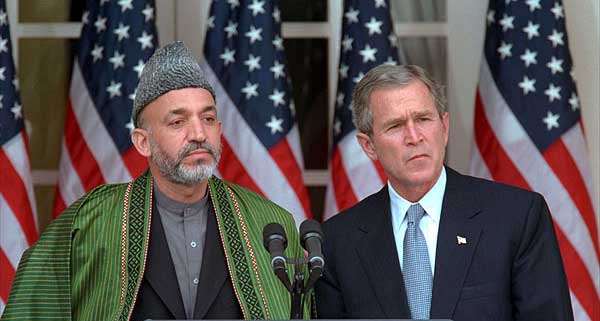
.jpg) Yesterday in Kabul the so-called Quadrilateral Coordination Group -- comprising representatives from Afghanistan, Pakistan, China and the US -- met to hold discussions on a roadmap to peace in Afghanistan.
Yesterday in Kabul the so-called Quadrilateral Coordination Group -- comprising representatives from Afghanistan, Pakistan, China and the US -- met to hold discussions on a roadmap to peace in Afghanistan.
A former Taliban senior official said that “military confrontation is not the solution” and that a “political solution” was needed to end the war in Afghanistan. “The motivation for peace talks was very weak in the past,” Mohammad Hassan Haqyar said. “But now the situation has changed and the parties seem to have a readiness for dialogue.”
Speaking before the meeting, Sartaj Aziz, the shrewd Foreign Affairs adviser to Pakistan’s Premier Nawaz Sharif, said that “the primary objective of the reconciliation process is to create conditions to bring the Taliban group to the negotiation table and offer them incentives that can persuade them to move away from using violence as a tool for pursuing political goals”.
Some have compared these negotiations to those between the Vietcong and the Americans that brought a successful end to the Vietnam War. In fact the two situations are not comparable. The Taliban, the ultra-fundamentalist Islamic guerilla movement, doesn’t hold a great deal of Afghanistan’s territory. The Vietcong controlled well over half. Shortly after the peace agreement they tore it up and captured Saigon, the capital of the South.
In Afghanistan, although US troops are being drawn down fast and now only amount to 10,000 plus a small contingent of aircraft the Americans are relying on the Afghan Army, which they have trained well, unlike the Iraqi Army which disintegrated last year before the onslaught of ISIS. Nevertheless, the Army is being battered. The 352,000 strong Army and Police last year sustained 28 per cent more losses than in 2014. A complicating factor is that ISIS has recently entered the fray joining the once defeated Al-Qaeda. Al-Qaeda was the target for the original act of war made a few days after the 9/11 attack on the twin towers of New York. US and British jets effectively destroyed it. Stupidly the allies stayed on, widening their purpose far beyond the limited goal of destroying Al-Qaeda that President George W. Bush had announced was the bombings only purpose. The Americans and their NATO allies decided that they wanted to defeat the Taliban and other hostile groups so that Afghanistan could become democratic and treat its women right. Today the Taliban are making ground and fight with a ferociousness that suggests they will always be a significant force in the country. They don’t have the strength to challenge Kabul and the power of the central government, but they have in the last year overrun military bases, district centres and security checkpoints, seizing many weapons. They now control more territory since the time before American forces kicked them out in 2001. They have taken most of the province of Helmand in the South. This gives them control over a large area of poppy growing. They are making money selling opium to buy sophisticated weapons. Nevertheless, there are reliable reports that the Taliban are splitting as a result of two antagonistic claims for the leadership following the death of its powerful leader, Mullah Omar.
What are the chances of the peace negotiations working? The political scientist James Fearon has noted that only 16% of civil wars and insurgencies end through a negotiated peace settlement.
Although some say that parts of its intelligence service is still pro- Taliban, there is also a fear that unless the war ends the increasingly-powerful Pakistani Taliban will cause severe problems