Reply To:
Name - Reply Comment
.jpg)
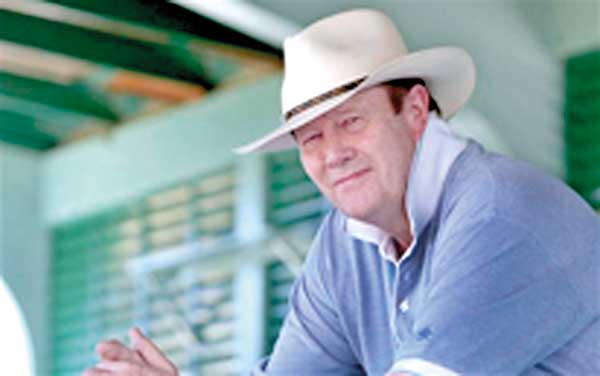
Greig had recently been diagnosed with a lung cancer but it was not the illness which claimed him. He suffered a sudden heart attack at his Sydney home and died on his way to hospital the day after the Boxing Day test ended prematurely. He was sixty-six.
Tony Greig held a special place in the hearts of Sri Lankans. That was not because he was a brand ambassador for Sri Lanka Tourism or because he endorsed several products in the local market. It was because he rooted for Sri Lankan cricket, when it was not fashionable to do so.
Anthony William Greig was born in South Africa to a Scottish father and a South African mother and was raised there. However, his British parentage gained him the right to play for England at a time when South Africa was in cricketing exile because of its apartheid policies.
A little known fact is that Greig battled with epilepsy from his teenage years. He attempted to conceal this from the public and was successful until he had a seizure at an airport. Later he went public with his illness and became an advocate for its proper treatment.
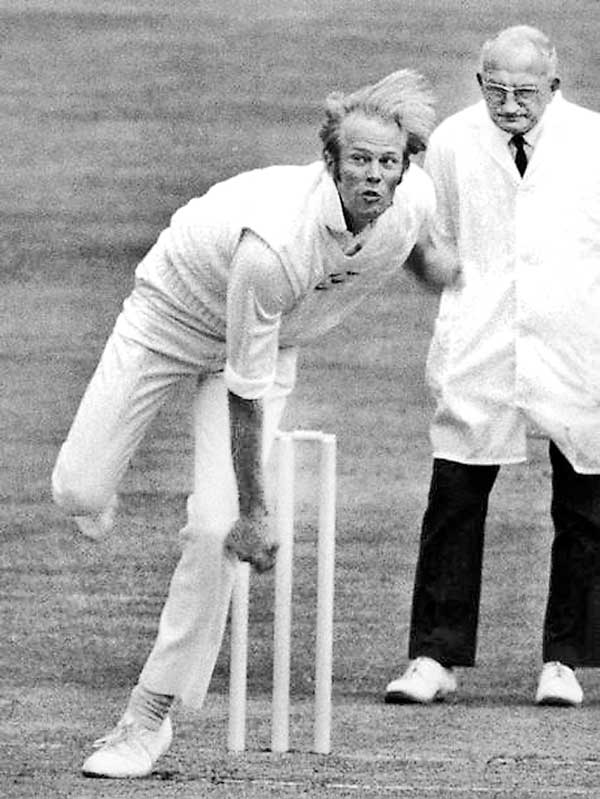
Greig soon made his mark in the English county circuit and made his test debut in 1972 against Australia. His potential as a cricketer was soon obvious to the English cricket authorities and he was appointed the England cricket captain just three years later.
In the cricketing arena, he was known as a fierce competitor. In a test with the West Indies in the Caribbean, he once ran out batsman Alvin Kalichcharan as he was walking off assuming that the day’s play had ended. It nearly caused a riot and the dismissal was later reversed.
In another incident, Greig said he would make the West Indians “grovel” during their tour of England. This was interpreted as a racial remark, given his South African origins. England lost and Grieg literally went on hands and knees, groveling before a cheering English crowd.
Greig’s captaincy of England was to be a short lived tenure. In 1977, Greig helped Australian media tycoon Kerry Packer recruit cricketers for a then revolutionary concept, ‘World Series Cricket’--cricket played at night, with a white ball in coloured clothing.
Greig’s assistance in procuring the services of cricketers not only in England but also in Australia and the West Indies cost him the England captaincy and he became an outcast in the eyes of the English establishment-but the World Series was a huge commercial success.
His international cricket career was cut short to just five years by World Series Cricket, Greig began a career as a cricket commentator. It was a job that he excelled in and lasted until his death last week. It was in this capacity that he won the admiration of millions of Sri Lankans.
Greig’s first encountered Sri Lanka in 1977, captaining the visiting English team when Sri Lanka had yet to gain test status. Then, Greig played against a team that included Ranjith Fernando and the late Ranil Abeynaike who would become his fellow commentators later.
Grieg’s love affair with Sri Lanka however really began in 1995 when our cricketers embarked on an acrimonious tour of Australia where Muttiah Muralitharan was called for chucking in another infamous Boxing Day test.
.jpg) While his colleagues in the commentary box sided with Umpire Darrel Hair, Greig took a bold stance, defending Muralitharan. He took some flak for speaking against the interests of his adopted country, but he did not yield his stance.
While his colleagues in the commentary box sided with Umpire Darrel Hair, Greig took a bold stance, defending Muralitharan. He took some flak for speaking against the interests of his adopted country, but he did not yield his stance.
On international airwaves, Greig’s soft spot for Sri Lanka was well recognised and he was often teased about it by his fellow commentators but he persisted and some of the phrases he coined-such as ‘little Kalu” for Romesh Kaluwitharane- have stuck in cricketing parlance.
It was entirely fitting that Greig was at the microphone when Arjuna Ranatunga hit the winning runs to win the World Cup in Lahore, again against Australia. Millions of Sri Lankans who watched that moment on television will always remember Greig’s commentary.
“These Sri Lankans are giving the Aussies a real hiding”, Greig said and added “This is a little fairytale. The thing that I like about these guys is that they not only win, but they win in style. It is only a small place, Sri Lanka. And what a moment this is for Sri Lankan people”.
As Sri Lanka’s cricket gained ascendancy in the post-1996 era, Greig was a frequent visitor to our shores to commentate on international games. With his cheerful and excitable voice he popularized not only our cricket but its pineapples and natural beauty with equal gusto.
When Greig said that he had lung cancer, thousands of Sri Lankans sent ‘get well’ messages.
A visibly moved Greig said “It’s a very special feeling in the heart of someone that there is a nation of cricket-lovers like the Sri Lankans, who care about an individual like myself”.
Greig’s demise comes at a time when Sri Lankan cricket is in a shambles. Its cricketers delivered their worst ever performance in decades last week, the cricket administration is run more often than not by men with political ambitions and its coffers are nearly empty.
Several ageing seniors in the team whose recent contributions are questionable are likely to retire soon-with no replacements in sight. Others have turned mercenary, claiming test cricket is too strenuous but performing day in and day out in Australia, in the T20 league there.
Sri Lankan cricket will be poorer without Greig. He managed to transcend the deep political divisions among local officials. He was friends with them all and was yet able to speak his mind freely. Most of our cricketers were his personal friends and the respect was mutual.
Tony Greig-like Arthur C. Clarke before him-was a Britisher who was besotted with Sri Lanka. Like Clarke, perhaps even more so, he carved a niche for Sri Lanka on the global map. Moreover, he believed in Sri Lankan cricket, even before Sri Lankans themselves did.