AI SUMMARY GENERATED ONLY FROM THIS ARTICLE'S TEXT.
Commemorating the 20th Death Anniversary of Lalith Athulathmudali
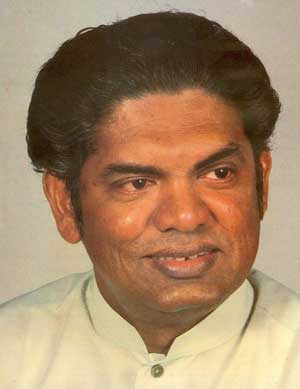
Twenty years have passed since the tragic death of Lalith Athulathmudali, a visionary politician, educator and acclaimed lawyer who pioneered the concept of ‘Mahapola’. Athulathmudali a President’s Council was the only Sri Lankan who held the prestigious post of President of the Oxford Union. Athulathmudali who was former Minister of national security, agriculture, education and deputy minister of defence was fatally shot while addressing a gathering at a election meeting on April 23, 1993.
I recall as a Member of Parliament, visiting India on their 50th Anniversary of Independence. On our request, the Indian government gave us an opportunity to meet with the Head of the National Planning Commission. Even at that time India had had ten or eleven National Plans of Action of four-year duration, all of which were passed and acted upon. We had only one such National Plan of Action somewhere during Independence and were embarrassed to acknowledge that we had not had a plan since then. An actionable plan is one of the greatest needs at the present time.
Many a reader would agree that the present predicament is a result of the absence of a visionary leader. This situation calls for a true statesman in the calibre of Lalith Athulathmudali, Gamini Dissanayake or for that matter Lakshman Kadiragamar. And that is why I keep referring to the vision of Lalith in relation to many a sphere of activity.
Recently it occurred to me that Mr. Athulathmudali had earned a strong following among the clergy and the public alike. At a recent meeting the majority of monks and laymen kept referring to his style of governance and were lamenting his absence.The reason why people agreed unanimously on this is because he is still considered by everyone as a practical problem solver. These are all indicators that Mr.Athulathmudali was a pragmatic leader who touched the lives of all Sri Lankans.
The vision Lalith had for Sri Lanka which he wrote in the 1990’s at a time he was disillusioned with the Premadasa government, is still valid.
Take for instance the national issue. We can all rejoice that Sri Lanka has defeated the LTTE and won the battle locally. The victory will only be complete if we can win the war internationally, although, reluctantly we will have to accept that we are losing face in the eyes of the international community, because we have failed to consider that every action has an equal and opposite reaction. Lalith’s wisdom was such that he knew that the national issue was twofold; the military battle with the LTTE and the North East issue. He always worked with the firm belief that both these issues needed to be addressed to resolve the national issue. Even today, his approach is relevant. It is the responsibility of the advisors to provide sound advice to the country’s leadership to use diplomatic language in these international engagements.
Lalith’s vision of a Foreign Policy
“Our foreign policy will be an extension of our domestic interest realistically projected against the background of a rapidly changing international scene. Accordingly we advocate a policy of friendship with all, but alliance with some. We will show malice to none but magnanimity to all. Within that framework the highest priority will be accorded to nationals in the geographical proximity of Sri Lanka”
He went on to add “we are aware that conflicts in Sri Lanka have ruined our image abroad on the issue of human rights. Therefore we will have a judicial inquiry into disappearances and torture of our citizens during the past years. Such a judicial panel will include judges from nations which have consistently been critical of us. Indeed we are mindful that issues pertaining to human rights are becoming a new vital component in the field of foreign relations”. Both these statements prove that he envisioned the difficulties if we did not have a clear foreign policy.
During his time he was very careful in using diplomatic language and tone with other countries. He firmly believed that even one word out of place could do untold damage. Diplomatic relations were something he handled with utmost care.
In the last Human Rights Session in Geneva, the facial expressions of the Sri Lankan Delegates showed that we were not ready to engage positively with the international community. Sadly we are facing the consequences of believing that arrogance is the way out of trouble. Today those who have been ‘air dropped’ into diplomatic posts have not heard the saying ‘when in a pit, stop digging’. Appeasing the local crowd seems to be the plan. We have lost our common sense and take pride in insulting. Even our ‘leaders’ love to slander international leaders, thinking that saying things in the local language would not be conveyed to them. We fail to understand that we are a small country with nothing of great economic value to offer, therefore fighting with economic powers is not the wisest thing to do. The trend is followed even by the local media. When Mr. Athulathmudali was a Cabinet Minister, there was only one person appointed to make statements whereas now, from the cabinet ministers to the Pradeshiya Sabha MP, everyone makes comments on international affairs.
No one seems to be studying or analysing the situation to find a strategy for redress. We should make every attempt to win over countries and not to antagonise them. The UN and its members have their own agenda and we should be mindful about it. I remember during the Falkland’s war, Sri Lanka supported the United Kingdom at the UN on an important resolution. As a result, we received a lot of support from the UK. Today, we seem to be failing in making strong alliances with anyone. We must also not forget the commitments we have made on these treaties and the honour of fulfilling them. All these have placed us in a situation where we are locally on top of the world and internationally, down in the dumps.
What would have made Mr. Athulathmudali very sad is the fact that a government has to retain Public Relations Companies (using public funds) to resurrect an image, so ruined by the idle talk of ignorant people. Promoting the country and safeguarding her image was the bounden duty of the President, Prime Minister, Cabinet Ministers, Secretaries and members of the diplomatic corps. But today, the image of the country is being tarnished at the speed of lightning and he would have believed a PR company could prop up any ill-reputed country without first resolving the issues at hand.
Healthcare
Lalith Athulathmudali was a wise man who knew that healthcare did not necessarily mean hospitals and medicine. His vision to improve primary healthcare started with developing water supply in all areas to ensure purified drinking water for all and physical education and preventive programmes. In addition to that his vision included improving basic sanitation and removing environmental hazards while advocating families on nutrition and balanced diet. From the government perspective he also felt it was important to adopt a suitable pricing policy on basic essential nutritional items. These were simple yet pragmatic suggestions. If today’s leaders could consider any of these options we could really maintain a top spot in the region in terms of primary health.
Agriculture
Lalith himself was someone who loved agriculture. Even at a very personal level he had his own little land in Alawwa where he planted many trees and taught his daughter the value of agriculture and the protection of the environment. Since he also held the portfolio of Minister of Food and Agriculture, he held a beautiful vision for this country which was traditionally an agricultural society. He strongly felt the need to protect the farmer and for the price stabilisation of their produce. Establishing export production villages (EPVs) was one his dreams. Today, the local farmer is at a loss. He is unsure of what he is going to cultivate or whether there would be any reason for him to continue as a farmer. He faces enormous problems from securing manure or fertiliser to water, to transporting his produce without losing his profit to wastage. All these areas need state intervention and state patronage immediately. Lalith’s vision for the agriculture sector included all these and more measures to safeguard the local farmer.
Religion and Culture
Lalith’s basic principles in a multi-religious and multi-cultural society was to respect all religions and foster national harmony. Today this has become something of national importance as there seems to be hatred spreading towards other cultures and religious intolerance. Frighteningly, the state has not made any clear comment on the goings on as if to indicate that it was acceptable.
Education
“The biggest problem in the Ministry of Education is its priorities. Today, the first two priorities of Education is the Department. But as long as I am holding this post, the first priority of the Ministry is children! Second priority is children! The third priority is children! Everything should be viewed from the point of view of children, the students. Secondly things should be seen from the point of view of teachers and then parents,” said the late Mr. Lalith Athulathmudali in 1990; addressing the first meeting with the Staff of the Ministry of Education, as the Minister for Education. He firmly believed that the need of the hour (way back in the 1990s) was an educated society. He also knew that the real benefit of free education was to have a society where people could think for themselves. At a time when experienced educationists feel that the country’s education is moving away from the right track and free education is not totally free, his absence is being truly felt.
Lalith always said that policy decisions on education should be made with utmost care as their results, good or bad will be felt about 20 years after. Particularly if there were ill-effects of an unsound decision, it would take another 30 years to be redressed and for positive results to come about. This has proven true with regard to the Swabhasha Act. Fifty years later, we are still suffering due to this change in policy.
Governance
Mr. Athulathmudali’s approach to governance was “more democracy and less bureaucracy”. His vision encompassed providing services such as water, electricity and transport at lesser costs to households and business establishments, to improve productivity in the country. At a time when the electricity charges are being raised, we need to understand that the Electricity Board has become an employment generation venture of successive governments and there is untold damage that it is doing to the economy. He believed in equity. His plan for this country was while the agricultural sector was developed, the infrastructure should be developed along with roads and transportation facilities for the development of everyone and for an economically independent Sri Lanka.
“Coherent policies for national development are becoming absolutely paramount, as a result of formulating national policies is a growing need. It is therefore essential to set up a national think tank comprising a wide range of academics, professionals and intellectuals. This think tank shall evaluate all proposals, views and ideas submitted by any interested party and advise the government of their recommendation”
He would have been the one to steer that think tank and the country. If only this country was fortunate enough to have a statesman such as Lalith Athulathmudali at a time like this!
Comments - 0
Comments - A Vision valid for all Seasons
222
Add comment
Comments will be edited (grammar, spelling and slang) and authorized at the discretion of Daily Mirror online. The website also has the right not to publish selected comments.



_Recast-DM-9_022.jpg)