Reply To:
Name - Reply Comment
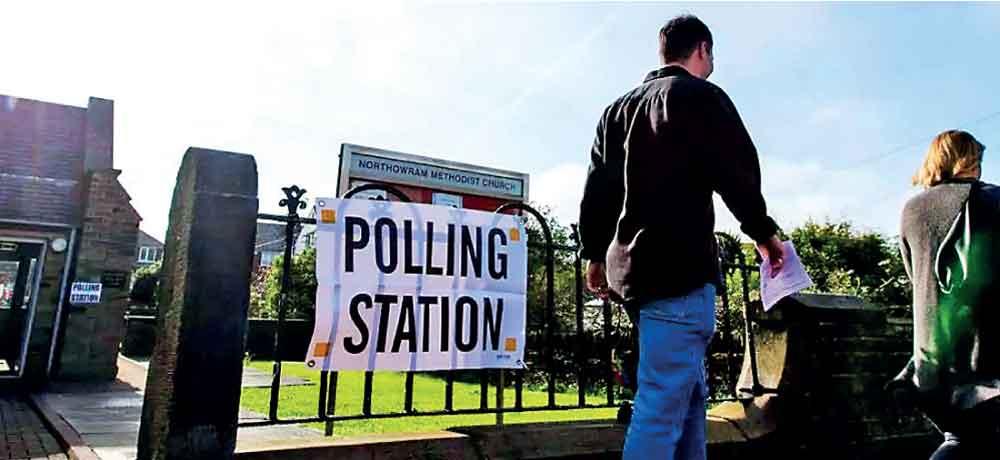
The recent Local Government Elections in Britain, the Green Party surged, and the Tories lost to Reform
 The recent Local Government Elections in Britain had thrown the Labour Party into disarray. The Labour Party was routed, losing 38 councils it previously held, and nearly 1,500 councillors. Nigel Farage’s ‘Reform UK’ broke through Labour’s red wall, winning 14 councils, a net gain, and over 1,450 councillors.
The Green Party surged, and the Tories lost to Reform, but the Labour collapse overshadowed the Tories’ misery.
The election marked the first breakthrough by the Reform Party into the political mainstream, riding on a populist campaign on anti-immigration. It capitalised on the disgruntled working-class electorate fatigued by the high cost of living and immigration, and the growing unpopularity of Prime Minister Keir Starmer, skilfully converting the public apathy into a campaign slogan “Vote reform, Get Starmer out.”
The Labour, on the other hand, suffered a pincer attack from both sides, losing its working-class voters in the traditional conservative heartlands to the Reform, and progressive young urban voters to the newly emboldened Green Party. The fractured electorate meant the Reform won many places where it polled barely 30 percent of the total vote. The results mirror what would most likely to be the outcome of a future general election, which would be three years from now. A potentially three-way race in an increasingly fragmented electorate would favour the Reform, unless Labour resorts to electoral arithmetic that their French counterparts had often opted to keep the far-right National Rally out of political power.
What is probably in the interest of the Sri Lankan observers is what followed next. The Labour collapse had set off a potential leadership challenge. Over 70 Members of Parliament, including the Home Secretary, have called for Prime Minister Keir Starmer’s resignation. Numbers are growing, though Starmer has so far resisted.
This should make Sri Lankans, especially the supporters of Samagi Jana Balawegaya (SJB) and the United National Party ( though it might be a tad too late for the UNP), ponder what is wrong with their politics. Here are party leaders, serial losers, indeed, who unrepentantly and shamelessly cling to party leadership, one defeat after another.
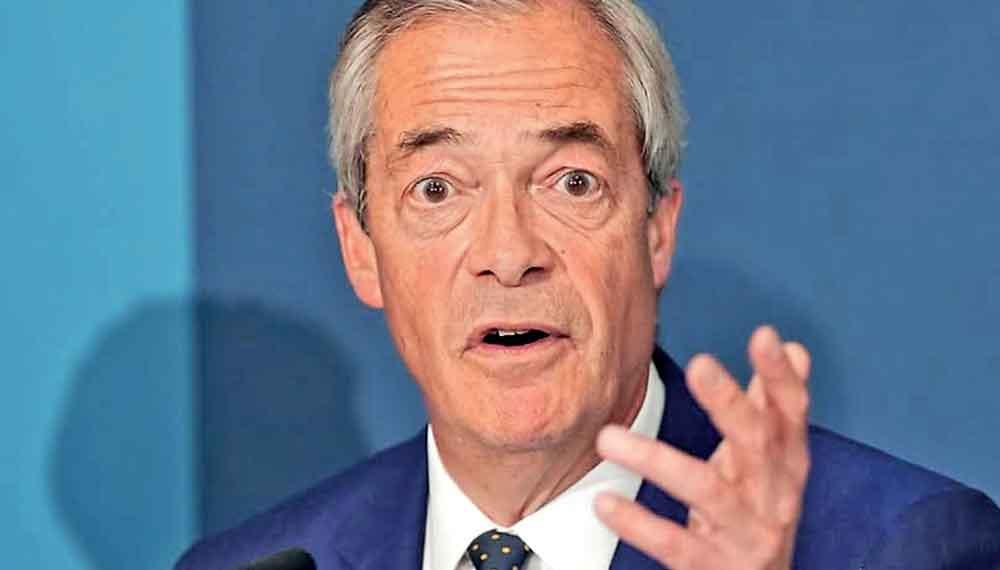
Nigel Farage’s ‘Reform UK’ broke through Labour’s red wall, winning 14 councils, a net gain, and over 1,450 councilors
Ranil Wickremesinghe had hung on to the UNP leadership from the mid 90s until now, despite a series of defeats, perhaps the most in any multi-party democracy. The UNP is now a skeleton of its former self and unlikely to be resurrected. The SJB that was set up by UNP defectors (almost all UNP MPs save a handful), tormented by Wickremesinghe’s grip on power, has not done better. Sajith Premadasa remains at its helm after three consecutive defeats in a Presidential election, General election and local government polls. Premadasa’s egotistic folly to throw his hat into the presidential election, effectively turning it into a three-way contest, disenfranchised over half of the Sri Lankan electorate, and handed the election to Anura Kumara Dissanayake. In any Parliamentary democracy, an idiocy of that scale would not go without repercussions. But here in Sri Lanka, he reigns over the SJB through multiple electoral defeats, and even more alarmingly, with no clear vision or future chance of success.
The Paradigm shift of Sri Lankan politics since Aragalaya suggests that dynasticism as the only qualification has now become a disqualification. There will always be suckers and a die-hard core of a skeleton, which would mean the SJB would win here and there, but political power would remain a distant dream.
This is a dangerous prospect, not just for the SJB but for Sri Lankan democracy, which risks dissolving into a one-party system. The fault is not with the ruling JVP-led NPP, though, the historical track record of militant left in political power across the world, especially in Latin America, suggests a tendency in that direction. However, Sri Lankan politics is hollowed out within by the main opposition itself.
A free-wheeling multi-party democracy can not function without inner-party democracy. No amount of complaints to the Commonwealth Parliamentary Secretariat, about the abolition of MPs’ pension and other imaginary and (minor) real grievances, could fill that lacuna.
Sri Lankan political parties – SJB, UNP and SLPP – are a miniature model of what Indian political scientist Dwaipayan Bhattacharyya described as ‘party society’ in Mamata Banerjee’s West Bengal, where the party embeds itself in the rural electorate through well-oiled patronage networks. In Sri Lanka, both UNP and Mahinda Rajapaksa tried to replicate the same, but now the party society is more prevalent within the working committees, where acolytes are appointed and rewarded, primarily for their loyalty by the leadership, effectively building an ironclad defence against any leadership challenge. And then the party loses the next elections, and acolytes, yet again, vow loyalty to the losing leader.
That also explains why not a single MP or a stalwart has demanded a leadership change, let alone offering a leadership challenge.
Sycophancy may play a role, but the greater ill lies with the structure. The British Labour or Tories, for instance, have a clearly laid out mechanism for the election and challenge of leadership. The Labour Party operates a three-tiered voting system, which triggers a new election whenever an incumbent resigns, dies or is challenged through an internal coup. In the latter scenario, the challenger should secure the signature of 20 percent of MPs and MEPs to trigger a formal ballot.
Second, a leadership challenger should secure the support of 5 percent local and affiliate (trade unions).
Third, all fully paid party members, affiliated supporters, and registered supporters, which altogether amount to hundreds of thousands of voters, could cast their vote. That provides for more pluralistic and democratic space for leadership selection than a few party insiders and cronies endorsing a leader, as is the Sri Lankan case.
In Sri Lanka, the party members have no say over who their leader is. Inner Party working committees and delegates, handpicked by the leader, then elect the leader. That is a farce. The consensus mechanism opted to elect the leader, instead of British-style competitive elections at the party grassroots. It fosters a culture of cronyism and sycophancy, and discourages free and fair contest.
Democracy in Sri Lanka has evolved over decades, with an independent election commission now regulating the entire election process. But, inner party democracy has not. It is stuck where it was in the 1950s when D.S. Senanayake hatched a plan with the Governor General to enthrone his son Dudley at his death. This vacuum has been filled by dynasticism and half-baked nincompoops, with splendid lineage but nothing more, who offer no vision. That political culture has now been rejected. If the UNP and SJB insist on its perpetuation, that would lead Sri Lankan democracy to great peril. They should change and adopt competitive elections for leadership, or perish.
(Follow the author on @Ranga Jayasuriya on X)