Reply To:
Name - Reply Comment
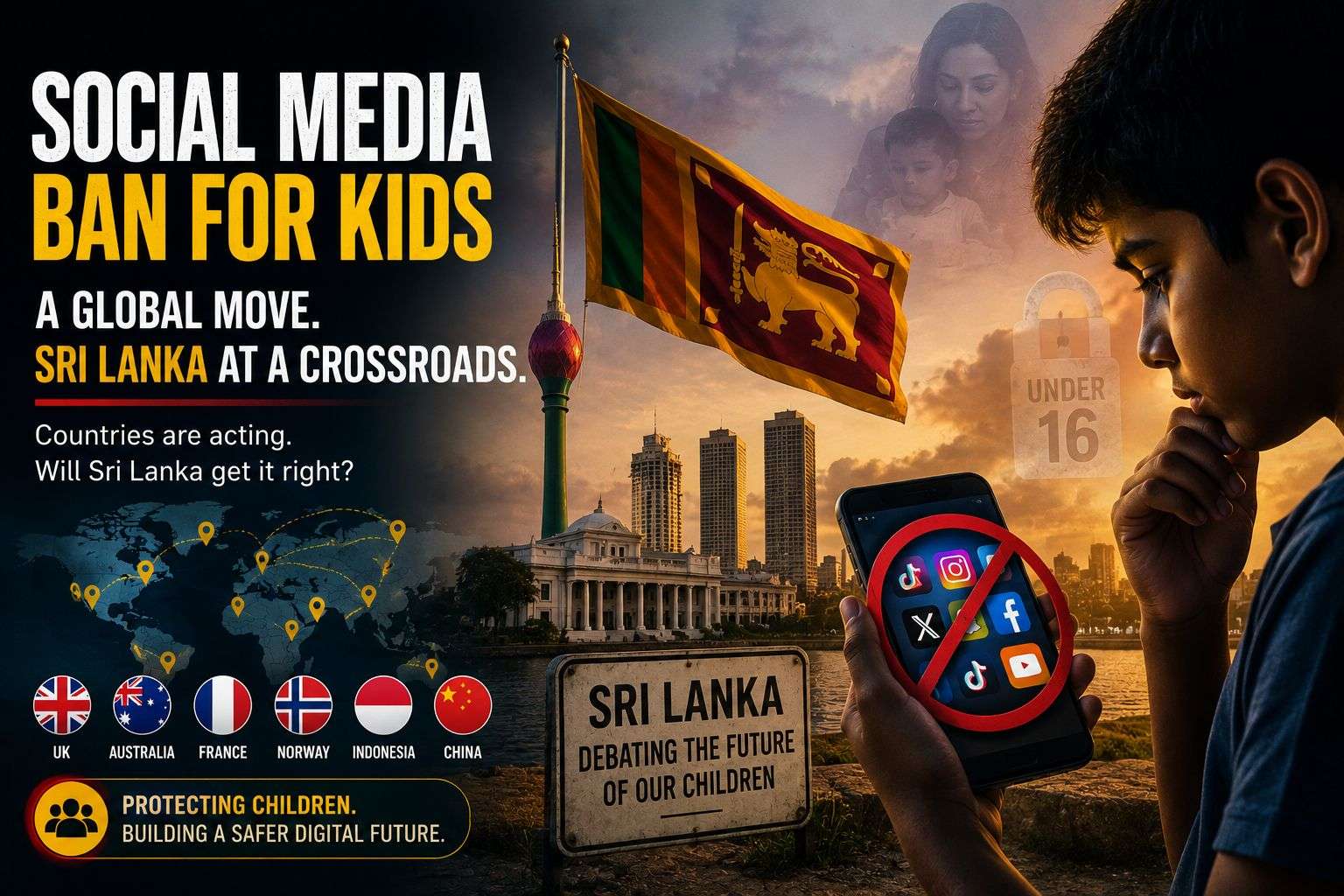
For more than two-thirds of the world’s population, social media is a basic part of everyday life. The 2026 DataReportal Digital Global Overview Report indicates that the number of social media users has reached 5.66 billion, which is equivalent to more than 68% of the world’s population. According to the report, the average active user spends 18 hours and 36 minutes per week on social media, or roughly two hours and 39 minutes every day. Compounded over a year, that adds up to more than 40 full days spent on these platforms.
From a South Asian perspective, the numbers don’t differ much. Research studies indicate that Facebook and WhatsApp dominate across South Asia due to their versatility for messaging, networking and business. However, content creation platforms such as TikTok, YouTube and Instagram are gaining momentum reflecting a global trend. In the South Asian region, user-generated content such as posts, videos and comments forms the basis of the region’s digital landscape.
With the availability of affordable smartphones and other technological devices, many users are now hungry for connections and content. While this digital revolution brought about a shift in access to content -- both filtered and unfiltered, a greater worry lies in the level of digital literacy amongst users. Today, a majority of users who are new to the technology would blindly share content which is sometimes unverified, or is in fact misinformation created by exploiting algorithmic models.
Misinformation, disinformation, fake news, mal-information and rumours frequently spread on social media have been identified as a major threat to society and public health. But little do people know about the harm they do by simply sharing such content, thereby amplifying the threats. This is because false or inflammatory content provokes stronger emotional reactions (like outrage or surprise), thereby generating more clicks and higher sharing rates.
In Sri Lanka, misinformation, fake news and disinformation spreads like wildfire every time there’s a public health crisis, political uprising such as the 2022 Aragalaya, or a major climate change event such as Ditwah. Such dangerous social media trends were observed during the COVID-19 pandemic as well. These trends have also been observed during elections, sometimes done by various political parties to gain mileage amongst users. From fake cures to glorifying certain vaccines and medication to promoting pseudo-medical practitioners, misleading online content transformed the COVID-19 pandemic into an ‘infodemic.’ Adding fuel to the fire, certain messages shared among WhatsApp groups worsened the situation, causing the public to panic.
Today, this trend continues every time an influential figure is being arrested or brought before the law. Apart from posts, the introduction of AI has made things worse as people have mastered the art of ‘creating’ near-authentic images which is sometimes difficult to be verified immediately. As the technology becomes smarter, verification tools need to be developed with much precision and accuracy in order to justify the credibility, veracity and accuracy of the content.
But the issue with a majority of social media users is the fact they may not be keen to verify facts before clicking on the share button. Despite numerous awareness sessions conducted mostly by private media organisations, the level of digital literacy among social media users remains poor.
Today, it has become next to impossible to dissociate people from social media. For some, it is a kind of stress release but for others it is an addiction. The diversity of content sometimes is increasingly disturbing. Added to that are impacts of hate speech, cyber bullying and cyber harassment which compels people to deactivate their social media accounts altogether. Careless use of social media could damage a person’s dignity, irrespective of the gender, leading to unpleasant circumstances.
Therefore, users need to set their limits with social media because it only takes one click to make someone a hero or a victim, thanks to the nature of engagements on these platforms. So, the golden rule to follow is to use social media at your own risk - because by the time the content is formally reported and Meta decides to act upon it, the damage to the user or victim may have already been done.
‘Your Thought’ is a space, a right of the readers to support or contradict and discuss the issues highlighted in the editorial and other articles in the editorial and op-ed pages. Designed as the reader’s editorial; our readers can send in their writings, with a word count not exceeding 200, to ‘Your Thought’, Daily Mirror Political Features Desk, No 8, Hunupitiya Cross Road, Colombo 2 or email to [email protected]