Reply To:
Name - Reply Comment
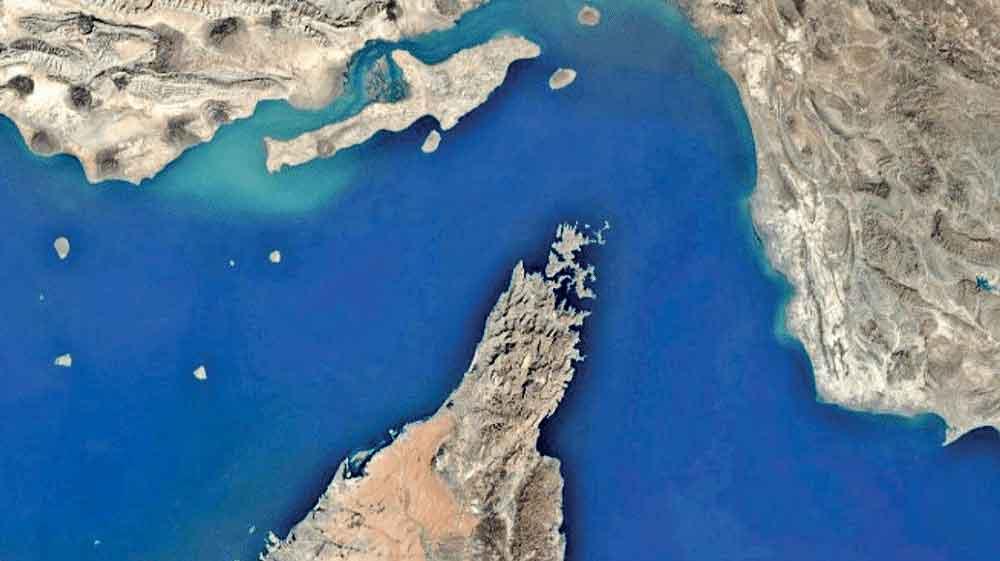
By closing the Strait of Hormuz, Iran has gripped the world by its throat
 As we assess the “way forward,” we must first acknowledge the grim reality on the ground: the strategy of “shock and awe” has failed to produce the expected political collapse. Instead of fracturing, Iran has unified under a banner of national and religious survival
 With the Strait of Hormuz effectively closed and oil prices spiraling the conflict is a global emergency
The Trump administration’s rationale for Operation Epic Fury extended beyond the immediate threat of a nuclear Iran

The world stands at a terrifying precipice. The events of February 28, 2026, have fundamentally altered the geopolitical landscape, perhaps permanently. The joint U.S.-Israeli operation, codenamed “Epic Fury,” which resulted in the assassination of Supreme Leader Ayatollah Ali Khamenei and a decapitation of the Iranian military command, was intended as a swift, surgical strike to catalyze regime change. Instead, it has ignited a regional conflagration that threatens to drag the global economy into a dark age of energy scarcity and hyperinflation.
As we assess the “way forward,” we must first acknowledge the grim reality on the ground: the strategy of “shock and awe” has failed to produce the expected political collapse. Instead of fracturing, Iran has unified under a banner of national and religious survival. With the Strait of Hormuz effectively closed and oil prices spiraling toward $200 per barrel, the conflict is no longer a localized regional dispute—it is a global emergency.
The grand strategy and its miscalculations
The Trump administration’s rationale for Operation Epic Fury extended beyond the immediate threat of a nuclear Iran. It was a move in a much larger “Great Power” game. By striking Iran, the administration sought to:
Contain China: By cutting off Tehran’s energy exports—following the previous containment of Venezuelan oil—Washington aimed to choke the energy-dependent Chinese economy.
Enforce a New Regional Order: Supporting Prime Minister Netanyahu’s vision of a “Greater Israel,” the strikes were designed to remove the only regional power capable of checking Israeli expansion.
However, these strategic goals were built on a critical misunderstanding of asymmetric resilience. The killing of Khamenei did not spark a pro-Western revolution; it turned a controversial leader into a martyr and consolidated the “Axis of Resistance.” Furthermore, the geographical reality of Iran—a mountainous fortress—makes a conventional ground invasion a logistical nightmare that NATO allies have already refused to join.
The Economic Brink: The Hormuz Deadlock
The most potent weapon in Iran’s arsenal has proven to be geography. By closing the Strait of Hormuz, Iran has gripped the world by its throat.
Global Impact: 20% of the world’s oil and gas passes through this narrow waterway.
The Price of War: With tankers unable to transit, the spike in energy costs is causing a “chain reaction” of inflation, hitting everything from European heating to Asian manufacturing.
The Stalemate: While the U.S. and Israel have superior conventional technology, Iran possesses an estimated 45,000 missiles and a domestic drone production capacity that can sustain a protracted conflict for years.
The Failure of Traditional Alliances
A significant blow to the U.S. strategy has been the lukewarm-to-hostile response from traditional allies. The refusal of NATO countries to send warships to force open the Strait indicates a profound rift. Europe, already weary from years of energy volatility, is unwilling to sacrifice its remaining economic stability for a war it views as an illegal act of aggression.
Simultaneously, China and Russia cannot afford an Iranian defeat. For Beijing and Moscow, a US-controlled Tehran would mean total American hegemony over Eurasian energy. Consequently, they are providing Iran with “digital armor”—real-time satellite intelligence and electronic warfare support—to neutralize U.S. and Israeli technological advantages.
A Roadmap to De-escalation
To end the 2026 Iran War, the tri-party (USA, Israel, Iran) must agree to a “Grand Bargain” that addresses the core insecurities of each side:
The “Epic Fury” has shown that while you can kill a leader, you cannot kill a nation’s will to survive through force alone. The world cannot afford a protracted war. If a ceasefire is not reached soon, the collapse of the global financial system may become more certain than any military victory.
The Case for Indian and Sri Lankan Intervention
In this deadlock, traditional Western diplomacy is paralyzed. A “Third Way” is required, led by nations that maintain trust with all combatants.
India: The Essential Mediator
India is uniquely positioned to bridge the gap. Prime Minister Modi maintains a “strategic autonomy” that allows for a robust partnership with Israel while preserving deep historical and energy ties with Tehran. India’s interest is purely pragmatic: its own economic rise is being choked by the $200 oil barrel.
The Proposal: India could host a “New Delhi Summit,” offering Iran security guarantees in exchange for the reopening of the Strait, while providing the U.S. a face-saving exit that focuses on “containment” rather than “regime change.”
Sri Lanka: The Non-Aligned Catalyst
Sri Lanka possesses a storied legacy of non-aligned diplomacy, most notably characterized by J.R. Jayawardena’s transformative role at the 1951 San Francisco Peace Conference, where his advocacy for a free Japan helped shape the post-WWII order. This tradition of high-level mediation continued under Sirimavo Bandaranaike, whose proactive leadership was instrumental in de-escalating the 1962 Sino-Indian border conflict. Her ability to convene neutral powers demonstrated Sri Lanka’s capacity to punch above its weight on the global stage.
However, a significant contemporary challenge lies in the perceived erosion of this diplomatic caliber. There is growing concern regarding whether the current leadership possesses the requisite depth of knowledge in international affairs and the strategic competency to replicate such historic feats. Unlike the era of Jayawardena and Bandaranaike, where visionary statesmanship and a highly intellectual bureaucratic core defined the nation’s foreign policy, today’s landscape demands a sophisticated mastery of complex, multi-polar tensions. Restoring Sri Lanka’s status as a credible “honest broker” requires bridging this widening gap in leadership capacity and global diplomatic expertise.
(The writer is a distinguished International Researcher, Author and analyst with a career spanning over 36 years of service in the Sri Lanka Army, including 20 years in active combat. He is a seasoned Infantry officer and holds a PhD in Economics and has authored 17 books and over 200 research articles. His multifaceted expertise bridges the gap between National Security, Global Politics and Economic strategy. As an entrepreneur and International analyst, he provides strategic insights into the intersection of security and economic policy. He can be reached [email protected])