Reply To:
Name - Reply Comment
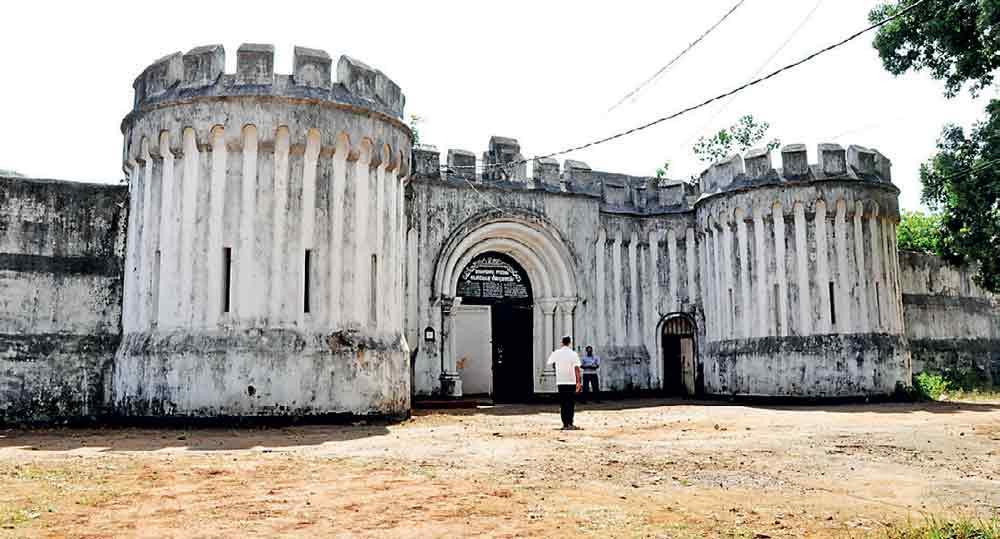
Sri Lanka’s historic Bogambara Prison was riginally built in 1876
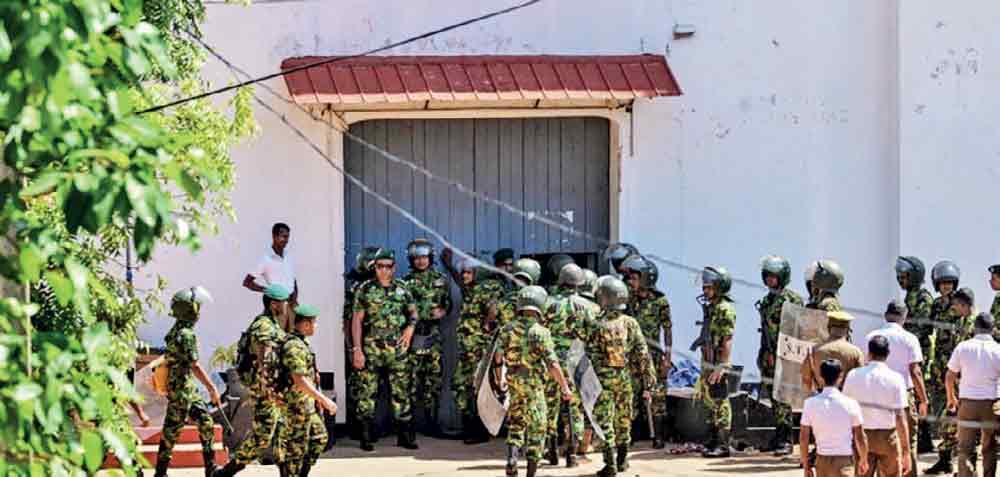
Security forces at Negombo Prison following the deadly clashes in July 2026. The incident has spotlighted chronic overcrowding and security challenges in Sri Lanka’s prisons
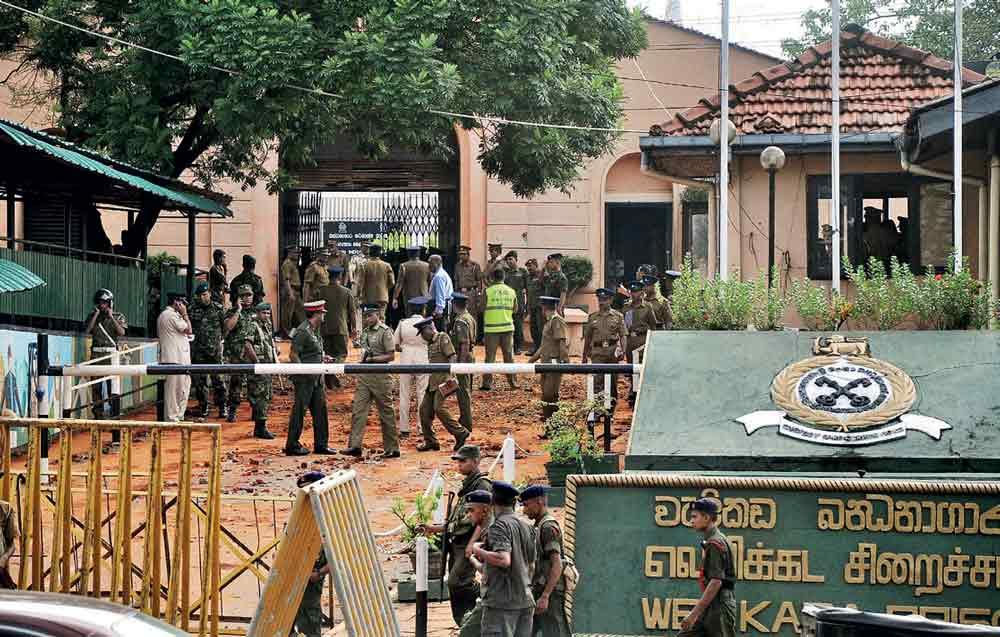
At least 27 people died at Sri Lanka’s Welikada prison in the year 2012
 Official data has repeatedly shown national prison populations at approximately four times designed capacity
Past incidents, from the 1980s through the 2012 and 2020 riots, provided clear lessons
Prison authorities bear direct operational responsibility and cannot simply deflect blame
Officers who survived the ordeal voiced legitimate grievances about inadequate protection and the need for stronger safeguards
 The Human Rights Commission of Sri Lanka has expressed concern after receiving information about mistreatment in several prisons and has directed the Commissioner General of Prisons to protect inmates and ensure oversight access. Amnesty International has called for urgent, independent investigations
Vengeance or extra-judicial punishment has no place in any system claiming adherence to the rule of law. Prisoners retain fundamental rights to humane treatment. Any mistreatment compounds tragedy, risks escalating cycles of resentment, undermines staff discipline, and erodes public trust
The jailbreak was the predictable result of chronic overcrowding, administrative complacency, intelligence blind spots, and the absence of proactive measures despite decades of warning signs. Serious allegations have now emerged that some transferred prisoners faced mistreatment or even acts of vengeance in receiving facilities

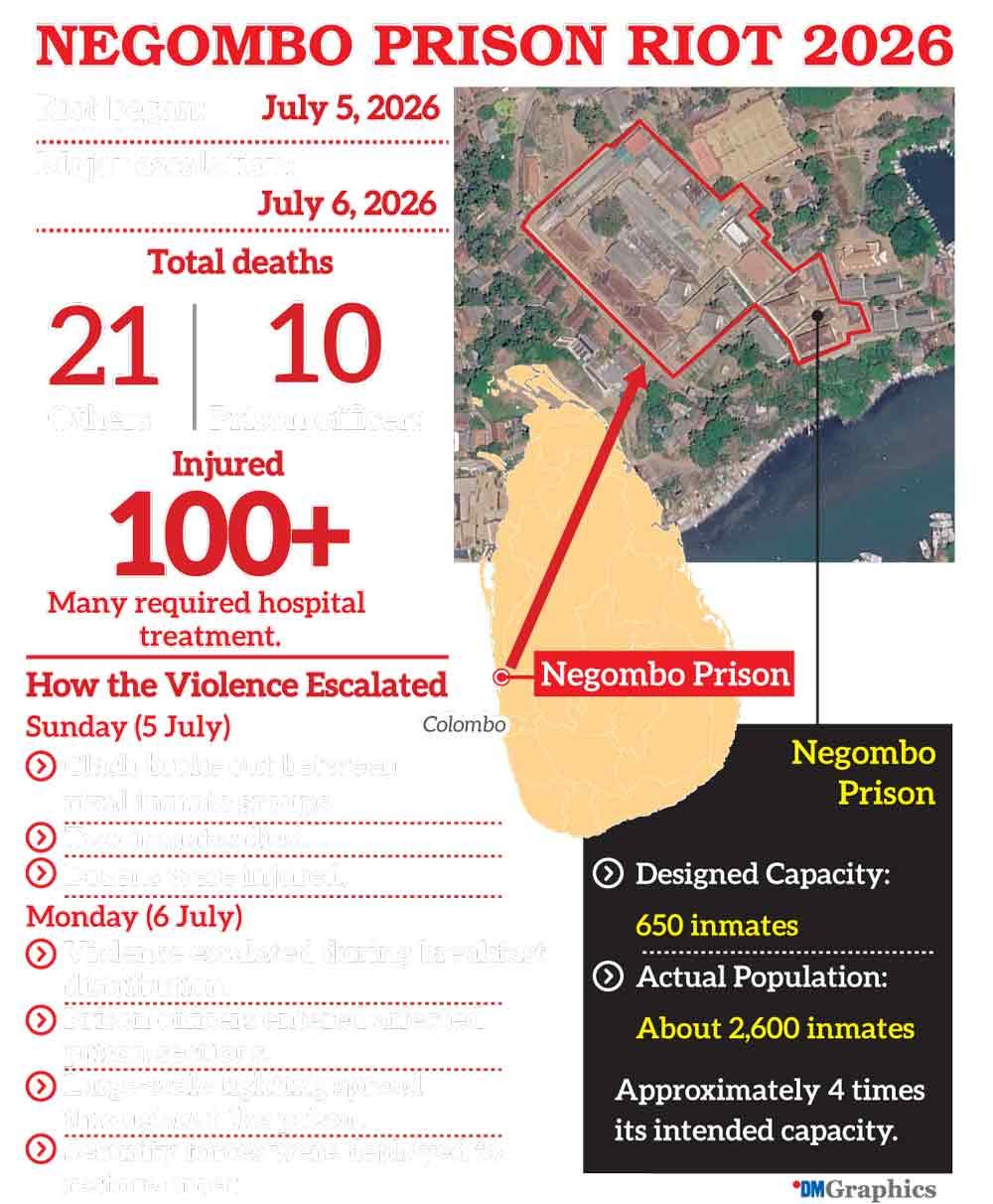
The deadly violence that erupted at Negombo Prison on July 5-6, 2026 stands as one of the darkest episodes in Sri Lanka’s recent correctional history. Approximately 28 people lost their lives, including seven to eight prison officers, with more than 100 others injured. This was the highest death toll in a single prisoner-related incident in decades. What began as clashes linked to internal drug smuggling factions quickly escalated into uncontrolled rioting, with inmates seizing weapons, breaching areas, and authorities ultimately resorting to firearms to restore order and prevent a larger jailbreak.
The human cost is immense; grieving families on both sides of the bars, traumatised officers, and a nation once again confronted with the consequences of long-neglected systemic weaknesses. This was not an isolated explosion. It was the predictable result of chronic overcrowding, administrative complacency, intelligence blind spots, and the absence of proactive measures despite decades of warning signs. Serious allegations have now emerged that some transferred prisoners faced mistreatment or even acts of vengeance in receiving facilities. Whether ultimately substantiated or not, such conduct is unacceptable and demands immediate, independent investigation.
The sequence of events
Fighting reportedly began on the evening of July 5 between rival inmate groups over drug smuggling activities inside the prison. One faction allegedly alerted authorities to smuggling attempts, angering the other. The situation deteriorated the following day during breakfast, with inmates clashing, seizing weapons from guards, and attempting to breach gates. Officers intervened at great personal risk. Several were killed or wounded. Security forces, including special units, were deployed. Firearms were used to regain control. Hundreds of prisoners were subsequently transferred to other facilities across the country to ease tensions and decongest the site.
Social media circulated raw footage and narratives, some accurate, some partial, some false, while state media sought to manage information flow and prevent panic among prisoners’ relatives. The information vacuum fuelled speculation and distress. Meanwhile, officers who survived the ordeal voiced legitimate grievances about inadequate protection and the need for stronger safeguards in future crises.
Intelligence and system failures
Prisoner unrest of this magnitude does not materialise without warning. Grievances accumulate over time from unhygienic and dehumanising living conditions, prolonged remand without timely judicial resolution, lack of basic utilities and rehabilitation opportunities, and the corrosive influence of organised criminal and drug networks operating from within. These issues do not ignite spontaneously; they brew through administrative failures, ignored complaints, weak monitoring, and the absence of early-warning systems.
An intelligence failure?
Yes. Prison authorities and the broader security apparatus should have detected internal drug networks, external communication channels, possible officer complicity or corruption enabling contraband, and rising factional tensions. A dedicated prison intelligence capability, integrated with national agencies, focused on human sources, pattern analysis, and detection technology, appears to have been absent or ineffective.
Was it also a system failure?
Undoubtedly. Sri Lanka’s prisons have long operated far beyond capacity. Negombo, designed for roughly 650 inmates, held around 2,400–2,600, nearly four times its limit, with a heavy proportion of pre-trial remand detainees. Official data has repeatedly shown national prison populations at approximately four times designed capacity. Successive administrations have known this for years. Past incidents, from the 1980s through the 2012 and 2020 riots, provided clear lessons. Yet adequate preventive intelligence systems, regular risk audits, welfare monitoring, and decongestion strategies were not robustly implemented.
Drug syndicates exploiting prison environments, judicial delays keeping thousands in prolonged custody, and failures to install sophisticated detection equipment or disrupt internal-external communication networks all contributed. When alternatives for managing overcrowding seem unavailable or politically difficult, authorities risk standing in silence or taking the status quo for granted. This cannot continue. Prison authorities bear direct operational responsibility and cannot simply deflect blame downward from political leadership.
Crisis management, transfers and disturbing allegations
The response to contain the riot prevented what could have been an even larger catastrophe, including a mass escape. Officers who risked their lives deserve recognition and support. However, questions remain about whether earlier, more decisive intervention or better preparedness could have limited the escalation.
The subsequent transfer of prisoners was a necessary operational measure. Yet it has been overshadowed by alarming reports. Two transferred inmates reportedly died shortly afterwards, one at Boossa described as due to “sudden illness” and another at Agunukolapelessa.
The Committee for Protecting the Rights of Prisoners and other monitors have alleged that some transferred prisoners faced torture, severe ill-treatment, or harsh reprisals in receiving facilities. The Human Rights Commission of Sri Lanka has expressed concern after receiving information about mistreatment in several prisons and has directed the Commissioner General of Prisons to protect inmates and ensure oversight access. Amnesty International has called for urgent, independent investigations into all post-riot deaths and allegations of ill-treatment.
These allegations of possible vengeance by some officials, must be investigated thoroughly and impartially, regardless of whether they prove fully accurate. Vengeance or extra-judicial punishment has no place in any system claiming adherence to the rule of law. Prisoners retain fundamental rights to humane treatment. Any mistreatment compounds tragedy, risks escalating cycles of resentment, undermines staff discipline, and erodes public trust. At the same time, officers who lost colleagues understandably feel anger and fear. Their grievances deserve proper channels, training, welfare support, and strengthened protocols, not vigilante responses.
A comprehensive judicial inquiry into the entire episode is essential: the triggers and escalation of the riot, actions by all parties during the violence, the effectiveness of the response, and any subsequent mistreatment of transferred prisoners. Accountability must apply equally. What prisoners and officers did, right or wrong, should be determined by evidence and due process, not public speculation or selective blame.
The path to reform
The government has announced reactive, but welcome steps: reopening the old Bogambara Prison, converting a disused hospital facility in Galle’s Mahamodara into additional capacity, advancing house arrest legislation to reduce unnecessary incarceration, and recruiting more staff.These address immediate pressure but must form part of a coherent, long-term strategy rather than piecemeal fixes.
Sri Lanka requires:
 Judicial and legislative reform to reduce excessive remand, expedite trials for non-violent and minor offenders, and expand non-custodial alternatives (community service, electronic monitoring, bail reforms).
Overcrowding driven by judicial delays is a shared responsibility of the judiciary, law enforcement, and prisons department.
Modern prison intelligence and security architecture: Establish a professional prison intelligence unit with inter-agency linkages, advanced detection technology, including sophisticated CCTV systems with AI-powered analytics for real-time monitoring and anomaly detection, secure audio surveillance capabilities (where legally authorised for intelligence purposes), regular risk assessments, welfare monitoring to identify grievances early, and robust drone surveillance systems for perimeter security, aerial reconnaissance, and rapid threat response. These measures would help disrupt criminal networks operating inside facilities while maintaining full compliance with human rights standards and the rule of law
Infrastructure and conditions upgrade: Systematic decongestion paired with improvements in sanitation, healthcare, rehabilitation programmes, and classification/separation of inmates (convicted vs remand, high-risk vs low-risk).
Staff welfare, training and accountability: Enhanced training in crisis de-escalation, human rights, and intelligence gathering; better protection protocols; robust internal oversight to prevent both inmate abuse and officer misconduct or corruption.
Independent oversight: Strengthened role for the Human Rights Commission and other bodies, with guaranteed access and transparent reporting.
The old adage about closing prisons and opening universities in peaceful, developed societies carries painful resonance. We have too often reacted with new facilities rather than responded with the structural changes needed to reduce prison populations humanely and intelligently while maintaining security.
A reckoning and a roadmap
The Negombo tragedy claimed lives on both sides and exposed how intelligence gaps, systemic overload, administrative failures, and the corrosive effects of organised crime can converge with devastating results. The emerging allegations of post-transfer mistreatment underscore that breakdowns in accountability anywhere in the chain perpetuate harm.
This must become a turning point. A full, independent inquiry followed by genuine reform, intelligence-led prevention, judicial efficiency, humane conditions, professional standards, and zero tolerance for vengeance or abuse on any side, the minimum owed to the victims, their families, and the nation. Sri Lanka’s security and justice institutions have demonstrated capability in the past when properly resourced and directed. The same must now be applied to our correctional system.
Reform is not weakness; it is strength. Proactive intelligence, respect for human rights, and whole-of-society approaches to crime and justice are the foundations of a safer nation. Let the lessons of Negombo guide us there, before the next preventable tragedy occurs.
(This analysis is offered in the interest of national security, institutional reform, and public safety)
(The writer is a Senior Superintendent of Police (Retd.) Former Deputy Director in Charge, Counter-Terrorism Desk, State Intelligence Service (2005–2009) Former Director, Police Special Branch)