Reply To:
Name - Reply Comment
 Intimate Partner Violence (IPV) is widespread across the world, making it a significant international public health issue impacting life-long health and economic opportunities. Even more disturbing is the fact that it is linked to suicide.
IPV, which includes abuse or aggression, physical or mental, may occur within a marriage or in a relationship outside marriage. IPV can vary in how often it happens and how severe it is. It can range from one episode to chronic and severe episodes over many years. Both women and men are subjected to IPV.
IPV would include physical violence, whether actual or threatened, forcing or attempting to force a partner to take part in a sex act, sexual touching, or a non-physical sexual event (e.g., sexting) when the partner does not or cannot consent.
Stalking is a repeated and unwanted attention and contact by a partner that causes fear or concern for one’s own safety. Psychological aggression is the use of verbal and non-verbal communication with the intent to harm a partner mentally or emotionally or to exert control over a partner.
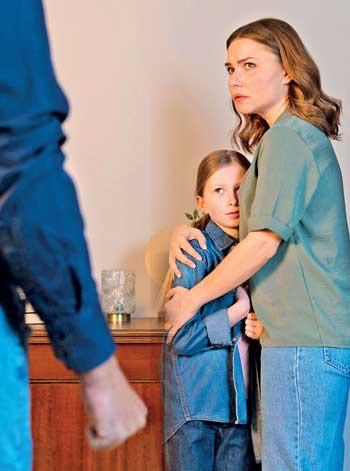 |
| IPV can cause trauma in children |
IPV And Deaths
IPV can result in injuries and even death. Data from US crime reports suggest that about one in five murder victims is killed by an intimate partner. Reports also reveal that over half of female murder victims are killed by a current or former male intimate partner.
Many other negative health outcomes are associated with IPV. These include conditions affecting the mind, heart, muscles and bones, and digestive, reproductive, and nervous systems, many of which are chronic. Survivors of IPV are at a higher risk for engaging in harmful behaviour like smoking, binge drinking, and risky sexual activity. People from some racial and ethnic minority groups are at higher risk of worse consequences.
In the US, more than one in three women (nearly 43.5 million) and more than one in 6 men (20.7 million) experienced contact sexual violence, physical violence, and/or stalking by an intimate partner during their lifetime. Among women, about 1 in 5 experienced contact sexual violence (19.7%), nearly 1 in 4 experienced physical violence (22.5%), and about 1 in 8 were stalked (12.2%).
Among men, nearly 1 in 23 (4.4%) experienced “contact sexual violence” (as opposed to non-contact sexual violence which is threatened sexual violence, exhibitionism and verbal sexual harassment). One in 7 experienced physical violence (13.7%), and almost 1 in 24 were stalked (4.2%).
In the US, the lifetime economic cost of IPV-related medical care, lost productivity from paid work, and criminal justice costs is US$ 3.6 trillion. The cost of IPV over a victim’s lifetime was US$ 103,767 for women and US$ 23,414 for men.
IPV is High in
South Asia
IPV is acute in South Asia, where 35% of partnered women reported experiencing IPV in their lifetime, compared to 20% in Western Europe and 21% in high-income Asia Pacific. Studies from South Asia consistently report high prevalence of domestic violence among hospital-presenting self-harm cases, with estimates as high as 72% in Nepal, 40% in Sri Lanka, and 73% in Afghanistan.
Bangladesh
According to an analysis of global and national data, Bangladesh ranks 11th globally in the prevalence of physical and/or sexual violence against women by intimate partners, and second only to Afghanistan in South Asia. Nearly one in two women in Bangladesh has experienced such violence, according to recent World Health Organisation (WHO) data. Findings from the latest Violence Against Women Survey by the Bangladesh Bureau of Statistics (BBS) show that 70% of women and girls aged 15 and above reported experiencing at least one form of intimate partner violence in their lifetime.
A comparison of three national surveys by BBS conducted in 2011, 2015, and 2024 shows that violence by intimate partners remains far more common than violence by non‑partners, pointing to deeply rooted problems within families in Bangladesh, according to “The Daily Star.”
The silence surrounding such abuse is also alarming. According to the latest BBS survey, 64% of survivors did not tell anyone about their experience, while only 7.4% sought legal action. Fear of social stigma, financial dependence, family pressure, and a lack of confidence in support systems continue to prevent many women from seeking help. Violence within families is treated as a private matter, and no one intervenes to stop it.
India
About 31.4% of Indian women between the ages of 18 and 49 reported having at least once experienced domestic abuse, according to the National Family Health Survey (NFHS) which was done between 2019 and 21. Karnataka (48%) and Uttar Pradesh (39%) reported the highest rates. Lakshadweep Island recorded the lowest rate of domestic violence in India (2%).
Indian laws have addressed domestic abuse between married spouses but not between other couples, partners or friends. The law penalises husbands who abuse their spouses. Interestingly, Indian law still does not consider marital rape a crime.
The Protection of Women from Domestic Violence Act (DV Act) was passed by the Indian parliament in 2005, which protects women in live-in relationships. However, women in casual relationships, living alone or if victims of violence from ex-partners do not have the same protections. If they are abused, their only option is the general law of the land.
In Sri Lanka, Piumee Bandara, Andrew Page, Thilini Rajapakse, and Duleeka Knipe in their paper “Intimate partner violence, suicide and self-harm in Sri Lanka: Analysis of national data” published in March 2024, say that IPV in Sri Lanka is estimated to be 40% for women aged 15 and above. Sri Lanka is undergoing urbanisation and transition in social and gender norms. It is also recovering from the effects of a protracted civil war, which ended in 2009. Populations exposed to conflict are known to experience higher rates of unemployment, poverty, and social dysfunction, suicide, alcohol misuse, childhood abuse, and IPV.
In Sri Lanka, there is evidence of a strong association between domestic violence and self-harm, although these studies were limited to hospital admissions. Given Sri Lanka’s unique history with civil war and its associated economic, social, and health implications, further understanding of the relationship between IPV and suicide and self-harm is needed at the national level.
In 2016, the Sri Lanka Demographic and Health Survey (SLDHS) introduced, for the first time, questions on the experience of IPV in the previous 12-months among ever-partnered females aged 15–49 years.
Crude rate of suicide and prevalence of IPV were highest in the Northern and Eastern post-conflict districts. For suicide, the highest crude rates were found in the Northern districts of Mullaitivu (48/100,000) and Kilinochchi (36/100,000) and the Eastern Batticaloa district (29/100,000). Similarly, for IPV, the highest prevalence was found in the Northern district of Kilinochchi (50%) and Eastern district of Batticaloa (50%).
Sri Lanka showed that almost half (48.6%) of all suicides reviewed had experienced abuse by a family member. Furthermore, a systematic review of interpersonal violence and female suicide showed that up to 51.2% of cases had experienced interpersonal violence.
The higher rates of IPV found in post-conflict regions may be explained by the prolonged exposure to collective violence, which in turn leads to the normalisation of violence as an acceptable method of conflict resolution.
Furthermore, death and disability among males has shifted the focus on females to be more economically active and, in some cases, the primary economic providers. This represents a destabilisation in gender norms, in which males feel the need to reassert power and control through abuse of their wives or partners.