Reply To:
Name - Reply Comment
Rakitha Rajapakshe Charith Abeysinghe 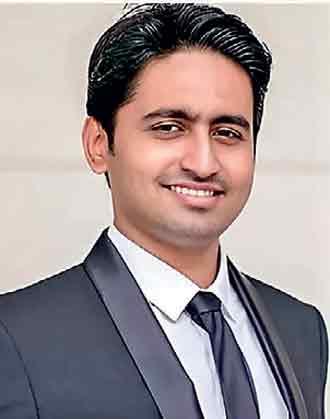

The latest political scandal underscores weaknesses in the legal system
 The timing of the leak might suggest it sought to influence public opinion. However, in a political culture where every suspect is soon reborn as a political victim, one can safely argue that the audio clip has effectively pre-empted it
 How far does the nexus between the underworld, and the political and bureaucratic establishment stretch out in Sri Lanka?
An audio clip leaked last week revealed it extended far enough to revoke detention orders, transfer a drug baron out of a high-security prison, and finally drop the charges altogether as long as the underworld pays up to political intermediaries.
That is a damning indictment, not just on the suspects already in custody, but on the entire political and judicial establishment.
Its release timed the arrest of Rakitha Rajapakshe, the son of Wijeyadasa Rajapakshe, Charith Abeysinghe, an SJB organiser for Horana and Aruna Sri Chathuranga, a former director of the Civil Aviation Authority, by the Commission to Investigate Bribery or Corruption in connection with a high-profile bribery case involving underworld kingpin Nadun Chinthaka Wickramaratne alias ‘Harak Kata.’
The timing of the leak might suggest it sought to influence public opinion. However, in a political culture where every suspect is soon reborn as a political victim, one can safely argue that the audio clip has effectively pre-empted it. Though one might add that any complicity of the law enforcement agencies mentioned in the leaked audio, if established, would inadvertently help the suspects during the court process on the ground that it was deemed to influence the legal process. A dispassionate observer might also note that it is this emphasis on minor technical detail that has often helped suspects in many bribery allegations escape prison.
The Commission to Investigate Bribery or Corruption has charged the three suspects with soliciting a bribe of Rs 500 million from Madushika Maduwanthi, the wife of Harak Kata, in order to remove detention orders and transfer the suspect to an ordinary prison from high-security Boossa Prison.
According to investigations, the three suspects who travelled to Dubai in March 2023 had met Maduwanthi at the residence of a Sri Lankan domiciled in Dubai, Nirmal Bandara alias ‘Herbi’ in the presence of another Sri Lankan, Midigama Ruwan. The latter is currently in detention in Sri Lanka. During the negotiations, the bribery payment was reduced to Rs 200 million, of which 100 million had been obtained as advance payment. The funds were transferred to Sri Lanka via an irregular ‘undial’ money transfer method. Subsequently, suspects had obtained another Rs 20 million from the wife of the detained underworld drug lord.
The audio clip is made by merging several telephone conversations among two suspects, Rakitha, Charith, Herbi and Maduwanthi.
It mentions Rs 100 million already obtained, which the suspects describe as intended payments to high-profile officials in exchange for the removal of detention orders of Harak Kata. The suspects also discuss Rs 50 million alleged to have been paid to Mr. Deshabandu, and then refer to ‘IGP Deshabandu, who is a friend of Charith.’
The controversial former IGP, who is entangled in multiple investigations including operating a personal hit squad, had not commented.
The audio also mentions Saman Ekanayake, the Presidential Secretary during Ranil Wickremesinghe’s administration. Wijeyadasa Rajapaksa was the Justice Minister at the time.
However, later conviviality descends into threats as Maduwanthi accused the suspects of failing to deliver any of the promised services. She threatens them, “ We will not let anyone who scammed us Rs 120 million in peace.” “Though we are going through a rough patch, we will also have our day,” she warns.
Investigations have revealed lavish bribery payments in the form of luxury houses and a BMW and a Range Rover.
The three suspects are currently in remand custody.
The arrest laid bare the dark underbelly of the Sri Lankan legal system. One can safely argue that the recent arrest is not a one-off incident. It was a rare incident which was exposed.
Consider the high number of leading underworld figures who jumped bail and fled the country, strangely enough after being repatriated before.
Kanjipani Imran, the notorious drug lord, fled the country shortly after he was released on Rs 5 million bail by the Colombo Chief Magistrate. Janith Madusanka alias Podi Lassie similarly fled the country after being released on bail in 2024 and was later tracked down in Mumbai by the Indian authorities and was repatriated to Sri Lanka. Modara Chathura and Bloemendal Sanaka, two other leading underworld operatives, similarly fled the country and were repatriated from Dubai recently.
It is mindboggling that the judicial authorities, who grant bail, do not consider a flight risk in those hardcore underworld figures who had set up their bases overseas. The government should investigate loopholes in the legal system and potential complicity which had led to the catch-and-release phenomenon of the underworld figures in Sri Lanka. The government claims 58 underworld figures had been repatriated so far during the current administration. However, any meaningful repatriation programme is in vain as long as they are released in three to six months, pending long-drawn-out trials. Similar to special anti-terrorism courts, Sri Lanka should establish a separate court to try underworld-related activities. Similarly, a new act should revoke bail conditions for underworld figures. Until such act becomes law, Sri Lanka could resort to the Prevention of Terrorism Act to hold underworld members in long-term detention pending a conviction. Similar to the Trump administration that had designated Mexican narco-cartels as foreign terrorist organisations, the President can designate underworld groups at a higher scale of national security concern. While one might view such a measure as an overreaction, indecision and half-hearted measures only play into the hands of the underworld. As an old conservative lord said in the 19th century, if liberalism is to survive, pickpockets should be locked up, and rapists and murderers should be hanged.
Integrity of the system
Another concern is the integrity of the entire political/ legal establishment that permits such pervasion of the process. Equally worrying is that the recent allegations were revealed three years after the bribe was obtained, and nearly eighteen months into the new government. The Bribery Commission has recently been pursuing several high-profile cases involving former regime heavyweights and the Rajapaksa family. Those investigations were long overdue, and had been put on the back burner by the previous governments. However, the Bribery Commission also faces allegations of selective justice
Another might be the recent statement by an SJB organiser, implicating the arrest of Charith Abeysinghe followed a telephone call by the JVP general secretary Tilvyn Silva. As Janatha Vimukthi Peramuna, a party that, when in opposition, thrived in conspiracy theories and innuendos, should know very well, as much as politically useful, they could pervade the nation. For a country to function, it also requires stringent libel laws in line with Singapore. Perhaps, before that, the Bribery Commission should prove its impartiality not just by words but also by deeds.
Follow Ranga Jayasuriya @RangaJayasuriya on X Follow Ranga Jayasuriya @RangaJayasuriya on X