 MOHAMED AYUB
Reply To:
Name - Reply Comment
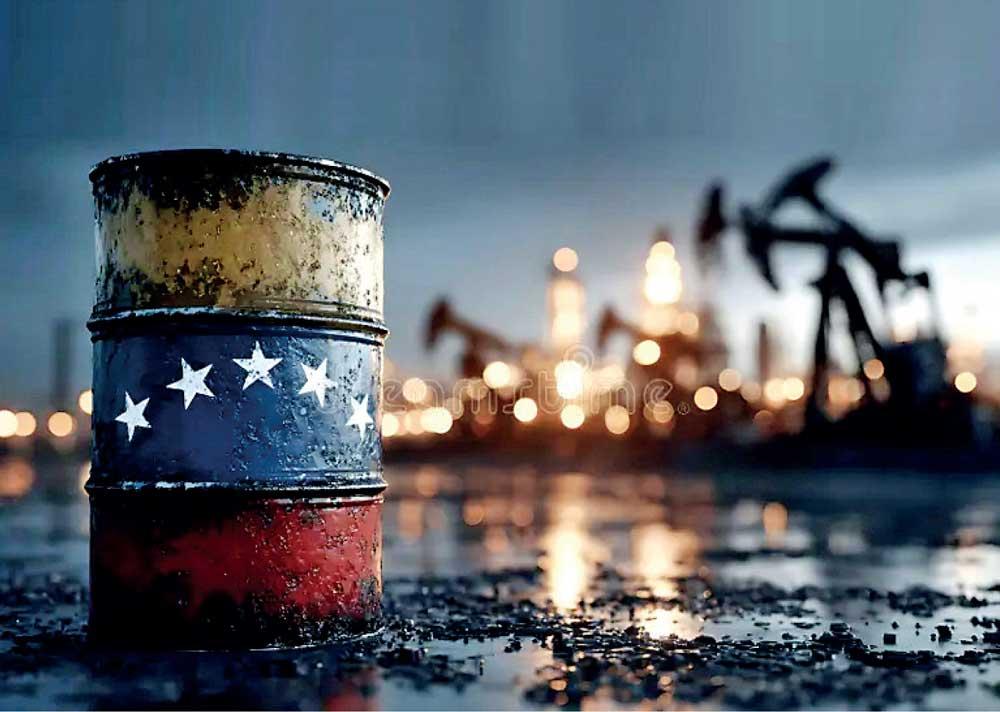
From Venezuela to Iraq, Iran and the Gulf, oil has become a trap for producing countries
This compels the Gulf countries and Venezuela always to be in good terms with the US, since billions of dollars of their wallet is in the hands of the US, even if the latter fails in its commitment to provide security
I just asked Google AI what really prompts the US to attack Iran. It gave a list of reasons. Here are some of them, which it attributed to US President Donald Trump:
To ensure that Iran could not develop a nuclear weapon, to stop planned Iranian attacks on Americans, specifically citing threats against U.S. diplomats and military personnel, to destroy Iran’s missile production and naval capabilities, to prevent the Iranian regime from continuing to arm, fund, and direct ‘terrorist armies’ outside its borders, frustration with the progress of nuclear negotiations, escalating series of attacks by Iran and Iran-backed militias on U.S. forces, and interests, and bring in regime change and freedom to the Iranian people.
However, what lacks is consistency when it comes to these avowed goals. Trump told Washington Post days after the US and Israel started attacks of Iran that “All I want is freedom for the people.”
He also stated that “I will never allow the world’s No. 1 sponsor of terror — which they are by far — to have a nuclear weapon.” But his Secretary of State Marco Rubio told reporters days before that Iran was not currently enriching uranium. However, it is common knowledge that the real motive behind the American attacks on Iran during the past decades has been to control what the US Energy Information Administration says are the world’s second-largest natural gas reserves, and the third largest proven oil reserves. This has been the case with regards to the invasion of other oil producing countries as well. Trump, unlike the previous US Presidents, is sometimes very blunt, and told the Financial Times on March 29 that his “preference would be to take the oil” in Iran -- as he said weeks ago -- “I want Greenland!”
Yet, the irony is that they lie about these countries. The world pretends to believe them and they in turn know the world is pretending. However, the Western media is somewhat successful in turning that pretension into belief.
The Trump administration launched a major military attack on Venezuela on January 3, bombing facilities and capturing the country’s leader Nicolás Maduro and his wife Cilia Flores before flying them to the United States. US federal prosecutors alleged that Maduro “is at the forefront of that corruption and has partnered with his co-conspirators to use his illegally obtained authority and the institutions he corroded to transport thousands of tons of cocaine to the United States.”
And the next day, Trump said U.S. oil companies were prepared to make major investments in the country. “We’re going to have our very large United States oil companies, the biggest anywhere in the world, go in, spend billions of dollars, fix the badly broken oil infrastructure, and start making money for the country.” Venezuelan Vice President Delcy Rodríguez who said the only objective of the US was regime change which “allows them to capture our energy resources, mineral resources and natural resources” then took over only to cave in. Things moved fast. Allegations of corruption and cocaine were dumped. The US Treasury Department on February 13 issued licences authorising five companies to engage in oil and gas contracts and transactions with Venezuela’s state-owned oil and natural gas company Petróleos de Venezuela SA (PDVSA) and its subsidiaries, but said proceeds must go to US government-controlled bank accounts.
This is like the Petrodollar arrangement built up since the 1970s which has pushed the oil producing countries into a US trap. Under the arrangement, U.S. protection of Gulf countries is exchanged with access to Gulf energy through pricing of oil in dollars, “and the recycling of hundreds of billions of those “petrodollar” windfalls “back into U.S. arms, technology, and American stocks and bonds” as Reuters put it in an article.
The article titled “Iran war rattles Gulf petrodollar foundations” argues that “since the U.S. and Israel launched strikes on Iran on February 28, it’s been its Gulf neighbours who have suffered most from missiles and drone attacks that followed -- tearing through energy infrastructure, damaging economies, and exposing the limits of a supposed U.S. security umbrella… At stake is a potential rethink of the financial, trade and military ties at the very heart of their dollar-based economies and of the hundreds of billions in dollar reserves underpinning them.”
This compels the Gulf countries and Venezuela always to be in good terms with the US, since billions of dollars of their wallet is in the hands of the US, even if the latter fails in its commitment to provide security.
Reuters journalists Yousef Saba and Ahmed Rasheed wrote in an article last year:
“Oil is Iraq’s most important revenue source, accounting for some 90% of the state budget. This gives Washington significant sway over the country’s economic and political stability. When the Iraqi government asked U.S. troops to leave the country in 2020, Washington reportedly threatened to cut Iraq’s access to the New York Federal Reserve funds, with Baghdad ultimately backing down. While the Iraqi government has gained more control over its financial affairs since the early years of the U.S. occupation, the ongoing relationship highlights the enduring influence of the U.S. on Iraq’s economic landscape, even as the country seeks to assert its sovereignty and independence.”
President Saddam Hussein of Iraq nationalised his country’s Petroleum Company (IPC) and its subsidiaries between 1972 and 1975, ending Western dominance over Iraq’s oil industry. Iraq has the world’s second largest proven oil reserves. After using Saddam Hussein to attack Iran for eight years (1980-1988) even with chemical weapons, the Us wanted to access to Iraqi oil which had been nationalised by Hussein in 1972 in par with the slogan “Arab oil for Arabs.”
When Saddam Hussein invaded neighbouring Kuwait in 1991, the US armed with a UN Security Council resolution invaded Iraq with the support of 34 countries. Even after Saddam withdrew from Kuwait sanctions imposed by the UN continued. The US accused Iraq of possessing weapons of mass destruction (WMD) and used the allegation as a pretext to invade Iraq in 2003 which ousted Hussein from power. He was later hanged. No WMD was found. Then access was granted to the US oil companies. the U.S.-led Coalition Provisional Authority (CPA), the successor to the Saddam Hussein administration, established the Development Fund for Iraq (DFI) to collect all of Iraq’s oil revenues. The CPA unilaterally decided to house the DFI account at the Federal Reserve Bank of New York, successfully handing over political and economic control to the US government. Libya was another such case in point. Freedom from despots that was promised by the US was then forgotten. Anarchy prevails. The oil resource once projected as national pride turned to be a disaster. This is what the US wants to do in Iran as well.