Reply To:
Name - Reply Comment
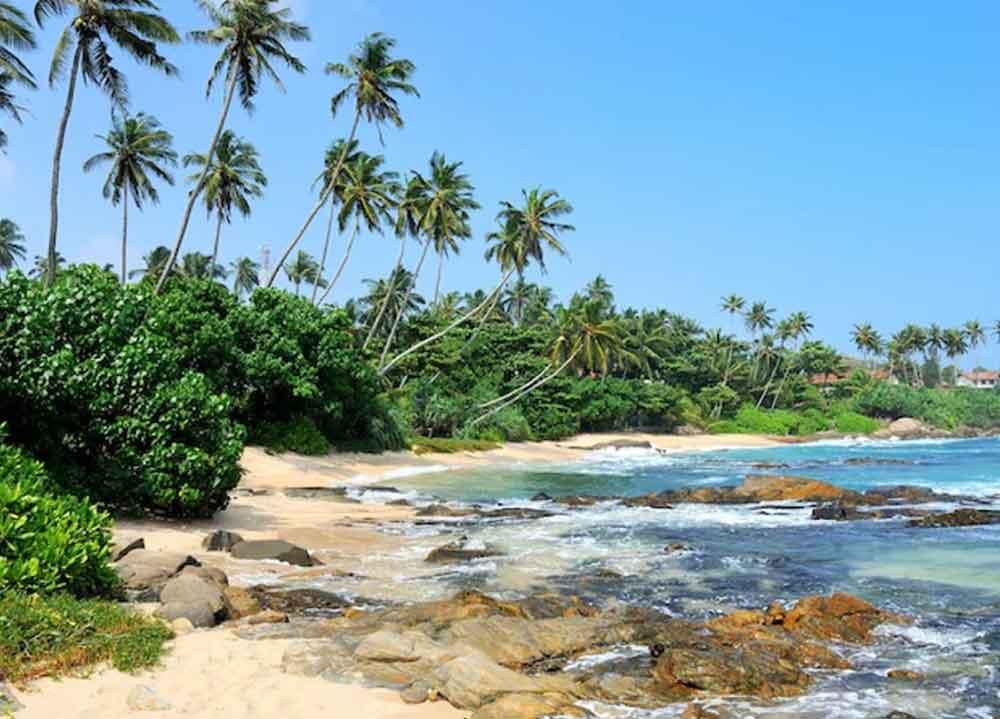
beneath our feet and along our coastline lies world-class heavy mineral deposits.
 For decades, Sri Lanka has spoken about becoming a high-income economy while relying on tourism, apparel, tea and remittances. Yet beneath our feet and along our coastline lies one of the country’s most valuable but underutilised strategic assets—its world-class heavy mineral deposits.
At a time when the global economy is demanding increasing quantities of titanium minerals, zircon, rare earth-associated minerals and other industrial raw materials essential for aerospace, defense, renewable energy, medical technology and advanced manufacturing, Sri Lanka possesses an opportunity that very few countries enjoy.
The real question is no longer whether Sri Lanka should develop its mineral resources. The question is whether we will develop them responsibly ourselves or continue watching other nations create wealth from resources that we refuse to utilise.
A Strategic National Asset
Sri Lanka is internationally recognised for high-grade heavy mineral deposits, particularly ilmenite, rutile, zircon and monazite-bearing mineral sands. These minerals are indispensable to modern industries.
Titanium minerals are used in aircraft manufacturing, defense equipment, pigments, medical implants and renewable energy technologies. Zircon is critical for ceramics, foundries, nuclear applications and advanced engineering. Global demand continues to grow as nations invest heavily in infrastructure and clean energy technologies.
Yet despite possessing internationally competitive mineral resources, Sri Lanka continues to export much of its production with minimal value addition, thereby surrendering significant economic value that could otherwise remain within the country.
Responsible heavy mineral mining can become one of Sri Lanka’s most significant foreign exchange earners.
A well-regulated mining sector would generate billions of rupees in export revenue, create thousands of direct and indirect jobs, attract foreign direct investment, strengthen government revenue through royalties and taxation, stimulate downstream mineral processing industries, improve the balance of payments, and reduce dependence on external borrowing.
Unlike many industries that depend almost entirely on imported raw materials, mining converts a domestic natural resource into export earnings. Every ton of mineral produced represents foreign exchange generated from Sri Lankan soil.
Revitalising Rural Economies
Perhaps the greatest beneficiaries of responsible mining are not corporate entities but rural communities. Many heavy mineral deposits occur in regions where employment opportunities remain limited.
A properly planned mining project creates demand for transport operators, local contractors, earthmoving equipment, civil construction, accommodation providers, food suppliers, mechanical workshops, fuel suppliers, security services, environmental consultants, surveyors, engineers, geologists, and laboratory technicians
Every mining operation creates an ecosystem of small and medium enterprises. Local farmers gain new markets. Young people gain skilled employment. Women benefit through service-sector businesses. Infrastructure such as roads, electricity and water supply frequently improves as part of project development.
This is how resource-rich regions around the world have transformed rural economies.
Supporting mining does not mean ignoring environmental concerns. Mining unquestionably alters land during extraction. If poorly managed, it can cause soil erosion, habitat loss, water pollution and biodiversity impacts. Numerous Sri Lankan studies have documented these risks and emphasised the importance of proper regulation and rehabilitation. The answer, however, is not to prohibit mining altogether. The answer is responsible mining.
Modern mining jurisdictions requires Comprehensive Environmental Impact Assessments (EIAs), Independent environmental monitoring, Progressive land rehabilitation, Water quality monitoring, Dust suppression systems, Biodiversity management plans, Community consultation, Financial rehabilitation bonds, and Post-mining land restoration.
Mining today is vastly different from the practices of several decades ago. Progressive rehabilitation enables mined land to be restored during operations rather than waiting until closure. Topsoil can be preserved, native vegetation can be replanted and water systems can be protected.
Former mining areas can be converted into agriculture, forestry, recreation or conservation areas. Responsible mining and environmental stewardship are not mutually exclusive—they must go hand in hand.
Learning from Global Best Practice
Countries such as Australia, Canada and the Nordic nations demonstrate that mining and environmental protection can coexist under robust governance. Their success rests on Transparent licensing systems, Strong environmental regulation, Independent monitoring and Community participation, Scientific decision-making, and Strict enforcement of rehabilitation obligations.
Sri Lanka should aspire to adopt these standards rather than framing the debate as a choice between development and conservation.
One of the greatest challenges facing Sri Lanka is policy uncertainty.
Investors require predictability. When approvals take years, policies remain unfinished or regulations are unclear, investment capital simply moves elsewhere. Mining is among the world’s most capital-intensive industries. Companies invest millions of dollars in exploration, feasibility studies, environmental assessments and specialised equipment before earning a single dollar in revenue. Uncertainty discourages investment, delays job creation and postpones export earnings. In a highly competitive global investment environment, delays can be as damaging as outright rejection.
The Role of Civil Society
Civil society organisations, environmental groups and local communities play an important role in ensuring transparency, accountability and environmental protection. Their scrutiny has often contributed to stronger environmental safeguards and improved governance.
At the same time, public debate should be grounded in credible scientific evidence rather than misinformation or blanket opposition to all mining. Each project should be assessed individually on its environmental, economic and social merits. Projects that fail to meet environmental standards should not proceed. Projects that satisfy rigorous technical, environmental and legal requirements should be evaluated fairly and consistently.
Evidence-based decision-making serves both environmental protection and economic development.
Mining is Part of the Green Economy
Ironically, many technologies promoted as environmentally friendly depend heavily on minerals -- Electric vehicles, Wind turbines, Solar panels, Battery technologies, Medical equipment, Advanced electronics, All require minerals extracted through mining. The global transition to cleaner energy cannot occur without secure supplies of mineral resources.
Sri Lanka therefore has an opportunity not only to supply raw materials but also to become an important contributor to global sustainable development.
A National Responsibility
Sri Lanka’s mineral resources belong to its people. They should neither be exploited irresponsibly nor left permanently idle. Responsible development means balancing three equally important objectives: Economic growth, Environmental conservation, and Social well-being.
This balance is achievable through sound science, transparent governance, rigorous regulation and genuine community engagement.
The Way Forward
Sri Lanka stands at a crossroads.
We can continue exporting our young talent while leaving valuable resources undeveloped beneath our soil.
Or we can embrace responsible, science-based mineral development that creates employment, strengthens rural economies, generates foreign exchange and supports national prosperity—while maintaining high environmental standards.
Economic development and environmental protection are not opposing goals. When governed responsibly, they are complementary objectives.
The future of Sri Lanka will not be built by choosing between development and conservation. It will be built by achieving both.
The Writer is a Resource Person of John Hopkins University and Project Investigator of the Institute of Health Policy. He was the former Advisor Ministry of Health and Former Chairman of the Geological Survey and Mines Bureau