Reply To:
Name - Reply Comment
 he lottery distribution arm of the NHMF became known as the HLF. It is now a non-departmental public body accountable to the British Parliament via the department for culture, media and sports (DCMS). As such, the HLF is independent of Governmental interference and reports to the Parliament through the DCMS, and the money is allocated as follows -- arts 20%, charities, health, education and environment 40%, heritage 20% and sports 20%. Since 1994, the National Lottery has raised 34 billion Pounds for projects across the UK. As the HLF website states: “Heritage provides the roots of our identities and enriches the quality of our lives. It inspires pride in communities and is at the heart of today’s tourism industry, bringing in investment to local economies of nearly 50 billion pounds every year and supporting over a million jobs. That’s why we believe heritage should be protected for the future, and why everyone should have the chance to explore and look after it.”
Its funding has given a new lease of life to neglected collections, parks, buildings and landscapes.
It has funded the recording of community histories and the training of young people to conserve rare wildlife, creating thousands of jobs and opportunities. Its achievements include a 50% increase in visitors to key heritage sites, work-based training of over 3000 people in heritage skills, a base of 234,000 volunteers, restoration of over 17,000 historic buildings and monuments, the revitalistion of over 700 public parks and funding of 750 community and archaeology projects.
Its latest projects include helping the only cinema in the world still lit by gas, and a grant to the country home of Victorian architect and designer William Morris.
The Hyde Park Picture House in Leeds is a tiny cinema in Leeds which opened just a few months after war broke out in August 1914. The grant will help restore historic features and open up its archives. Now owned by local authority, the Grade II cinema still has eleven working gas lamps and has survived competition from huge modern cinema complexes. Its records include weather reports  kept daily until 1958, and original programmes and film posters. Kelmscott, a medieval house in rural England inhabited by William Morris and now owned by the Society of Antiquaries, was described by the anti-machine-age designer as the ‘loveliest haunt of ancient peace.’ It is still full of items which he, family members and friends owned or made, including curtains embroidered for his bed by daughter Mary.
Sri Lanka has thousands of such sites and buildings which can be helped by a similar lottery.
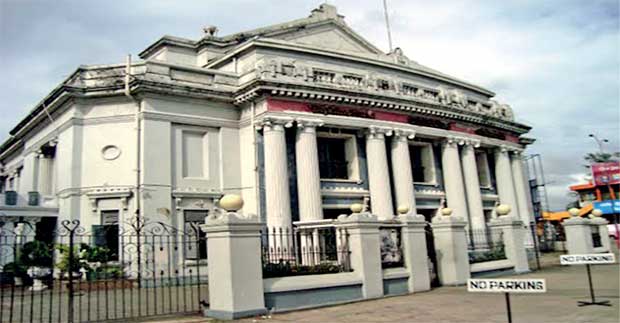
A number of old, struggling cinemas immediately come to mind, but other worthy projects include railway stations, the Elphinstone Theatre and Tower Hall, the Public Library, the Colombo Zoo, Pinnawala elephant orphanage, Sudharshi Hall and the mansion (wallawa) where Lester James Pieris filmed Gamperaliya.
There are thousands of similar projects scattered across the island.
With no funding for restoration, they face degradation and eventual demolition, or bought by commercial interests and turned into hotels or shopping malls.
Most writers, artistes and other public figures including sportspersons lack the means to preserve their documents and homes for heritage.
The manuscript books of a famous woman poet were once found in a gram seller’s cart, and newspaper cuttings and photographs of a reputed 1970s motor cycle racer were discovered for sale on a pavement.
A heritage fund could help archive such documents. But it should be independent like the British model from government interference.