Reply To:
Name - Reply Comment
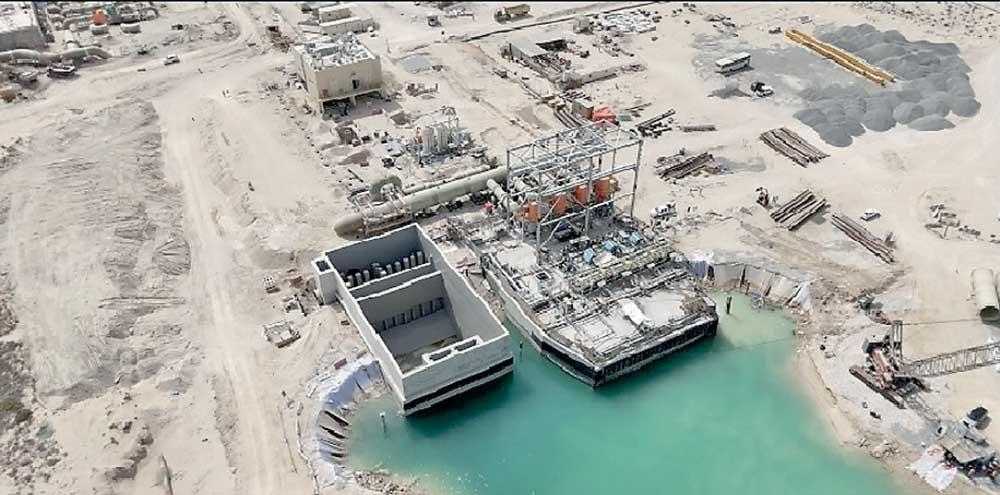
A desalination plant in Dubai
 For decades, Dubai has stood as the ‘Singapore of the Middle East’ - a glittering, safe harbour - carved out of the desert, through the visionary leadership of Sheikh Mohammed bin Rashid Al Maktoum.
By transforming a pearl diving outpost into a global hub for finance, tourism, and logistics, the King of Dubai (as he is often colloquially termed) has brilliantly insulated his emirate from the chronic instability of the broader region. However, a seismic shift is underway. As Dubai moves toward a deeper, more overt alignment with United States strategic interests, it risks upending the very neutrality that fueled its rise. This policy of alignment, while intended to secure a high-tech future, may inadvertently position the architect of modern Dubai as the unwitting agent of its potential destabilisation.
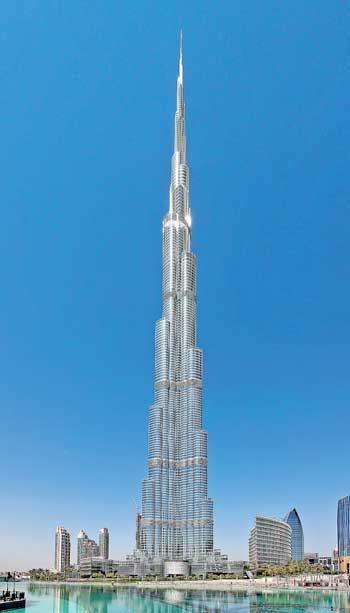 |
| Burj Khalifa or the Khalifa tower in Dubai |
The safe haven doctrine: A legacy of brilliant development
The success of Dubai is predicated on the ‘safe harbour’ principle. While its neighbours were embroiled in the Arab Spring, proxy wars, or ideological crusades, Dubai remained a neutral ground where East meets West.
Economic diversification: Under Sheikh Mohammed, Dubai successfully decoupled its GDP from oil, focusing instead on the DP World logistics empire, Emirates Airline, and a real-time real estate laboratory.
The neutrality premium: By maintaining cordial relations with everyone from Washington and London to Tehran, Moscow, and Beijing, Dubai became the default counting house for the world’s wealth.
This brilliance created a sanctuary. However, the geopolitical gravity of 2026 is making ‘neutrality’ an increasingly expensive luxury.
The Pivot to Washington: Security vs. Sovereignty
The present policy of further alignment with the United States is driven by a desire for cutting-edge defence technology, AI integration (via partnerships with firms like Microsoft and OpenAI), and a formal security umbrella against regional threats. While this offers a short-term stability, it carries three catastrophic risks:
1. The Iranian counter-pressure
Dubai sits a mere 100 miles across the Persian Gulf from Iran. Historically, Dubai has acted as Iran’s ‘lung’ a vital trade link that allowed the Iranian economy to breathe under sanctions.
By aligning too closely with US military objectives, Dubai risks transforming from a neutral trade partner into a ‘frontline state.’ In any potential conflict between the US and Iran, Dubai’s glass towers and desalination plants the lifeblood of the city become the most vulnerable targets for asymmetric drone and missile strikes.
2. The erosion of the ‘global clearing house’ status
A significant portion of Dubai’s capital inflow comes from nations currently at odds with the US (e.g., Russia and China). Deeper alignment with Washington often necessitates compliance with US financial sanctions and ‘Know Your Customer’ (KYC) protocols that target these very investors. If Dubai loses its reputation as a non-aligned financial sanctuary, the ‘Safe Haven’ disappears, and the capital will flee to competitors like Riyadh or Singapore.
The ‘creator and destroyer’ paradox
The phrase “he will be his own creator and destroyer” captures the tragic irony of the current trajectory. The same ambition that allowed Sheikh Mohammed to build an impossible city, the desire to always be ‘number one’ in technology and global relevance is now pushing him towards a superpower alliance that could make Dubai a casualty of a larger ‘Great Power’ struggle.
The human and economic consequences
Should this alignment lead to a regional flare-up, the consequences for Dubai would be more than just fiscal; they would be existential.
The expat exodus: 90% of Dubai’s population are expatriates. They remain there because it is safe and tax-free. At the first sign of a missile siren, the human capital that runs the city will evaporate overnight.
The real estate bubble: Dubai’s economy is a ‘confidence economy.’ If the perception of safety is shattered by geopolitical alignment, property values which underpin the local banking sector could collapse in a manner that dwarfs the 2008 crisis.
NATO, US, and the ‘Vietnam’ of the desert
Dubai’s alignment draws it into a web of alliances that are increasingly fragile. As seen in recent years, NATO members are increasingly reluctant to support ‘out-of-area’ conflicts in the Middle East. If Dubai aligns with a US administration that pursues a ‘maximalist’ policy against Iran or other regional actors, it may find itself abandoned by the international community when the blowback begins.
Like the American experience in Vietnam, the US may be able to project power from afar, but it cannot protect every skyscraper in a city built on the edge of a volcano.
The need for a strategic correction
The brilliance of the Dubai model was its ability to be everywhere and nowhere and at the same time to be a friend to all and an ally to none. By tilting too far toward Washington, the leadership risks trading a legacy of independent prosperity for a role as a pawn in a 21st-century Cold War.
To avoid becoming the ‘destroyer’ of his own creation, the ‘King’ must return to the delicate balancing act that defined Dubai’s golden age. The world does not need another military outpost in the Middle East; it needs a safe harbour. If that harbour becomes a fortress for one side, it ceases to be a haven for anyone.
The choice made in the coming months will determine whether Dubai remains a monument to human ingenuity or becomes a cautionary tale of geopolitical overreach.
(The writer is an international researcher, author and analyst with a career spanning over 36 years of service in the Sri Lanka Army, including 20 years in active combat. A seasoned Infantry officer, Major General (Retd.) Dr. Boniface Perera, holds a PhD in Economics and has authored 17 books and over 200 research articles. His multifaceted expertise bridges the gap between national security, global politics and economic strategy. As an entrepreneur and International analyst, he provides strategic insights into the intersection of security and economic policy. He can be reached [email protected])