Reply To:
Name - Reply Comment
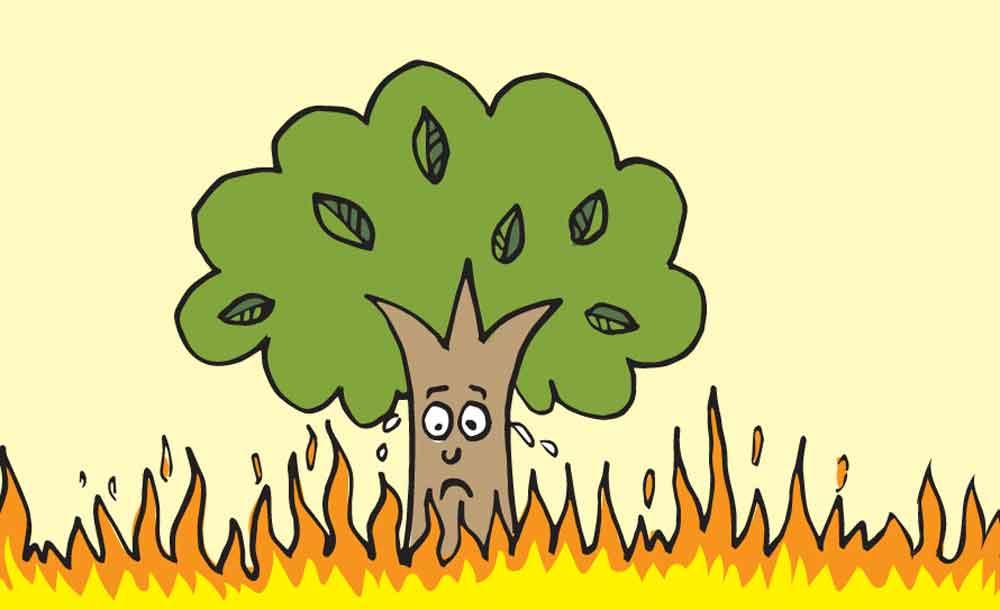
According to latest reports, the fire at the Ella Forest Reserve in the Uva province had been doused after two days. Around 600 or more acres of the reserve has been destroyed so far. According to reports in our sister-paper the ‘Sunday Times’ the blaze has spread towards the Ravana Falls, home to the ‘Ravana Cave’ where the legendary Lankan king Lord Ravana resided and is supposedly buried.
Tales passed down by word of mouth, have it that the cave was used by King Ravana to hide Princess Sita Devi whom Ravana allegedly kidnapped. The cave is also thought to be connected to the cave at the Dowa rock temple in Bandarawela (part of King Walagamba’s famous ‘tunnel network’).
Situated at an elevation of 1,041 metres (3,415 ft) above sea level. The area is rich in biodiversity with numerous varieties of flora and fauna and is surrounded by hills covered with cloud forests and tea plantations. The area is a huge tourist attraction.
It is in this area -rich in biodiversity and steeped in history- that was engulfed in the recent forest fire. According to ‘Global Forest Watch’ in 2020 Sri Lanka had 3.28 Mha of natural forest, extending over 50% of its land area. In 2023, it lost 11.9 kha of natural forests. Much of the loss of forest cover has been caused by forest fires.
The peak fire season normally starts in June and lasts for around 14 weeks. Data shows there were 54 VIIRS fire alerts reported between 12th of February 2024 and 10th of February 2025. The VIIRS active fires data (VNP14IMGT) is the latest fire monitoring product to FIRMS (Fire Information for Resource Management System), which identifies global fire locations in near-real time.
Unfortunately though, fires in the area are an almost annual event. There have been few if any practical efforts made to prevent the outbreak of these fires in this historically rich area with an abundance of biodiversity.
The Uva Province is also home to many of the poorest people in the country -the Sinhala peasantry and the upcountry estate workers. During colonial times the lands of the Sinhala peasants who lived in these areas were confiscated by the British imperialists to set up large plantations in the area. The villages were caught between the plantations with no room for expansion.
With the growth of population their land holdings grew ever smaller. ‘The Kandyan Peasantry Commission’ describes peasant land holdings to be as small as a postage stamp.
Meanwhile plantations, themselves are home to the most exploited section of workers in the country -the tea and rubber plantation workers. These workers were brought from India to work on the plantations. Their housing conditions were described by Sri Lanka’s longest-serving Finance Minister Ronnie de Mel as being unfit for human habitation. Even today these workers receive less than Rs. 40,000/- per month in wages, own no homes of their own or receive running water. The estate serves as an open toilet.
The landless peasantry, with no land to cultivate crops, use slash and burn methods of cultivation. With no land of their own, they cut down and burn portions of the forest which they subsequently use to cultivate their crops. In many instances it is fires started by these impoverished peasants which lead to major forest fires. It has led to the loss of forest cover and destruction of this land with rich biodiversity.
Sadly no government has as yet been able to solve the problem of landlessness and poverty of the Kandyan peasantry.
Militancy of the Kandyan peasantry lead them to rebel against the British imperialists who robbed their lands. More recently during the 1971 insurgency it was in this Uva Province (Wellawaya) that the uprising first began. Villagers suspect that it is their militancy that prevents modern-day governments to ignore their plight.
The workers and peasants of the Uva Province are wondering as to whether even today, the present government -progeny of the 1971 insurgency- will remember their plight and work towards finding a solution to their poverty. Proud of their heritage, the peasantry demand plans to preserve the rich heritage of the Uva-Wellassa area be put in place.