 MOHAMED AYUB
Reply To:
Name - Reply Comment
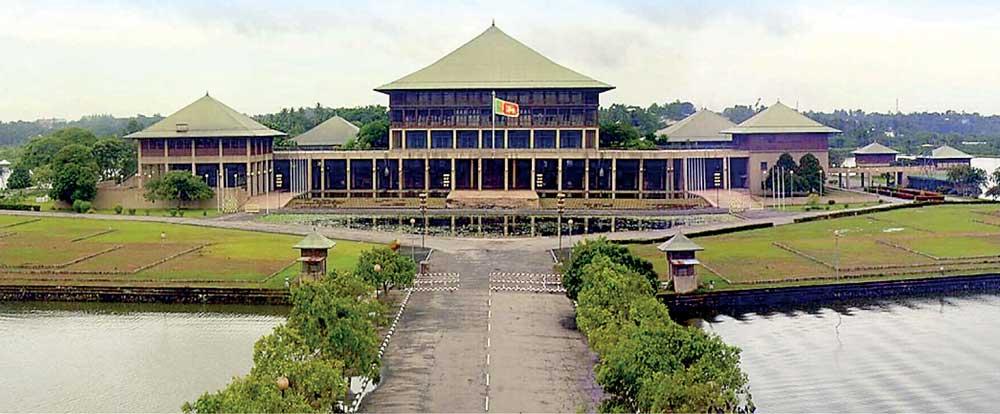
Sri Lanka’s parliament has a long, unsavoury history of political crossovers
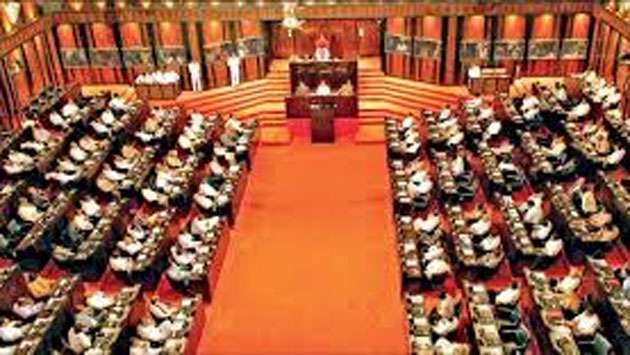
The government’s announcement to enact a law to prevent members of Parliament, provincial councils and local government bodies from crossing over to other parties from the parties they were elected from does not seem to have evinced much interest from political circles.
Neither has it drawn flak even from those politicians who are used to jumping from one party to another, especially during elections. This may be due to the fact that people despise those politicians changing parties seeking power and perks. There are politicians who have served as ministers of almost all governments since they were first elected to Parliament.
What is interesting and surprising is that the politicians who cross over to other parties are so brazen as to vilify the leaders of the party under which they were previously elected to Parliament or provincial council. There are politicians who even call the leaders of their previous party murderers or thieves. Some shamelessly join those leaders again at the next election and insult the leaders of the party they joined for the second time. What is even unabashed is that some people do this alternately several times.
Nimal Siripala de Silva served as a minister under all governments since 1994, even though the leaders of some of those administrations claimed their policies were completely different from those of their predecessors. Professor G.L. Peiris did the same except during the Yahapalana Government. Dr. Wijeyadasa Rajapaksha was a minister under Presidents Mahinda Rajapaksa, Maithripala Sirisena, Gotabaya Rajapaksa and Ranil Wickremesinghe. Dayasiri Jayasekara, Rajitha Senarathna and S.B. Dissanayake have also defected frequently from one party to another in the past.
The current National People’s Power (NPP) government is the only government without defectors in the history. However, there were signs that some politicians from other parties unsuccessfully approached the NPP prior to the last Presidential election. Now, they have become the harshest critics of the current government.
Politicians crossing over from one party to another, or breaking away from a party to form another, have in most cases been unprincipled in Sri Lanka. Their primary goal was to gain power and access to perks. Only in leftist parties, policy differences and theoretical conflicts have actually not contributed in splits.
Politics without principles
Politics without principles is common in every country in the world, and Mahatma Gandhi defined it as one of seven fundamental moral failings or “Seven Social Sins” that destroy societies. Jumping from one party to another just for ministerial portfolios or other positions, powers and perks also falls under this category of sins. The purpose is clear -- corruption. And the NPP government’s professed intention to introduce the proposed law is justified with its pledge to change the political culture of the country.
However, even in the absence of a new law, there are provisions in the Constitution to prevent political defection of people’s representatives. If a Member of Parliament, for instance, crosses over to another party or works against the party he was elected from, the secretary of that party has the legal right to expel him from the party, resulting in him being deprived of his seat in Parliament. Yet, that Constitutional provision is subject to a condition -- it would be valid only after a month within which the member can seek legal redress against his expulsion.
While many Parliamentarians have lost their seats due to removal from parties, some others have saved their skin using this condition. In 1993, MP Tilak Karunaratne was expelled from the SLFP for making a statement critical of the party to a newspaper. However, the Supreme Court ruled that his conduct was justified and his expulsion invalid as he had taken every possible step within the party forums to agitate his grievance before going public.
Similarly, Sarath Amunugama and five others were expelled from the UNP during the presidential election campaign of 1999 when it transpired that they had met President Chandrika Kumaratunga who was campaigning for her second term to assure her of victory in the election. Following a petition by them, the apex court in 2000 unanimously held that the expulsions were invalid due to lack of procedural propriety and informed the party to hold a fresh inquiry. However, that did not happen.
Basheer Segudawood was expelled from the National Unity Alliance (NUA), a coalition of the Sri Lanka Muslim Congress (SLMC) and another party, and it was communicated to the Election Secretariat to appoint a new MP. However, the Supreme Court in 2002 invalidated the expulsion accepting Segudawood’s argument that he was a member of the SLMC, and not NUA from which he was removed. MP for Digamadulla P.H. Piyasena’s expulsion from the Ilankai Thamil Arasu Katchi was also annulled on technical grounds in 2010.
These incidents justify the government’s move to bring in a new law to ban defection despite there being Constitutional provisions for the same. Nevertheless, several important issues including the personal judgement and the conscience of the politician concerned, the internal discipline of the party and the people’s mandate have to be considered when deciding the merit or demerit of defection by politicians.
Personal judgement and conscience on policy matters, however, have been something we have not or rarely seen in Sri Lankan politics. 18 MPs have voted in favour of the last five Constitutional amendments, and 43 MPs have done so in respect of the last three Constitutional amendments which alternately trimmed and strengthened the powers of the executive Presidency. Where was their conscience? Broken promises of successive governments are a perfect example of politicians’ disrespect for a people’s mandate.
When the first-past-the-post electoral system was in place in Sri Lanka, the conscience took precedence over party discipline and it is the other way around -- party discipline takes precedence -- after the Proportional Representation (PR) system was introduced in 1978.
Switching parties or abandoning a party to form another is not always prompted by opportunism or greed. Regime changes always come to pass with millions of people changing their minds on their party affiliations. That is not opportunism. That is how political history unfolds. Similarly, politicians too might abandon a party to join another or to form another, on policy grounds.
However, the merit of the act is determined by the honesty and integrity they display in the years to come. Rarely does a politician pass this test, and that seems to be the rationale behind the proposed new law.