Reply To:
Name - Reply Comment
Sustainable use of timber for carbon neutral economy in Sri Lanka
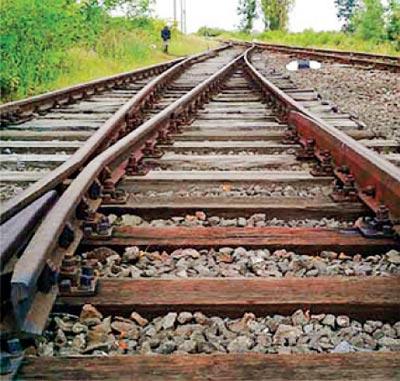 Railway sleepers are a crucial component of railway infrastructure, providing stability and support for railway tracks. Traditionally, concrete sleepers have been used widely, but there is a growing interest in sustainable alternatives, such as wooden sleepers. Using timber and wooden items in maximum capacity is a critical issue in achieving carbon positive economy in achieving sustainable development.
As a tropical country, Sri Lanka maintains commercial forests in order to sustainable harvesting with removing atmospheric carbon dioxide. This newspaper article argues that wooden sleepers should be considered for their environmental, economic, social, ecological and operational benefits, in addition to the main benefits of climate change mitigation.
Background
In the market there are many substitute goods used instead of timber such as concrete and plastics which have many long-term environmental consequences.
In this article, we are going to highlight negative environmental consequences risen from production and using concrete sleepers in Sri Lanka ..
Let’s start with the production of raw material for cement production and then production of sleepers. The production of concrete sleepers require significant amount of raw materials, including cement, metals, and steel. Producing cement requires limestone, clay and gypsum.
Extracting these materials can lead to habitat destruction, soil erosion, and depletion of natural resources. Next, the cement industry is a major source of carbon dioxide (CO2) emissions, which is contributing to negative impact on climate change.
The process of producing cement is energy-intensive and involves the calcination of limestone, which also releases CO2 as a byproduct. The transportation of raw materials to the manufacturing plants of concrete sleepers to installation sites can lead to additional greenhouse gas emissions, especially if the distance is significant.
While concrete sleepers are more durable than wooden sleeper, wooden sleepers could be replaced even a few times by producing the wood a few times as it is the renewable natural resources, which lessen environmental impact over time.
Concrete can be recycled, but often it is not reused. If disposed in landfills, the embedded carbon in concrete contributes to long-term environmental issues. Although concrete sleepers are durable, when they do reach the end of their life, they can generate waste unless properly managed. Disposing of damaged or unused concrete sleepers poses an environmental challenge.
Wooden Sleepers
There are many positive environmental, economic, social and ecological benefits in using wooden sleepers. Using wood is not only for sustainable alternative to concrete in railway infrastructure, but a better way to remove and store atmospheric CO2 from carbon cycle for centuries of time.
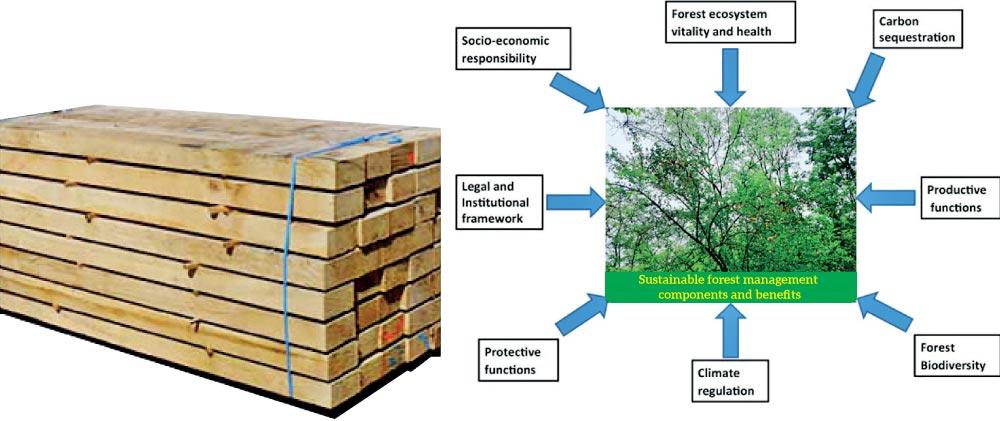
Chart: Sustainable Forest Management components and benefits.
Sustainable Forest Management
One of the key environmental benefits of wooden sleepers is the sustainability of materials. Wood is a renewable resource, whereas concrete relies on non-renewable materials for production.
Responsible forestry practices ensure that timber can be sustainably used, which helps to minimize ecological , economic, social and environmental impacts. Additionally, wood has a lower carbon footprint due to its carbon sequestration capabilities; it stores carbon throughout its life cycle, contributing to reduced atmospheric CO2 levels. The manufacturing process for wooden sleepers requires significantly less energy than the energy-intensive production of concrete.
Furthermore, wooden sleepers can promote improved soil health and soil biodiversity, as they contribute less to soil erosion and runoff compared to the hard surfaces of concrete.
From an economic standpoint, wooden sleepers also present various advantages. Although initial cost differences may be a consideration, wooden sleepers can often be cheaper to produce and install, especially when produced locally. Their lighter weight not only facilitates easier transport but also translates into reduced logistics costs. The promotion of wooden sleepers can also support local jobs in sustainable forestry and manufacturing, providing economic boosts to communities that utilize locally produced materials.
Forests cultivated for timber provided a plethora of benefits called ecosystem services. These ecosystem services clean water, clean air, preventing soil erosion, conservation of biodiversity , ecosystem services for neighbors, recreational values to local and foreigners etc.,but to mention only some.
Moreover, forestry sector provide huge number of direct and indirect employments to our economy. These employments are high-skilled, semi-skilled and un-skilled jobs in forestry sector and timber industry in the country.
In terms of performance and resilience, wooden sleepers exhibit natural properties that allow for greater flexibility and adaptability in varying weather conditions. Advancements in wood treatment technologies have significantly improved the durability of wooden sleepers. Additionally, wooden sleepers demonstrate reduced vibration and noise absorption compared to concrete, which can lead to fewer maintenance issues. The result is such that operation of trains on wooden sleepers, contribute to lower noise pollution for surrounding communities and commuters.
While concerns about the durability and maintenance of wooden sleepers are valid, modern treatments have been developed to enhance their resistance to decay, addressing these issues effectively. There are numerous case studies from railways that have successfully utilized wooden sleepers, demonstrating their viability .
Furthermore, we would like to emphasize the importance of bringing together the attention of our peers, policymakers, and politicians to advocate for the promotion of wooden sleepers in Sri Lanka.
The transition towards using timber and wooden products more extensively within our economy holds tremendous potential for various benefits. By utilizing wood as a primary material, we can not only enhance the sustainability of our infrastructure but also support local industries dedicated to responsible commercial forestry and wood production.
Harnessing the natural resources we have, such as timber, presents an opportunity to strengthen the economy while simultaneously ensuring that our negative environmental impact is minimized. Increased investment in wooden sleepers could significantly boost employment in related sectors, promote sustainable practices, and ultimately lead to healthier ecosystems.
Furthermore, as we move toward a future that places a premium on sustainability, embracing wooden sleepers is a proactive step that aligns with global trends toward eco-friendly and renewable construction materials. It is crucial for various stakeholders, including government officials and industry leaders, to collaborate in creating policies and initiatives that will encourage the use of timber in railway infrastructure and beyond.
By advocating for the maximum utilization of timber and wooden items across all sectors of our economy, we will be making a significant contribution to not only the construction industry but also to the overall well-being of communities and the environment in Sri Lanka. Let us work together to promote these sustainable practices and pave the way for a greener, more resilient future for our nation.
Finally, in concluding, we would like to draw the attention of all peers, policymakers and politicians’ attention in promoting wooden sleepers in Sri Lanka. Using timber and wooden items as maximum as possible in our economy would be contributing enormously.
The article was co-written by Dr.Vidyaratne Herath, Director Board, State Timber Corporation, Prof.Nishantha Patabendi, Chairman, State Timber Corporation, Dr C.K. Muthmala, Assistant General Manager (Research, Development and Training), State Timber Corporation.