Opinion
Outdated laws hamper women workers in Sri Lanka
18 Mar 2026
 0
0
751
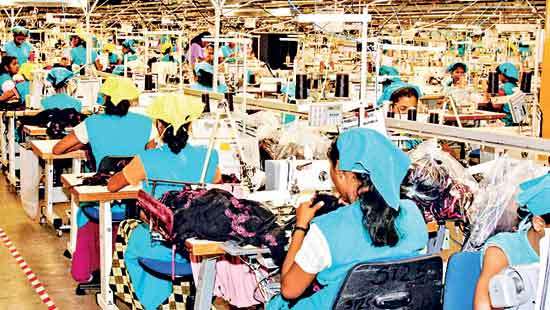
In Sri Lanka, significant progress in human resource development has not led to increased women’s participation in the workforce. Although the country has nearly closed the gender gap in education and health, only one in three women is active in the labour market.
Reflections on energy security in the fuel queue
18 Mar 2026
0
589
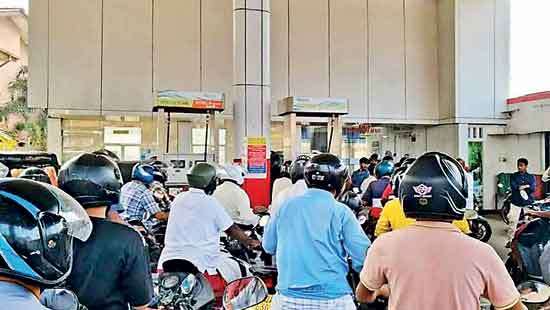
For years, political agitators have opposed the joint development of the World War II British oil tank farm in Trincomalee. The pretext has always been defending energy security, although irony should not be lost on the discerning onlooker.
Can Sri Lanka afford additional holidays?
18 Mar 2026
4
886
Sri Lanka has never had a shortage of holidays. From religious observances to full moon days, from national commemorations to long weekends that quietly stretch into unofficial breaks, we have built a culture that celebrates pause far more easily than it embraces productivity.

Should nine-yr.-olds be kept in school until 4 p.m.?
18 Mar 2026
1
485
I regularly go to pick up my grandson, who is in Year 4 at a leading Buddhist school in Maradana. His classes usually conclude at 1 p.m. However, on certain days the students are kept in school until around 4 p.m., as teachers prepare them for the forthcoming Grade 5 Scholarship Examination.

Current world order proves Marx’s interpretation of law
17 Mar 2026
0
646
The Sri Lankan Government is apparently preparing for the repercussions of the long-drawn-out war in the West Asia or a war covering other regions as well, as the belligerent parties - the US and Israel on the one hand and Iran on the other - are not showing signs restraints.
Drug bust valuations raise questions
17 Mar 2026
2
655
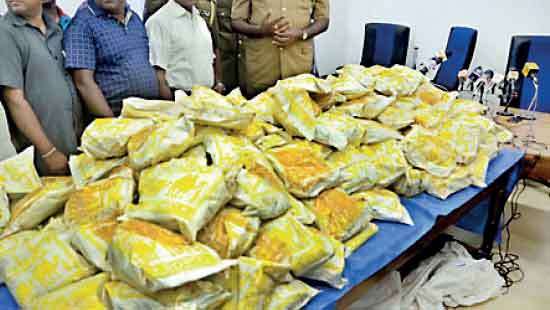
The Sri Lanka Navy recently announced the seizure of narcotics from a fishing vessel valued at about Rs. 3 billion (around US$ 9.6 million). Only days earlier, the authorities reported another detection worth about US$ 4.8 million.
AI chatbots add to the epidemic of teenage violence in US
17 Mar 2026
0
519
The United States is well known for many things, among them is the under-17s indulging in violence, including murder and mass shootings. Children are increasingly ill-mannered, whiny, selfish, arrogant, rude, defiant and violent, according to ‘Psychology Today’.

Sri Lanka’s economic vulnerability to Middle East Conflict
16 Mar 2026
0
657
The geopolitical landscape of early 2026 has shifted with a violent suddenness that the current Sri Lankan administration seems ill-prepared to navigate.
Potato cultivation a no-winner for Welimada farmers
16 Mar 2026
3
450
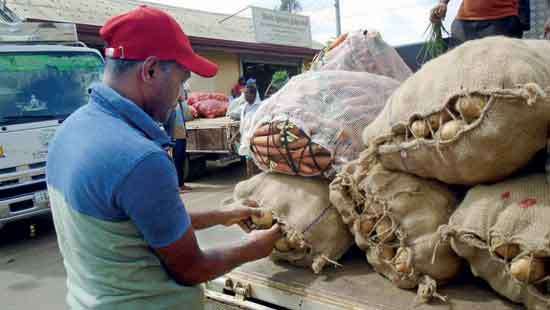
Farmers in the Welimada plateau maintain that cultivating potatoes requires a very high investment, and when the harvest they produce reaches the market, imported potatoes are sold at lower prices during the same period.
Peace Is Not a Slogan: Indian Ocean’s Dangerous Moment
16 Mar 2026
1
366
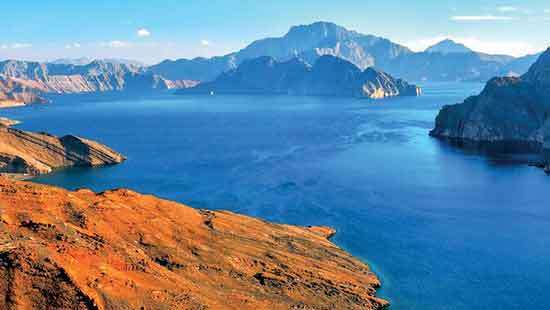
The Indian Ocean has been declared a zone of peace on successive occasions. It is time the world’s major powers started acting like they believe it.

Sri Lankans should brace for harder times again!
16 Mar 2026
1
491
Sri Lankans may soon have to tighten their belts once again. The reintroduction of a QR based fuel distribution system is a clear signal that the government is bracing for turbulence in the global energy market.
Should people panic this time, too?
16 Mar 2026
0
319
Sri Lankans are once again faced with a fuel crisis due to the escalating conflict in the Middle East. Ever since US-Israel launched their attack on Iran, people have gone into panic mode.

A New Digital Pathway for Sri Lankan Space Explorers
14 Mar 2026
1
689
In an era where space exploration is no longer limited to a few powerful nations, Sri Lankan youth now stand at the gateway of a global scientific revolution.
The UN Security Council on Iran: Is it hypocrisy back and forth?
14 Mar 2026
0
1509
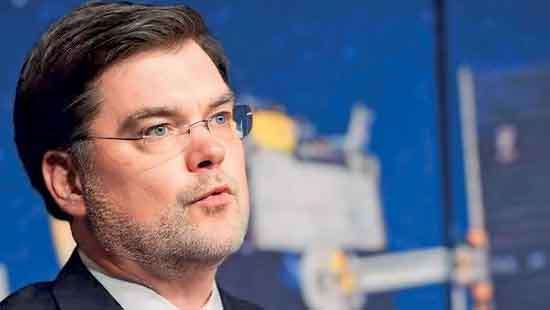
The UN Security Council yesterday adopted Resolution 2817 presented by Bahrain, a non-permanent member of the Council, on behalf of the GCC states.
Wanted, a serious Opposition
14 Mar 2026
0
416
Managing Director of the International Monetary Fund (IMF) Kristalina Georgieva last week said that Sri Lanka now has a government that people trust, and the country’s recovery is being powered by that trust which is a rare and valuable asset.
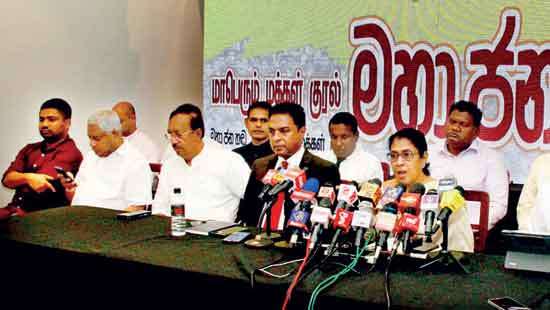
Loss-making CEB unions oppose restructuring, demand wage increase
14 Mar 2026
0
335
Faced with continuous losses and no end in sight of a turnaround at the loss-making Ceylon Electricity Board (CEB), Energy Minister Kumara Jayakody ultimately issued an Extraordinary Gazette Notification earlier this month establishing six successor companies to transfer the functions and duties of the CEB.
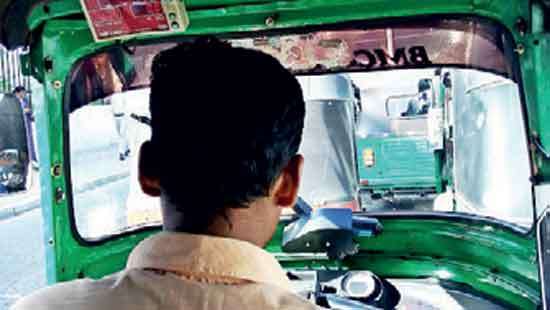
Trishaw drivers rooking us on fares
14 Mar 2026
2
313
They are at it again. With the present uncertainty about fuel prices and availability, some trishaw drivers are making the most of the situation to get more money from passengers.
Beyond language: What Sri Lanka needs from its Foreign Minister
13 Mar 2026
9
832
The controversy surrounding the English proficiency of Sri Lanka’s Foreign Minister has sparked a debate that, while understandable in a country with a colonial legacy and global diplomatic engagements, risks missing the larger point. In diplomacy, language is undoubtedly an important tool. Yet, what ultimately matters is the substance of policy, the ability to foster dialogue, and the clarity of the strategic direction a country seeks to pursue

Iran’s stern response inspires resilience in the Global South
13 Mar 2026
7
1819
As the unprovoked and illegal war on Iran continues for the 14th day, one thing is certain: the United States and Israel—the aggressors in this case—are not winning, nor is Iran losing. Yet in Washington and Tel Aviv, there is no shortage of arrogant rhetoric. US President Donald Trump and the dimwitted members of his administration keep saying, “We won the war, but we will stay in the fight to finish the job.” If that is so, why waste your fast
It is the message that matters, not the language
13 Mar 2026
4
574
There are ongoing attempts to ridicule the present Government over its so-called inability to converse in English. The media both social and mainstream, are complicit for obvious reasons. All government representatives need not be highly proficient in English, which is not our mother tongue. It is the intended message that matters, and not the language in which it is conveyed. As leaders of many other countries and their representatives do, may

The Sunset of Hegemony: Analysing the potential permanent displacement of U.S. Bases Post-2026
13 Mar 2026
0
505
For nearly eight decades, the United States military presence in the Middle East has been the cornerstone of global energy security and regional “stability”—a stability often defined by American interests. However, the 2026 escalation, characterised by the killing of Iran’s Supreme Leader and the subsequent retaliatory strikes across the Gulf Cooperation Council (GCC) states, has shattered the social and politica
The US began regime change in Iran way back in 1953
12 Mar 2026
3
750
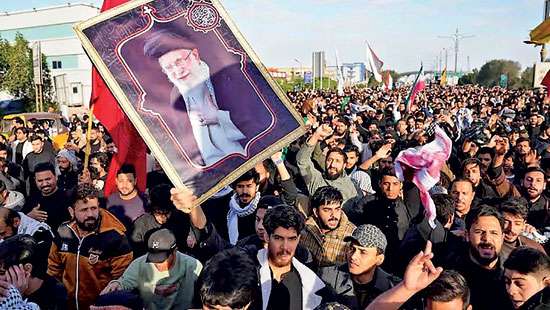
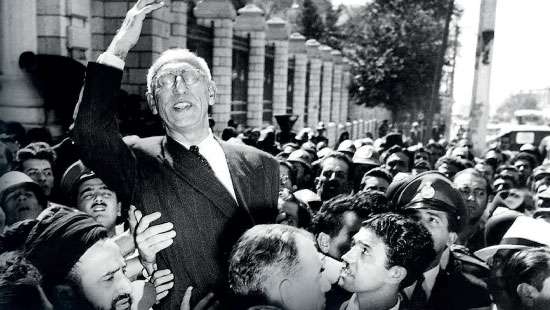
In 1953, the CIA and the British MI6 together staged Operation Ajax, a coup which overthrew Iran’s democratically-elected Prime Minister Mohammad Mosaddegh, who nationalised Iran’s oil industry in 1951. This was done without Shah Mohammad Reza Pahlavi’s approval. The Pahlavi dynasty had ruled Iran since 1925, but power now lay with the parliament which gave Mosaddegh the green light to nationalise Iran’s oil industry.
Is Sri Lanka ready to manage prevailing crises?
12 Mar 2026
0
355
Sri Lankans are once again facing several crises in the aftermath of the intensified conflict in the Middle East. Fuel and gas price hikes are obvious outcomes of these tensions and it doesn’t only affect Sri Lanka. Global oil prices have surged, with Brent crude briefly exceeding $100-120 a barrel. It is said that the conflict threatens supply chain disruptions. But this is not the first time that Sri Lanka experienced such shocks.
Iranian warships in SL waters: How Sri Lanka stood tall amidst a geopolitical conundrum
12 Mar 2026
0
520
Sri Lanka’s prudent handling of the two Iranian warships – IRIS Dena, which sank off Sri Lankan waters, and IRIS Bushehr, which was granted sanctuary – was a rare example of a small nation, not just, navigating a looming geopolitical conundrum, but also making political capital out of it, by playing safe and playing right in accordance with International Law.
Keep Galle Face Green safe - No vehicles on the grounds
12 Mar 2026
0
276
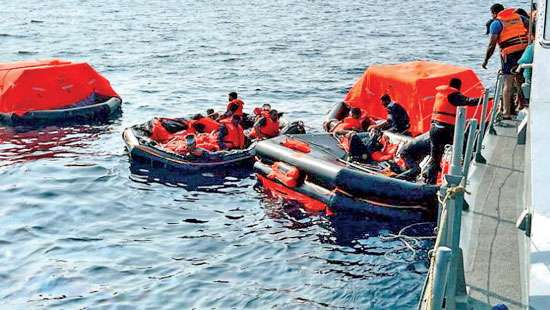
On the evening of March 7 (Saturday), I attended an Iftar (fast-breaking) gathering organised by a relative at Galle Face Green. It was heartening to see several families choosing this iconic public space as the venue to break their fast together. However, it was also noticeable that large areas of the ground were without grass, possibly due to the prevailing warm weather.

The Mirage of Quick Victory: Why the 2026 Iran Conflict is a strategic quagmire
11 Mar 2026
2
1189
The history of warfare is littered with the hubris of technologically superior powers who underestimated the resilience of a civilization state.
Let’s not allow the war to obscure everything else
10 Mar 2026
1
438
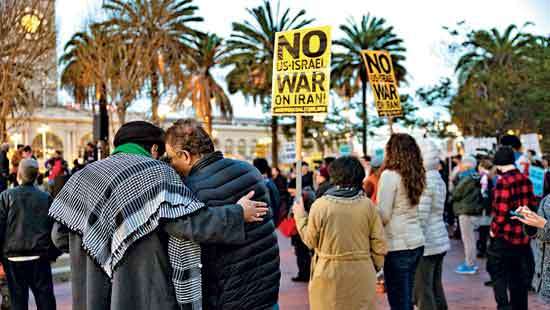
The war in West Asia between the US, Israel and Iran has practically dwarfed everything locally. International and local mainstream media as well as all social media platforms are obsessed with real, fake and AI-generated information on this war in a manner one can hardly understand what is really going on in the region.
The many reasons why countries crave nuclear weapons
10 Mar 2026
0
401
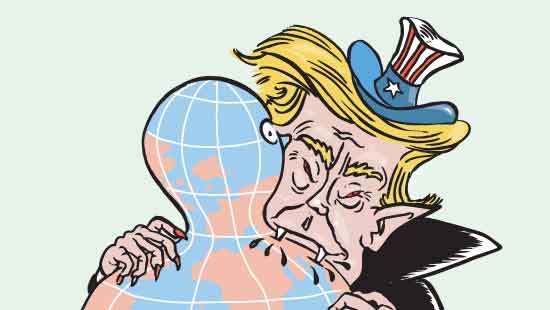
Although nuclear weapons are extremely destructive, as was proven when the US bombed Hiroshima and Nagasaki on August 6 and 9, 1945, all rising powers want to have atomic and hydrogen bombs in their arsenal. Zhuldyz Kanapiyanova, of the Eurasian Research Institute, Kazakhstan, goes into the security, geopolitical, technological, prestige and domestic reasons for States wanting to have the deadly weapon and that in large quantities.
Exporting a culture of political violence
10 Mar 2026
2
243
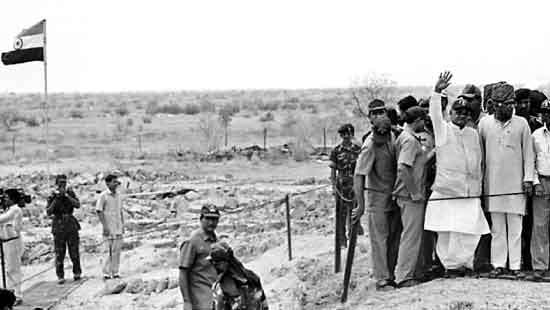
The United States often speaks of democracy, human rights and the rule of law. Yet its own history reveals a troubling pattern of political violence. Four American Presidents — Abraham Lincoln, James A. Garfield, William McKinley and John F. Kennedy — were assassinated by their own citizens. These tragedies underline the darker side of America’s long-debated gun culture.
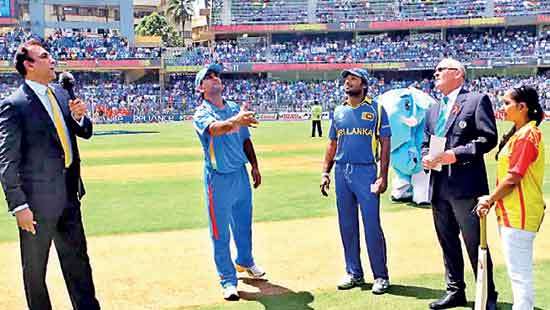
Deified and Damned: Cricket, Faith and the Mob
09 Mar 2026
0
615
“We are not sure exactly why, but cricket is like a religion here.” So wrote W. Lewis Amselem, Chargé d’Affaires of the US Embassy in Colombo, in a cable to Washington on September 13, 2002, logged in the WikiLeaks database.