Reply To:
Name - Reply Comment
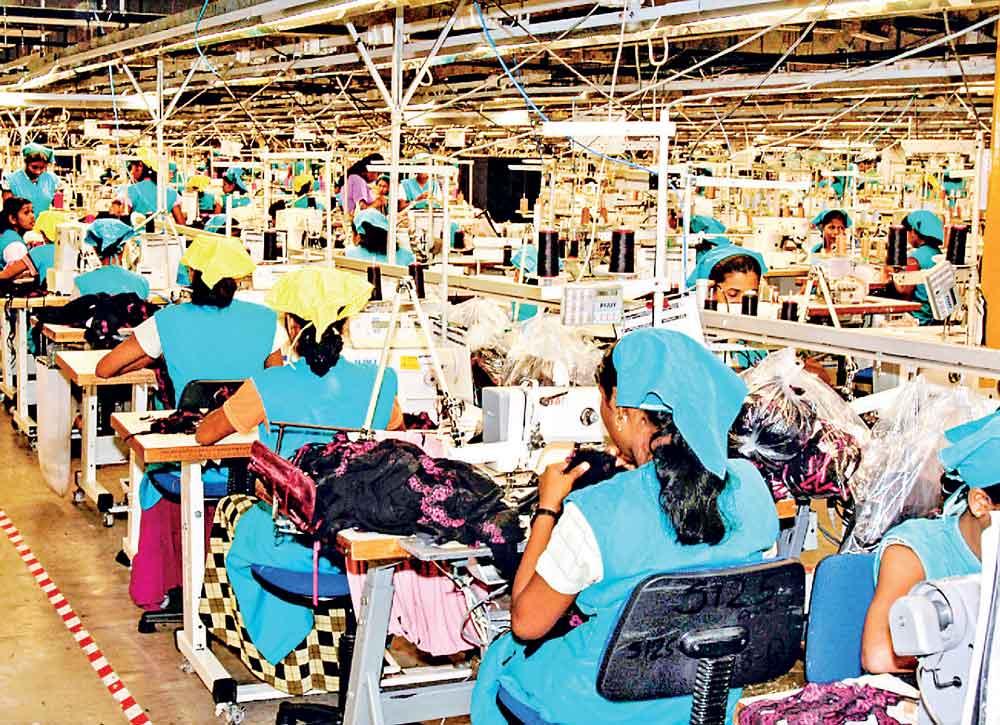
The new conditions—including limits on maximum night work hours and additional requirements
like transportation—may still hinder women’s ability to participate fully in the workforce
 An increasing body of research on the precariousness of women’s labour participation in Sri Lanka has identified several economic and non-economic factors as key drivers of women’s low participation rates
The absence of clear labour laws on sexual harassment and discrimination in the private sector is recognised as another factor that contributes to low FLFP in various empirical studies
 Several other pieces of legislation restrict women’s participation in the labour force. The British colonial statute -- the Women, Young Persons and Children Ordinance of 1923, for example -- prohibited the employment of women and young persons at night except in specific circumstances
By Shermila Antony
In Sri Lanka, significant progress in human resource development has not led to increased women’s participation in the workforce. Although the country has nearly closed the gender gap in education and health, only one in three women is active in the labour market.
According to the Labour Force Survey (LFS) conducted by the Department of Census and Statistics (DCS), female labour force participation (FLFP) in Sri Lanka is 29.8%, compared with the male labour force participation rate of nearly 70%. Of the 29.8% of women who participate in the workforce, almost half are active in the informal sector. The COVID-19 pandemic increased the vulnerability of women in employment, further exacerbating the problem.
Today, labour participation remains gender-segregated, with sectors like plantations, apparel, and migrant work employing mainly women, but offering low-skilled jobs with minimal growth. According to ILO reports, women are twice as likely to face unemployment, often occupy low-quality jobs with poor pay and protection, and experience devaluation, violence, and harassment. Additionally, they face social censure, which shapes their roles and the time they commit to paid work and unpaid care work, further diminishing their economic role. The DCS Sri Lanka Time Use Survey 2017 found that women spend over three hours daily on unpaid domestic and childcare work, while men spend over three hours on employment-related activities.
Outdated colonial laws
An increasing body of research on the precariousness of women’s labour participation in Sri Lanka has identified several economic and non-economic factors, including outdated colonial paternalistic and patriarchal labour legislation as key drivers of women’s low participation rates. The British colonial government enacted several statutes containing provisions on the terms and conditions of work, including health, safety, and the welfare of women, to ‘protect’ women deemed vulnerable or unable to make independent decisions about their employment, which remain in force today with little or no amendment.
For instance, the Factories Ordinance of 1942 addressed the health, safety, and welfare of workers, specifically regulating the employment of women working in factories. This included the provision of separate accommodation when men and women are both employed, detailed safeguards to prevent injuries to women from machine operation, suitable rest facilities for all female workers whose work is performed while standing, and protection for women from hazardous work.
Additionally, the Shop and Office Employees (Regulation of Employment and Remuneration) Act of 1954 introduced similar health and safety provisions specifically for female workers. Although these safety standards may also apply to male workers, the provisions seem to prioritise the protection of women over a comprehensive approach to safeguard all workers from hazardous conditions. This raises important questions about the reason for differentiated protective measures and their effects on gender equality in occupational health and safety regulations.
The provision of paid and mandatory maternity leave for female workers, as outlined in the Maternity Benefits Ordinance of 1939 and the Shop and Office Act for women in the private sector, as well as the Establishment Code, including the University Grants Commission Circular No. 10/2013, which applies to women in public and state universities, has created direct and indirect barriers for women despite its aim of addressing women’s disproportionate burden of unpaid care work.
The law recognises women’s reproductive role and provides for paid, mandatory maternity leave, job security, and protection against discrimination, as well as provisions for nursing and crèche facilities. Although these laws offer significant protection and benefits for working mothers, several gaps impede their effective enforcement. For example, the duration of paid maternity leave for women in the private sector and eligibility for statutory leave and other benefits differ from those of women working in the public sector, depending on the nature of employment (permanent, temporary, or casual).
Moreover, while paid paternity leave, leave for adoptive parents, and leave for fertility treatment are available for workers in the public sector, they are absent in the private sector. Furthermore, the limited three-day paternity leave and the absence of a comprehensive parental leave policy reinforce the expectation that women should handle the bulk of childcare. This dynamic restricts women’s full participation in the workforce and sustains gendered divisions of labour, creating barriers to equal employment opportunities. Additionally, unlike in developed countries, the financial burden of maternity in the private sector is borne solely by the employer, leading to indirect discrimination against women in employment and promotion practices.
Ban on working at night
Several other pieces of legislation restrict women’s participation in the labour force. The British colonial statute -- the Women, Young Persons and Children Ordinance of 1923-- for example, prohibited the employment of women and young persons at night, except in specific circumstances, in accordance with ILO Conventions of 1919 and 1920. This law recognised the vulnerabilities of women. While the outright ban on night work for women was lifted in 1984 and 2002 by an amendment to the Factories Ordinance and the Employment of Women, Young Persons, and Children Act of 1956, respectively, the new conditions—including limits on maximum night work hours and additional requirements like transportation—may still hinder women’s ability to participate fully in the workforce. Although a 2024 amendment to the Shop and Office Act permits women to work ‘after hours’ in the service industry and emerging sectors such as BPOs, thereby allowing women to access traditionally male-dominated roles, the law still prohibits women employed in shops and offices from working after 8.00 p.m.
The absence of clear labour laws on sexual harassment and discrimination in the private sector is recognised as another factor that contributes to low FLFP in various empirical studies. Although Articles 17 and 126 of the Constitution of Sri Lanka provide a remedy against sex-based discrimination, relief is available only against executive and administrative action. Whilst sexual harassment is recognised as a criminal offence in the Penal Code of 1883, there are no explicit labour laws on sexual harassment or grievance handling mechanisms for women employed in the private sector. Additionally, the right to equal pay for women and men for work of equal value, despite ILO and human rights standards, remains elusive for women. The absence of women active in trade unions has exacerbated these challenges.
Therefore, it is evident that several shortcomings in labour legislation impede women’s employment. The formation of a cabinet-appointed committee of experts in 2025 to review labour legislation, which has implications for FLFP, is therefore both timely and crucial. This initiative presents an opportunity to propose reforms to existing labour legislation, grounded in empirical evidence and women’s lived experiences, and to regulate atypical forms of employment, enabling women to reconcile work-family responsibilities and advance gender equality in the workplace.
Shermila Antony is a Lecturer at the Faculty of Law, University of Colombo.