Reply To:
Name - Reply Comment
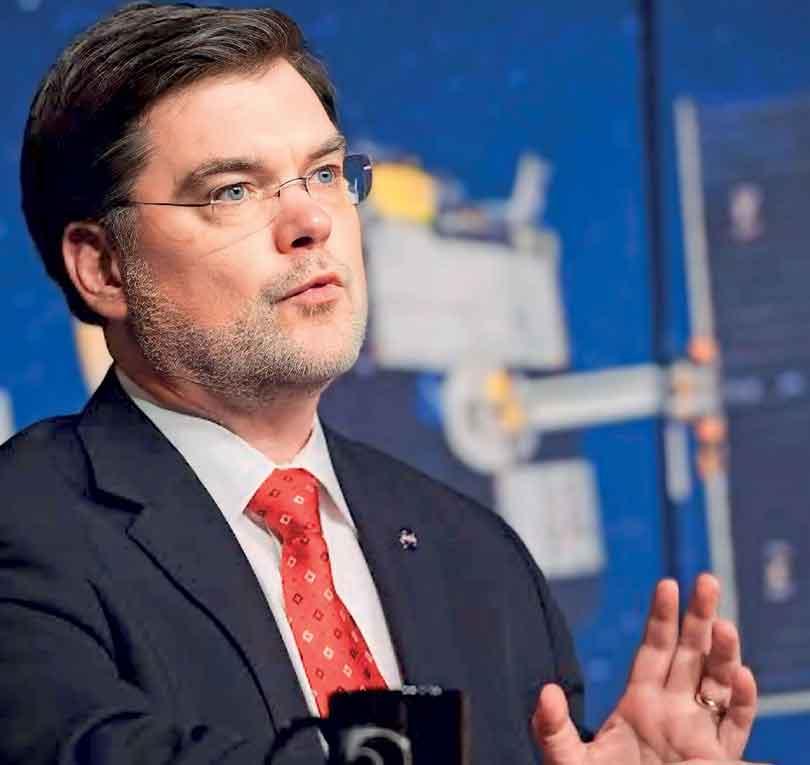
Jim Adams

|
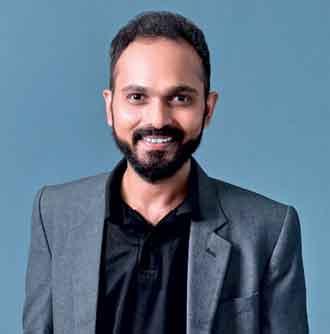
CTO Manjula Gayan |
 |
In an era where space exploration is no longer limited to a few powerful nations, Sri Lankan youth now stand at the gateway of a global scientific revolution. This is an attempt to inspire and empower young minds in Sri Lanka to explore the wonders of astronomy and space science by showing how world-class knowledge is now accessible to anyone with curiosity and ambition.
At the heart of this global movement is Manjula Gayan, Co-founder and Chief Technical Officer of the “Book a Scientist” (www.bookascientist.com) online astronomy education platform — a groundbreaking initiative developed in collaboration with Jim Adams, former Deputy Chief Technologist at NASA. Through this platform, Sri Lankan students now have direct access to world-renowned scientists, including Nobel Laureate in Physics (2006) Dr. John C. Mather, visionary behind the James Webb Space Telescope (JWST), and former NASA Chief Scientist Dr. James L. Green. This opens new doors for learning, discovery, and inspiration in space science. In the following discussion, Jim Adams outlines his views on….
Q How did you end up at NASA, and what was it like becoming the Deputy Chief Technologist?
Jim: I actually started out studying physics in college. My first “real” job was at General Electric, building satellites. Back then, nobody really understood how space radiation affected components like transistors or satellite parts, so I spent about 10 years at GE and another 15 at NASA’s Goddard Space Flight Centre figuring that out. One day, an astronaut friend, Dr. Mary Cleave, called me up and said, “I need you at NASA Headquarters to be the Deputy Director of Planetary Science.” I told her I’d never even worked on a planetary mission, and she just said, “Doesn’t matter, you’ll figure it out.” She was right —I loved it. It was the absolute highlight of my career. I got to be involved in the Messenger probe arriving at Mercury, the development of Juno at Jupiter, New Horizons arriving at Pluto, the rovers on Mars, MAVEN orbiting Mars, and flybys of asteroids and comets. It was just a fantastic opportunity.
QAnd then you moved into the CTO role?
Jim: In most cases, when you’re successful, your bosses tell you what you’re going to do next. I was offered the job of Deputy CTO for the agency. At first, I turned it down three times because Planetary Science kept me so busy. Finally, they called again and said, “No, you really have to take the job. You have no choice.” It turned out to be wonderful. It was an opportunity to sharpen my public presence, improve my speaking skills, and deepen my understanding of NASA’s budget and strategy. I dealt with many government officials and members of Congress, and although I never met the President, I was often at the White House with his staff.
Q Jim, you mentioned earlier that you were ‘just’ a project manager, but wasn’t your role as Deputy CTO actually responsible for overseeing $6.5 billion in project-related space missions?
Jim: Well, I didn’t manage it directly; I set the strategy and approved spending—yes, $6.5 billion. NASA’s technological needs are defined very early in the concept stage of a mission, and we try not to change them afterward. For example, by the time the Space Shuttle launched, there were new state-of-the-art computers, but the hardware was defined 10 years prior. As Deputy CTO, we set roadmaps for key areas like thermal control, structures, electronics, and software, looking ahead to 2030. If we needed to process ten times more data than today, we have to plan now. Strategic thinking ensures the technology is ready by the mission launch.
QCould you explain in simple terms how radioisotope power systems work and why they are essential for deep space?
Jim: Most of our universe is dark. Beyond Jupiter, sunlight isn’t enough to run probes. Mars rovers like Curiosity and Perseverance use nuclear power for a constant energy and heat source. We use Radioisotope Thermoelectric Generators (RTGs), which contain a small amount of Plutonium-238. As it decays, it generates heat, which is converted into electricity via a bimetallic strip—essentially a long-lived battery. Unlike terrestrial fission power plants, RTGs are compact and provide the steady 100 to 1,000 watts needed for spacecraft. One day, fission systems may power commercial lunar bases.
Q What safeguards exist for nuclear material?
Jim: Safety protocols are strict. Rockets are like bombs; if one explodes, we don’t want radioactive material falling on land. We use rockets with proven safety records, and the RTG is designed to survive explosions. We also launch over the ocean so that any mishap can be tracked and recovered safely.
Q Why did you decide to leave NASA in 2016?
Jim: During the 2016 U.S. election, management knew that a new president would bring in their own top staff. I was offered early retirement at age 59 and a half, and I took it. Since then, I’ve run my own consulting company, reviewed projects for NASA and the South African government, and travelled globally to inspire the next generation. I want people to remain passionate about space and not be distracted by short-term tech fads like AI.
Q What advice would you give to youth in Sri Lanka?
Jim: I tell junior high students to study algebra—it may seem daunting, but a strong foundation in math and science is essential. You don’t need to work for NASA anymore. Space exploration is open to almost everyone. I’ve seen India succeed through dedicated people and government support. Sri Lanka can start CubeSat programmes, develop small rockets, or run ground stations. Think innovatively, educate yourself, and start. Don’t give up.
Email:[email protected]
Rusin Thathsara is an undergraduate at the University of Moratuwa, a world record holder and an amateur astronomer. He launched South Asia’s first book on space construction, created Sri Lanka’s first lunar model, and is currently building a youth team to promote astronomy and space startups in Sri Lanka.