 Kamanthi Wickramasinghe
 Reply To:
Name - Reply Comment
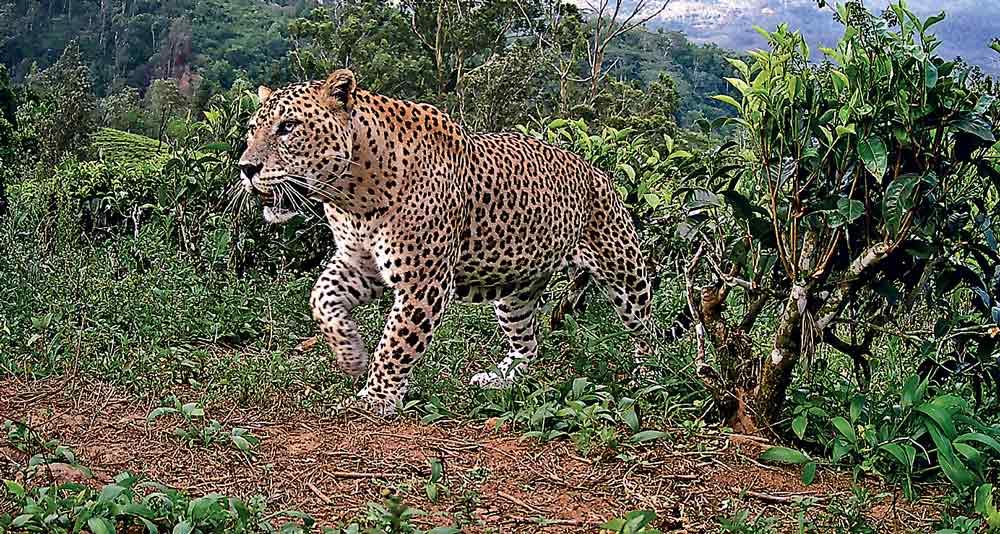
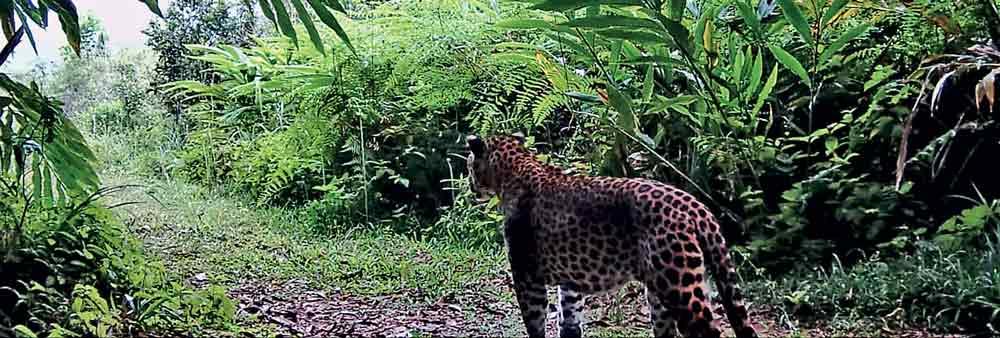
Footage recorded during camera trapping in the Belihuloya region (Images courtesy – WNPS)
 WNPS launched Multi-Regional Leopard Research and Conservation Project in 2022
The project aims to study leopard populations outside protected areas and facilitate human-leopard coexistence
In an attempt to protect the iconic Sri Lankan leopard living outside protected areas, the Wild Cats Subcommittee of the Wildlife and Nature Protection Society (WNPS) launched the Multi-Regional Leopard Research and Conservation Project in 2022. The partnership inked with LOLC Holdings aims to study leopard populations outside protected areas and facilitate human-leopard coexistence. Activities are being conducted in six field stations located in Panama, Sigiriya, Kilinochchi, Kotagala, Belihuloya and Kalawana.
From collecting baseline data to identify leopard distribution outside protected areas to identifying locations to install camera traps, the team working on the field has worked tirelessly to encourage human-leopard coexistence.
The need for conservation-based decision making
Speaking to the Daily Mirror, WNPS Wildcat Sub-committee Co-Chair Prof. Enoka Kudavidanage said that over the past two years, the team has been obtaining information by continuously engaging with local communities. “We have collected a lot of information on the presence and absence of leopards, how they move in the landscape and what do people feel about it. This is being drafted into a publication at present. While we continue working with people we are trying to establish something more scientific. As the preliminary step we started putting camera traps in areas where there are incidents and where people have told us that there are leopards. On the book we have information from people about leopards and where they have been moving around. Each centre coordinator is now equipped with camera traps and has been trained to install camera traps in areas with leopard incidents,” she explained.
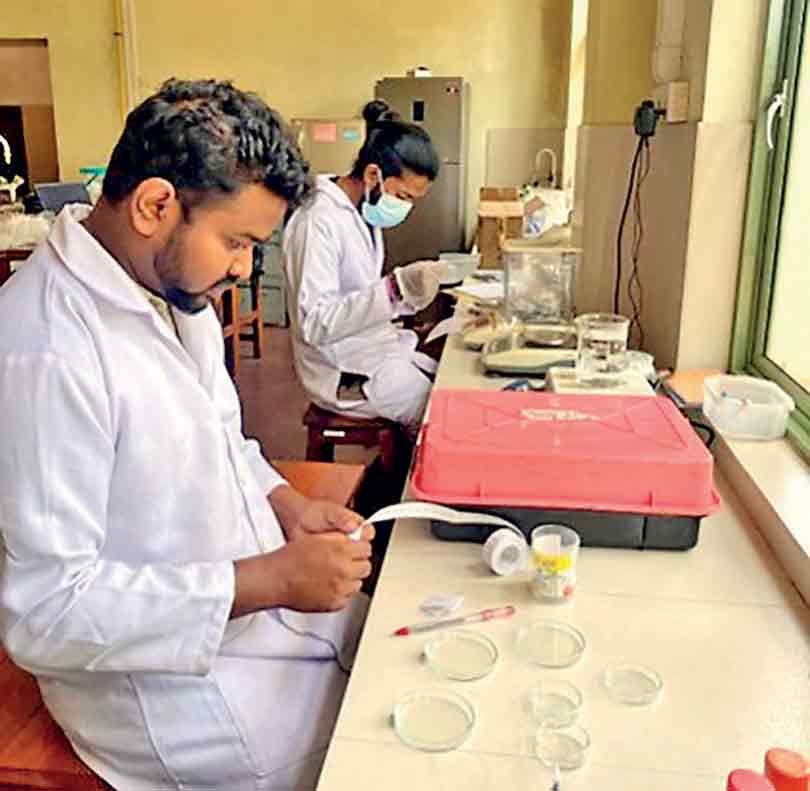
Laboratory analysis of scat samples conducted at the Sabaragamuwa University
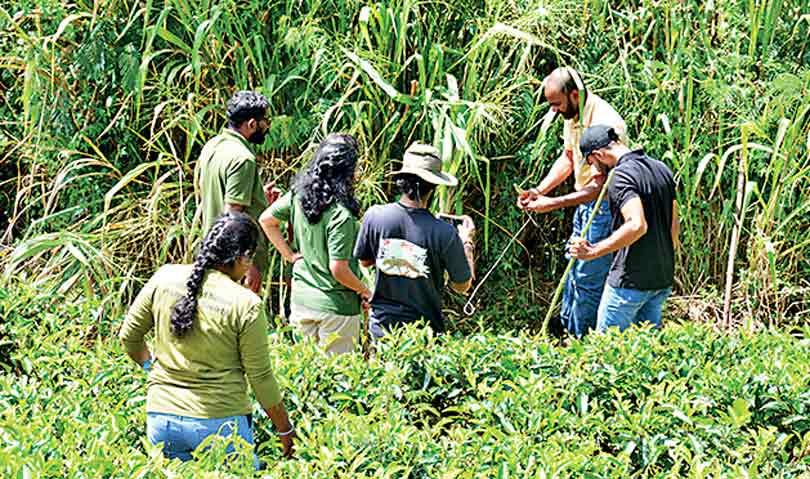
Snare removal session conducted at Strathdon Estate, Hatton in 2024
Prof. Kudavidanage further said that so far they have received on the ground evidence about leopards. “We get information about their presence in human-dominated landscapes, the way they move around, the presence of cubs, evidence of breeding and their movement patterns. These are several outcomes from the reconnaissance survey,” she added.
From this month (May) onwards, a scientific assessment would be initiated based on a sampling method to understand the ecology of leopards in human dominated landscapes for the purpose of conservation. “The whole idea is to understand two things; to see how humans are affected by leopards and how leopards are affected by the presence of humans and to understand whether they are adjusting in a scientific manner. All the previous work involved baseline data to determine where we would carry out sampling. I believe that science is needed to make conservation-based decision making. Now we are providing evidence for our work. But simultaneously all the other things that we did for conservation continues; the education programmes, raising awareness and community outreach,” she said.
Speaking about challenges, Prof. Kudavidanage said that despite all efforts, incidents are still being reported. “People also keep information to themselves. In this changing economy, with deforestation and a growing demand for land and so on, many negative events are occurring as well. Due to economic constraints, people are compelled to seek illegal means to earn money. We work in collaboration with the Department of Wildlife Conservation and many other stakeholders. At the end of the day I believe that everybody needs to work together to bring about a lasting impact,” she underscored.
Prof. Kudavidanage also commended LOLC for their commitment towards the project. She said that a publication based on the first set of data would be released soon.
More targets ahead
From next year, research efforts will be intensified with a strong focus on camera-trap–based studies to identify spatiotemporal activity patterns of leopards across multiple landscapes within the six study regions. Project proponents believe that this approach would enable a better understanding of leopard presence, movement, and activity in shared landscapes, where conservation challenges are most prevalent. In parallel, a detailed study into dietary ecology will be undertaken to assess prey composition and levels of livestock dependence.
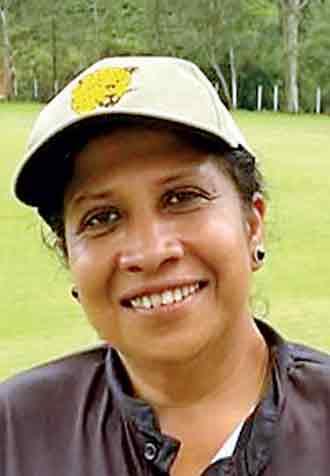
 “We have collected a lot of information on the presence and absence of leopards, how they move in the landscape and what do people feel about it. This is being drafted into a publication at present. While we continue working with people we are trying to establish something more scientific. As the preliminary step we started putting camera traps in areas where there are incidents and where people have told us that there are leopards”
Prof. Enoka Kudavidanage, WNPS Wildcat Sub-committee Co-Chair
Overall, this project aims to integrate scientific research, community engagement and practical conservation interventions. It also underscores an important role in addressing one of the most pressing conservation challenges faced by the iconic Sri Lankan leopard within the increasingly threatened human-dominated landscapes.
Kalawana study region