Reply To:
Name - Reply Comment
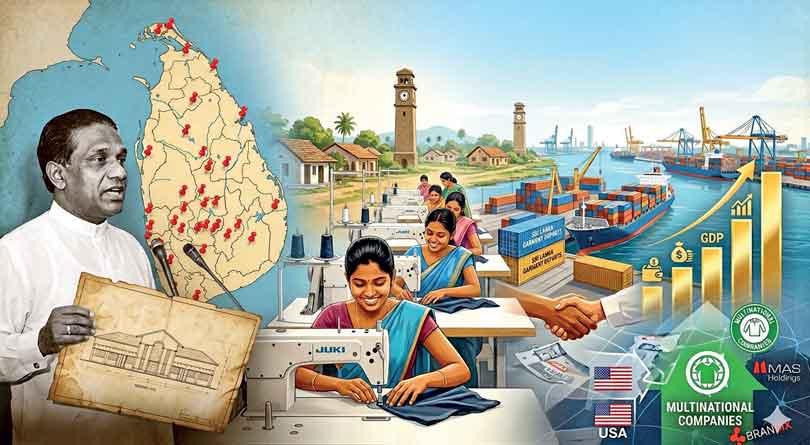
- The 200 garment factories programme was the major industrial development project spread throughout the country, creating employment and exports, bringing in valuable foreign exchange
- Exports were promoted by utilising the USA garment quotas by President Premadasa as a strategic tool to develop the rural economy and to help alleviate poverty
- Apparel and Garment exports, which were app. US $764M
- in 1991 when the 200 Garment Factory was launched. Currently exports have exceeded US$ 5.0 billion
- Workers who had to leave their villages, were now able to travel to work from their homes and have a substantial saving to take home
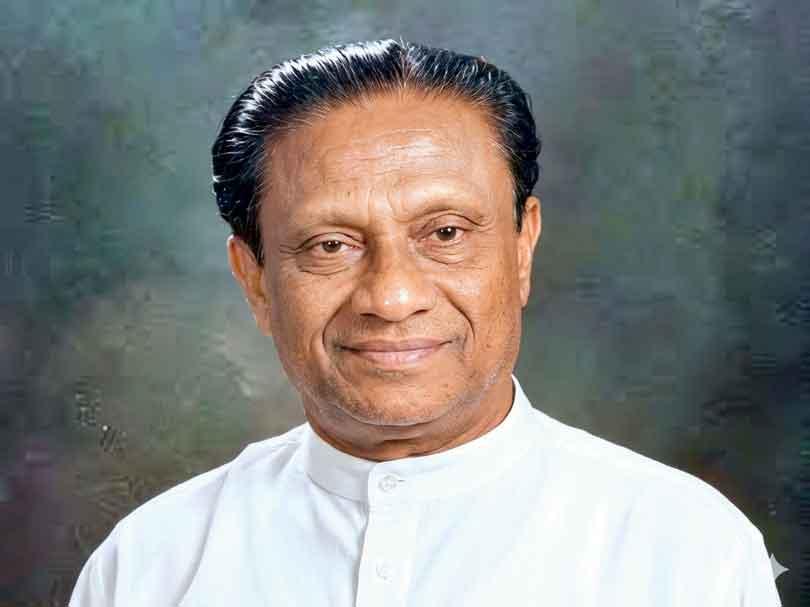
 On the 33rd death anniversary of President Ranasinghe Premadasa (1989 - 1993) we should recognise the major contribution made to economic development with his foresight to set up the 200 garment factories programme as the major industrial development project spread throughout the country, creating employment and exports, bringing in valuable foreign exchange to the country.
President Premadasa focused on pro-poor policies, despite facing severe civil conflict. Key initiatives included the 200 Garment Factories programme, The Gam Udawa Village Reawakening Movement and the Janasaviya Poverty Alleviation Programme, which significantly increased GDP growth to 6.9% by 1993, reduced the budget deficit and decentralised local and foreign investment.
As the Chairman and Director General of the Greater Colombo Economic Commission (GCEC) transformed into the Board of Investment (BOI) in 1991 to take economic development throughout the country was one of the major reforms done to achieve results by President Premadasa who believed in practice rather than precept.
Converting GCEC to BOI: A major transformation to accelerate Economic Development
I was Chairman of the Peoples Bank and one evening I had a call from the SecretaryFinance Mr Paskaralingam who told me that the President wanted me to take over the GCEC now the BOI.
This was quite a surprise for me as I had been the Chairman of the Peoples Bank under President Jayawardena and continued under President Premadasa and was in charge of an organisation having over 350 branches and over 10,000 employees in 1991 with good quality, well trained, experienced senior management and staff who were the best products turned out by our local universities, serving mainly the less privileged businesses and customers through its branches spread throughout the country supporting economic development in all parts of the country especially at the grass roots levels.
On assuming office as Chairman and Director General of the GCEC, the major Foreign Direct Investment (FDI) development organisation in the country operating free trade zones in Katunayake and Biyagama recognised as the best Free Trade Zones by the Global Free Trade Zone Association.
The setting up and expansion of the Koggala Export processing Zone by President Premadasa,.took place immediately following the taking over of the GCEC
The transformation included the conversion of the GCEC to the BOI to be operated under the President a strategic decision made by President J R Jayewardene who opened up the economy and set up the GCEC under Upali Wijewardene, the business tycoon to be the major driver of FDI to Sri Lanka, attracting new foreign export industries, transferring new technology and skills to Sri Lankan workers and management and creating new employment with foreign exchange coming into the country with a new ethical culture to make our industries efficient and competitive in the world market.
200 Garment Factory Programme
President Premadasa who had the knack for grass root development took this concept to the villages by implementing the 200 garment factories programme throughout the country.
The addition to infrastructure projects which resulted in high-rise apartments in this country, growth and development of the hotel sector in Colombo and the suburbs and the commencement of the multi-storey World Trade Centre by Singapore Giant investor S P Tao, were all served by the BOI, the one- stop shop about which many talk about but do not know how it was done.
Also, many other service industries such mobile phones, TV and Radio Stations playing a major role to support the city and rural population were started giving a change to the earlier concept of only export-oriented projects.
The 200 garment factories programme to manufacture garments for the export market using the skills of rural girls bringing in the much-needed foreign exchange was one of the significant achievements and contributions made by President Premadasa to revolutionise industrial development and uplift the rural economy with the help and support of the private sector.
The concept was to have 200 Garment Factories - each factory to employ 500 persons from the area with preference given to the poorest of the poor from Jansaviya families, an export quota of 10,000, 25,000 or 50,000 dozens to USA based on the criteria of non-difficult, difficult and most difficult areas, tax incentives, if one was operating an existing factory and expanding under the 200 garment factory programme, the mother factor was also given the tax incentive, duty free concessions for capital items for the factory, all raw material imported were to be duty free. Setting up of a clock tower in the area of the factory, the import of a Benz car on completion of the project.
The one-stop shop for Customs imports and exports, Income Tax and Opening a Foreign Currency Bank account all under the BOI. All zones had a Customs office where import - export was done at the zones and those outside could go to the Orugodawatte BOI customs operating centre.
For the first time we saw factories shifting out of the Katunayake and Biyagama free trade zones in the Colombo and Gampaha Districts to outside provinces.
Exports were promoted by utilising the USA garment quotas by President Premadasa as a strategic tool to develop the rural economy and to help alleviate poverty in Sri Lanka. Credit should be given to the USA Government for this gift of the garment quotas which enabled Sri Lanka to become one of the top exporters in garments, even after the abolition of the quota system to produce quality products at competitive prices. We also attracted major buyers from the USA and Europe to Sri Lanka with this new expansion of the garment industry.
The garment industry became the largest industrial export from Sri Lanka due to the vision of the late President Premadasa. Workers who had to leave their villages and come to Colombo and Katunayake and stay in boarding houses with measly savings were now able to travel to work from their homes and have a substantial saving to take home.
President Premadasa did not tolerate any political interference and we hardly ran into problems with any of the politicians in the electorates. The management and staff of the BOI and others which included staff seconded from various ministries played a major role in making the 200 garment factories programme a success.
The BOI was a one-stop shop where investors could come to one place for all their requirements. The numerous meetings that we had with investors, government ministries, banks chaired by the late president himself and others chaired by the finance secretary were action oriented to solve problems of investors and not mere talk shops.
I remember the frequent meetings we had at Sucharitha where President Premadasa invited investors who were given dates to open their factories and solved any problems on the spot.
Always at these meetings the Chairman or GM of the CEB, Road Transport and the Water Board were present as these were three major requirements of investors and were ready to provide solutions to investors who had any problems as regards the availability of electricity supply, roadways and water supply.
Youth, especially the young girls in the villages were for the first time producing export quality garments going to the main markets of the USA and Europe.
We had investors from the USA, UK, Hong Kong, Singapore and Germany investing in factories in the rural areas hitherto not even thought of by any industrialist, local or foreign.
In the 200-garment factory programme, the late President was present at all the official openings of factories and he gave opening dates to investors. so much so that they they had to work round the clock to open their factories on the scheduled dates.
The opening of a factory was marked by the construction of a clock tower giving recognition to the towns to have a clock tower similar to the prestigious one in Fort.
President Premadasa was able to use the garment quota held by only a privileged few and use it to develop the 200 Garment Factory programme.
Sustainability
The Opposition members ridiculed the 200-garment factory programme as an industry making “Jangi” meaning “underwear for ladies”. Some others said it was a fly by night industry and not sustainable.
However, president Premadasa’s decision was correct, as it is the only industry continued by successive governments and today the highest industrial export earner and providing jobs to 350,000 especially for females.
At the time of President Premadasa’s untimely death, 160 areas had been allocated to construct garment factories and 117 factories were opened by the late President, six were ready for opening and 37 factories were under construction. A feat unmatched in the industrial and export development in Sri Lanka. Also a great achievement for the BOI.
The 200 garment factory programme was one of the very few projects that were supported by all future governments that came into power after President Premadasa and enabled the Apparel and Garment exports which were app. US $ 764 M in 1991 when the 200 Garment Factory was launched to expand to great heights and currently exports exceed US $ 5.0 billion.
Today, we have many Green Garment factories. Many of the bigger Garment factories that started during the 200 Garment factories programme have expanded overseas and are now multinational companies bringing credit to Sri Lanka.
Some of the major global players who had their beginnings with the 200 Garment Factory programme are MAS Holdings, Brandix, Hirdramani, Omega Line, Orit Apparels serving brands such as Nike, Victoria”s Secret and Marks & Spence.
Today, with the massive foreign exchange crises the Government needs to embark on ambitious export-oriented programmes which needs the courage, determination and grass roots touch of President Premadasa and to be action and result-oriented to achieve success.
For the younger generation Digital, Software and IT is one of the promising sectors which should be taken to the rural areas where education and training could be given by setting up a minimum of 100 IT education centres by the Private sector with Government support. If qualified, skilled youth are available in the villages this will definitely attract both local and foreign investors for the digital and IT industry and we could develop cities similar to Bangalore and Hyderabad in India, in Sri Lanka,
Another success factor of President Premadasa was that he never took ”no” for an answer and expected government servants as well as the private sector to have a “can do” attitude with a positive mindset. He was a person who ‘Walked the Talk’ a version of the everyday phrase ‘practise what you preach’.
Finally at this critical juncture,we need to implement the export - oriented economic development policies of President Premadasa to bring in the much-needed foreign exchange to repay the billions of dollars in debt and make Sri Lanka a prosperous debt free country.
The writer, Professor Lakshman R. Watawala, FCA, FCMA, FCMA (UK), CGMA, FCPM is a former Chairman and Director General Board of Investment of Sri Lanka and Greater Colombo Economic Commission. (Two terms), Former Chairman Peoples Bank, Former Chairman National Insurance Trust Fund (NITF), Former Chairman State Mining and Mineral Development Corporation, Former Chairman Ceylon Leather Products Corporation.