Reply To:
Name - Reply Comment
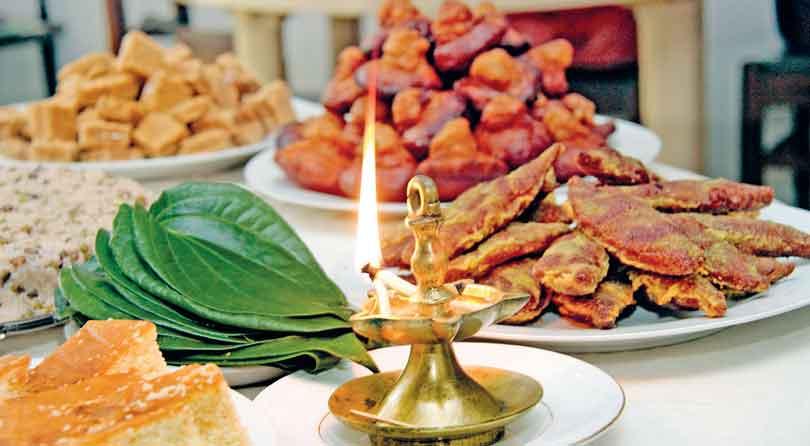
Avurudu, with its shared rituals, its communal games, its open doors and offered sweets, creates the conditions for those tensions to ease
 The month of Bak, falling in April, is one of the most spiritually luminous periods in Sri Lanka’s calendar, a time when religion, tradition, and seasonal renewal converge into something rare and precious: an invitation to pause, to reflect, and to make peace. In a world increasingly defined by noise and division, such a moment is not merely welcome; it is urgently necessary. For peace is not a single event. It is a living thing, and it must be tended at every level of human life, in the home, in the community, among nations, and across the world.
Peace in the home
Peace begins in the smallest space we inhabit, the family. Avurudu, the Sinhala and Hindu New Year born of ancient agrarian rhythms and the sun’s passage from Pisces to Aries, understands this intuitively. It is, above all, a festival of homecoming. Families travel long distances to be together. Old grievances, quietly nursed through the year, are set aside. Misunderstandings that hardened into silence are gently dissolved. At the threshold of the New Year, people meet with open smiles and the simple, sincere wish: Suba Aluth
Avuruddak Wewa.
That greeting is more than custom. It is a declaration, that whatever passed before, we begin again. The home, so often the site of our most intimate wounds, becomes the first place where peace must be practised. Avurudu provides a culturally sanctioned moment to do precisely that: to forgive a long-held grudge, to speak kindly where silence had taken root, to restore what time and hurt had strained. If peace cannot be made at the kitchen table, it will not be made anywhere.
Peace in the Community
Equally fascinating are the older cultural beliefs associated with this season. The practice of viewing the new moon of Bak (nava sanda belima) was once considered an auspicious act. The famous Sigiriya Mirror Wall graffiti, “Nava bag lasand dut… minisak hu novajanneyi” (“One who has seen the tender moon of Bak should not be rejected”), reveals how deeply such beliefs were embedded in the consciousness of earlier generations. These traditions reflect a worldview in which nature, the cosmos, and human life are intricately interconnected. The sun and moon are not merely celestial bodies; they are symbols of continuity, fertility, and renewal. From the home, the spirit of Bak moves outward into the neighbourhood, the village, the
wider community.
Communities, like families, carry their own accumulated tensions, between neighbours, between faiths, between those who have and those who have not. Avurudu, with its shared rituals, its communal games, its open doors and offered sweets, creates the conditions for those tensions to ease. It reminds us that we are bound together by something deeper than our disagreements, by shared land, shared memory, and shared humanity. Community peace is not the absence of difference; it is the decision to live alongside difference with
dignity and goodwill.
Peace Among Nations
Bak Poya deepens the month’s significance with a teaching that speaks directly to the relationship between nations. It commemorates the Buddha’s second visit to Sri Lanka, when He journeyed to Nagadipa to resolve a dispute between two Naga kings, a conflict that stood on the edge of violence. He intervened not with force, but with wisdom and compassion. He did not take sides; He illuminated the truth. The war did not happen.
This episode is not merely historical. It is a model. Nations today stand at crossroads not unlike that ancient shore, armed with grievances, pride, and the terrible machinery of destruction. The Buddha’s example asks a searching question of every leader and every people: what would it mean to choose understanding over domination? To sit with an adversary and seek the truth together rather than simply prevail? Lasting peace between nations is never imposed by the stronger upon the weaker. It is built, slowly and carefully, on mutual respect, on the recognition that the humanity of the other is not a threat but a mirror.
Peace in the World
Easter, which so often falls within this same luminous month, carries a message that enlarges the frame still further. The life and sacrifice of Jesus Christ, His Atonement, His Resurrection, speak of a love that knows no borders of race, religion, or nation. His willingness to endure suffering for all of humanity is not merely a theological statement; it is a moral challenge. Love of this kind is not passive. It demands sacrifice. It demands that we see beyond ourselves, that we respond to the suffering of strangers with the same empathy we would offer those closest to us.
Taken together, Avurudu, Bak Poya, and Easter form a remarkable convergence of meaning. Each tradition, in its own voice, affirms the same truth: that reconciliation is stronger than resentment, that compassion outlasts conflict, and that renewal is always possible, even after the longest winters. The world does not lack for intelligence or resources. What it most urgently lacks is the will to choose peace, again and again, even when, especially when, it is difficult.
The Buddha’s teaching on metta, loving-kindness, stands as perhaps humanity’s most enduring answer to this challenge. To meet hatred with love is not naivety. It is an act of immense moral courage. It requires a deliberate, daily choice to rise above anger, fear, and the seductive simplicity of enmity, and to seek instead the harder, truer path of understanding.
The choice before us
As the sun completes its passage and the New Year dawns, as temples, kovils, and churches echo with prayer, and homes fill with the warmth of reunion, the month of Bak calls us to something both ancient and urgently contemporary. It asks us to carry the spirit of peace outward, in concentric circles: from the quiet of our own hearts, to the people we live with, to the communities we belong to, to the nations we inhabit, to the world we share.
Peace is not a destination arrived at once and held forever. It is a practice, renewed each day, in each small act of forgiveness, each word of kindness, each decision to understand rather than to judge. The month of Bak offers us the occasion. The rest is our choice.
May that choice be made, in homes, in streets, in parliaments, and across borders, with wisdom, with courage, and with love.
Peace Is a Practice: What Bak Teaches a Divided World. Suba Aluth Avuruddak Wewa!
(The writer can be reached on [email protected])