 KELUM BANDARA
 Reply To:
Name - Reply Comment
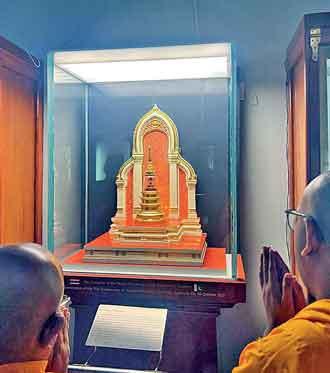 The exposition of the Lord Buddha’s Tooth Relic evoked awe and reverence from Buddhists across the country. Devotees, from all over, thronged the Kandy city, and waited for days in snaking queues, to pay homage to the Sacred Relic, which was exposed for the first time since 2009 for public veneration. Some even had to turn back desperately since the city administration imposed restrictions on entry because it was unprepared to handle such a relentless cascade of crowds.
People who were lucky enough to observe the Tooth Relic put on display after being taken out of its traditional casket endured many hardships on their pilgrimage to Kandy city. When it is devotion, any suffering is secondary. They managed with meagre resources, even sleeping on mats rolled out on wayside pavements. They braved the weather.
The worship of the Sacred Relics of the Lord Buddha has become an integral part of Buddhist culture and religion.
During archaeological excavations in the land of the ancient spread of Buddhism, Sacred Relics, works of art, Stupas, and statues continue to be unearthed, much to the delight of followers. Numerous archaeological finds have found their way to the museum in India, Pakistan and Nepal, where Buddhist civilisation flourished in its pristine glory in ancient times. Today, Buddhism is no longer the main religion in any of these countries, except Sri Lanka.
In fostering ties among the countries based on ancient linkages, the countries play culture diplomacy. Buddhist relics are, at times, brought to Sri Lanka from India and Pakistan for public veneration.
In the hearts of devout Buddhists, Dalada Maligawa in Kandy is held in high esteem since it houses the Tooth Relic of the Lord Buddha. According to Buddhist belief, another Tooth Relic of the Lord Buddha is in the world of snakes (Naga Loka), a heavenly plane mentioned in Buddhist literature. The next is said to be enshrined in the historic Somawathiya Chaitya.
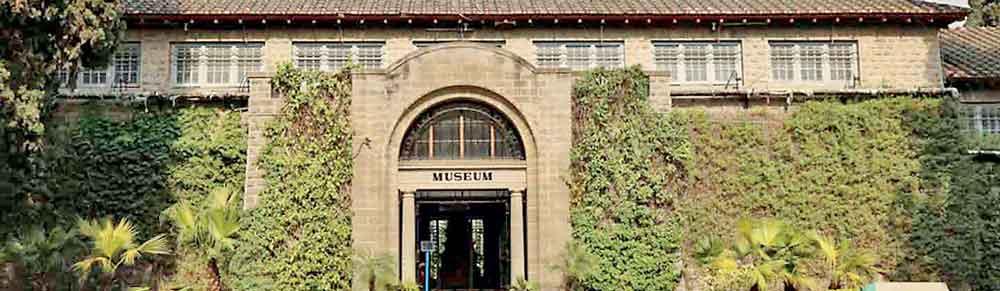
Yet for public veneration or observation, like in Dalada Maligawa, the Lord Buddha’s Tooth Relic is kept in another place in this world, the Taxila Museum in Pakistan. It houses the Lord Buddha’s holy relics for public display. It is one of the Tooth Relics of the Lord Buddha, discovered in the Gandhara region, where the Gandhara Buddhist civilisation reached its pinnacle of glory from the 1st Century A.D. to the 7th Century A.D. Since the inauguration of the Taxila Museum in 1928, the holy relic is now displayed in a separate gallery.
That relic of the Lord Buddha was discovered from the Buddhist Stupa and Monastery Dharmarajika near Taxila Museum in a silver casket containing a silver inscription.
In ancient times, Gandhara was predominantly Hindu. Taxila is a city in that region, admired for its contribution to human civilisation through education. It is the same city which hosted the world’s first ever university ‘Taxila University’. Currently, approximately 7,000 artefacts are displayed at the Taxila Museum and around 30,000 are preserved in the reserve collection. The collection includes Sacred Relics of the Lord Buddha, stone and stucco sculptures, stupas, relic caskets, inscriptions, beads, jewellery, coins, tools, pottery, utensils, and numerous other architectural and household objects.
Most recently, Pakistan sent the most Sacred Relics of the Lord Buddha to Sri Lanka on April 28, 2018, for exposition in connection with the annual Buddha Rashmi National Vesak Festival. Once again, Pakistan has shown interest in the display of these relics for veneration by the Sri Lankan public. In the past, proposals have been made for the development of religious tourism between the two countries, and air connectivity between Colombo and Islamabad is a long-standing idea which is yet to see the light of day. Indian Prime Minister Narendra Modi, during his latest visit to Sri Lanka, offered to send some relics of the Lord Buddha found during excavations in Gujarat, India.
Cultural diplomacy among South Asian countries is important in building ties and bringing people closer. Enormous is the potential for cross-border movement of people on religious linkages. It is a shot in the arm for the development of tourism.