Reply To:
Name - Reply Comment
 “When the lives, livelihoods and security of our people are at stake, there should be only one side, and that is Sri Lanka.”
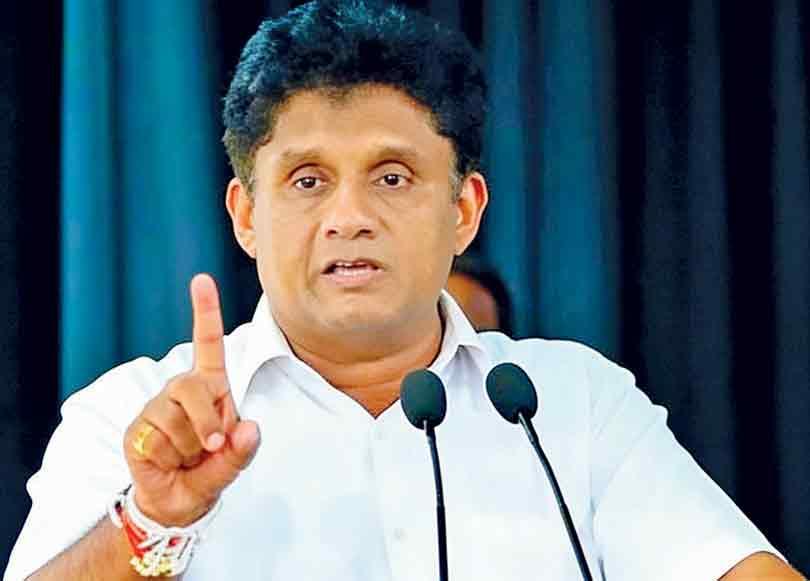
Addressing the National Council for Disaster Management (NCDM), chaired by His Excellency the President, on 30 June 2026, Leader of the Opposition Sajith Premadasa, called for Sri Lanka to adopt a whole-of-government, science-based approach to climate resilience and disaster preparedness, emphasising that climate security has become a national priority that transcends political differences.
During the meeting, the Leader of the Opposition shared his views on the growing climate-related risks facing Sri Lanka and outlined a series of evidence-based policy recommendations aimed at strengthening national preparedness for the anticipated impacts of the 2026–2027 ENSO (El Niño–Southern Oscillation) cycle.
His observations reflected the key recommendations contained in a Strategic Policy Proposal prepared to support national policy deliberations on climate resilience and disaster preparedness.
Mr Premadasa commenced his remarks by expressing his appreciation to His Excellency the President for convening the National Council for Disaster Management at a critical time for the country. He emphasised that disaster preparedness and climate resilience are national responsibilities that transcend political differences and require a collective national response.
“When the lives, livelihoods and security of our people are at stake, there should be only one side, and that is Sri Lanka.”
He noted that his observations were made in a spirit of national unity and constructive cooperation, with the sole objective of contributing to Sri Lanka’s preparedness for the growing risks posed by climate change.
Referring to the latest global scientific assessments, the Opposition Leader observed that the developing 2026–2027 El Niño could become one of the strongest in recent decades, increasing the likelihood of prolonged drought followed by severe flooding, a phenomenon increasingly described by climate scientists as “climate whiplash.”
He stressed that Sri Lanka has only a limited window within which to strengthen national preparedness before these impacts materialise.
Reflecting on the lessons from Cyclone Ditwah and other recent disasters, Mr Premadasa stated that Sri Lanka could no longer rely solely on responding to disasters after they occur.
Instead, he emphasised the need to progressively transition towards anticipatory governance, where scientific forecasting, risk assessments and early preparedness guide national decision-making.
Mr Premadasa emphasised that his remarks were not intended as a criticism of the Government, nor as an attempt to duplicate the valuable work already being undertaken by State institutions. Rather, he said they were intended to contribute constructively to national policy discussions by bringing together international evidence, scientific assessments and practical policy recommendations into a coherent strategic framework that could support the Government and all relevant institutions in strengthening Sri Lanka’s resilience to future climate-related disasters.
The Leader of the Opposition highlighted three fundamental messages.
Firstly, he emphasised that anticipatory governance must become the cornerstone of national disaster management, noting that investments made before disasters occur save lives, protect livelihoods and significantly reduce the cost of recovery and reconstruction.
Secondly, he stressed that climate resilience must become a whole-of-government responsibility, requiring close coordination among institutions responsible for agriculture, water resources, energy, health, finance, defence, provincial administration and local government.
Thirdly, he underscored that climate resilience is inseparable from economic resilience, pointing out that food security, water security, energy security, public health, infrastructure, biodiversity and fiscal stability are closely interconnected and should therefore be addressed through an integrated national policy framework.
Among the priority areas highlighted by Mr Premadasa were strengthening national climate preparedness and anticipatory governance, improving water security through integrated reservoir management, enhancing food security and climate-smart agriculture, modernising early warning systems through impact-based forecasting, strengthening disaster risk financing, improving preparedness for heatwaves and public health emergencies, enhancing the resilience of critical infrastructure, and considering the establishment of a National Climate Risk and Disaster Intelligence Centre to support evidence-based decision-making across Government.
Mr Premadasa noted that countries increasingly exposed to climate risks are investing in anticipatory governance, integrated climate intelligence and science-based planning.
He referred to India’s strengthened climate forecasting and agricultural contingency planning, together with broader resilience initiatives undertaken in countries such as Australia, as examples from which Sri Lanka could draw valuable lessons while developing solutions suited to its own national circumstances.
He also emphasised that climate resilience cannot be achieved by Government alone. It requires close collaboration among Parliament, Government institutions, Provincial and Local Authorities, the scientific and academic community, universities, the private sector, civil society organisations, international development partners and local communities.
Looking beyond the immediate challenges posed by the 2026–2027 ENSO cycle, Mr Premadasa observed that Sri Lanka may wish to consider the preparation of a comprehensive Presidential White Paper on National Climate Resilience and Disaster Preparedness.
He said such a document could provide a long-term whole-of-government policy framework that transcends individual administrations and establishes a clear national direction for future generations.
Mr Premadasa expressed confidence that climate resilience can become a unifying national agenda capable of bringing together the Government, Parliament, the scientific community, the private sector and civil society in pursuit of a safer, more resilient and more prosperous Sri Lanka.
Mr Premadasa reaffirmed that climate change does not distinguish between Government and Opposition, nor do floods, droughts or heatwaves distinguish between political affiliations.
“Climate change does not distinguish between the Government and the Opposition. Floods do not distinguish between political parties. Droughts affect every farmer. Heatwaves affect every family. Protecting our people is therefore a shared national responsibility.”
He also reaffirmed his readiness to support every initiative that protects the lives, livelihoods and future prosperity of the Sri Lankan people, emphasising that the country’s response to climate change must be guided by science, strengthened through national unity and sustained by long-term strategic planning.