 KELUM BANDARA
 Reply To:
Name - Reply Comment
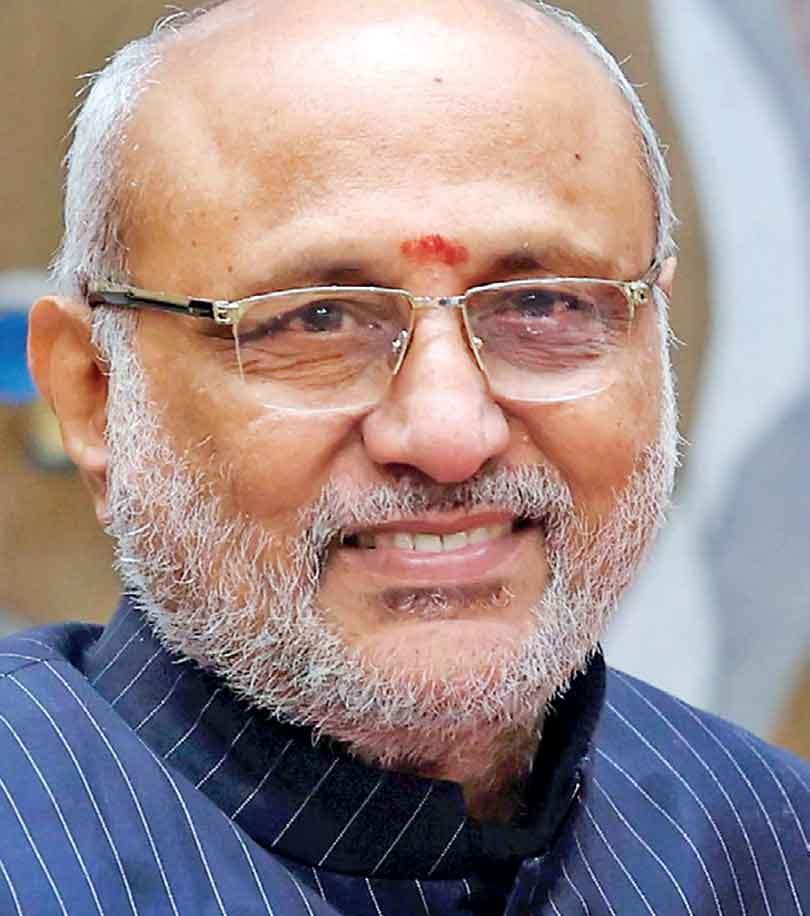
Indian Vice President C. P. Radhakrishnan
During the recent visit of Indian Vice President C. P. Radhakrishnan, the two countries witnessed the use of India’s soft power diplomacy, as he announced the extension of Overseas Citizen of India (OCI) benefits to the fifth and sixth generations of Sri Lankans of Indian origin.
The Malaiyaga Tamil community, commonly known as estate Tamils, is set to be the core beneficiary of this initiative, as they form the bulk of Sri Lankans of Indian origin.
OCI is a form of long-term residency status granted by India to people of Indian origin living in other countries. India has a large diaspora across the world, including in countries such as Mauritius, Malaysia, Singapore, the United States, and Canada.
The Indian Vice President visited Sri Lanka from April 19 to 20, 2026. This was the first-ever bilateral visit by an Indian Vice President to Sri Lanka. Earlier, in October 2000, Krishan Kant visited Sri Lanka to attend the state funeral of former Prime Minister Sirimavo Bandaranaike. The announcement on the extension of OCI benefits turned out to be a key outcome of the visit. Until then, only up to the fourth generation of Sri Lankans of Indian origin was entitled to this benefit.
OCI is sometimes perceived as the granting of Indian citizenship to a segment of Sri Lankan society. This is not the case. However, it entails benefits quite similar to those enjoyed by Indian citizens. Once granted, OCI holders can benefit from India’s economic growth, which continues at a strong pace, creating increasing opportunities.
It is not full Indian citizenship, but rather functions like a lifetime visa with residency privileges, allowing foreign citizens of Indian origin to live, work and travel in India freely.
Key benefits of OCI include a multiple-entry, lifelong visa to visit India, exemption from registration regardless of the length of stay, parity with Non-Resident Indians (NRIs) in areas such as education (including admissions and fees in many cases), financial investments (with certain limitations), and the ability to own property in India (except agricultural or plantation land).
Those who were citizens of India on or after 26 January 1950, or who were eligible to become citizens of India at that time, are eligible for OCI. Individuals belonging to territories that became part of India later, as well as children, grandchildren, or great-grandchildren of such persons and minor children of OCI holders, are also included in the eligibility criteria.
Spouses of Indian citizens or OCI holders are also eligible, subject to certain conditions. However, citizens of countries such as Pakistan and Bangladesh are not eligible.
With the extension of this facility to the fifth and sixth generations of Sri Lankans of Indian origin, documentation requirements have also been relaxed. In the past, applicants were required to submit Indian-issued documents—such as passports, domicile certificates, or other valid proof of Indian citizenship—to establish their origin. Supporting documents also had to be issued by the Indian authorities.
Many Indian Origin Tamils (IOTs) in Sri Lanka found it difficult to obtain such Indian documents to prove their roots due to various reasons.
In a bid to ease the requirements for establishing Indian lineage, the following documents will now be considered for the issuance of OCI cards to IOTs in Sri Lanka:
A Certificate of Registration (CoR) issued by the Department for the Registration of Persons of Indian Origin of the Government of Sri Lanka, certifying that the applicant or the applicant’s ancestor is an Indian Origin Tamil; or
A certificate issued based on India–Sri Lanka passport and registration records maintained at the High Commission of India in Colombo or the Assistant High Commission of India in Kandy, certifying that the applicant or the applicant’s ancestor is of Indian origin.
Due to the practice of early marriage, many individuals in the fifth generation—and in some cases the sixth generation—possess supporting documents but were previously not eligible to obtain OCI cards. The extension has now been made following representations by various Indian diaspora organisations.
India, under Prime Minister Narendra Modi, has actively engaged its diaspora. He has visited Sri Lanka on several occasions and has, at times, directly addressed Tamils of Indian origin in the estate sector.
India is a strong proponent of soft power, defined as the ability of a country to influence the behaviour of others to achieve desired outcomes through attraction rather than coercion or payment—a term coined by American political scientist Joseph Nye.
India possesses multiple soft power tools, with its diaspora being a key asset. In its engagement with Sri Lanka, outreach to people of Indian origin has become an integral part of foreign policy.
In addition, India leverages its rich cultural traditions—cinema, yoga, Ayurveda, and music—as instruments of soft power diplomacy, enhancing its global image.
The engagement of Sri Lankans of Indian origin, in this manner, manner helps deepen India’s socio-economic, cultural imprint in Sri Lanka. The Vice President, during his visit, also addressed around 1000 members of the Indian Diaspora at a community reception at the New Kathiresan Hall in Colombo.
India is not targeting Sri Lankans of Indian origin in the display of soft power diplomacy. India recently brought the Devnimori Relics of the Buddha for exposition in Sri Lanka. It is yet another part of cultural diplomacy. It was the continuation of the vision articulated by Prime Minister Modi during his visit to Sri Lanka in April 2025.
India extended financial assistance amounting to US 4 billion during the economic crisis. India was the first responder to Sri Lanka’s natural disasters when cyclone Ditwah hit Sri Lanka. India has already started reconstruction of infrastructure damaged by the cyclone.
Sri Lanka, under the current Government led by the National People’s Power (NPP), has taken an India-centric foreign policy. It has pledged to advance the proposed connectivity rejects. The Government has also sought to accelerate work on the Trincomalee petroleum project. Sri Lanka’s foreign relations remain central to India in this manner. It is a blend of economic ties, strategic cooperation and cultural and civilizational linkages.