Reply To:
Name - Reply Comment
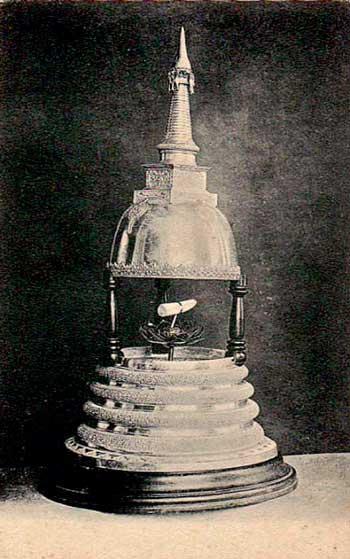 |
| The Sacred Tooth Relic has been held in high esteem as the symbol of kingship in Sri Lanka and has an exalted status as an object of Buddhist Religious worship |
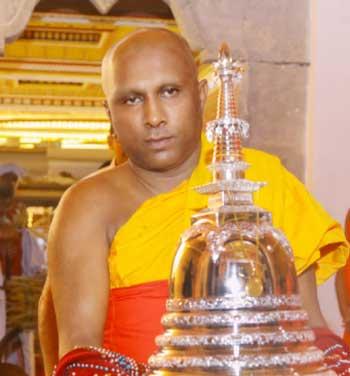 |
| The writer, Ven. Ketakumbure Dhammarama |
By Ven. Ketakumbure Dhammarama
The Sacred Tooth Relic in Kandy, Sri Dalada Maligawa, which is interwoven within Sri Lankan Culture, has been widely revered and respected by Buddhists all over the world for centuries since its advent in Sri Lanka during the reign of King Keerthi Sri Meghawanna (Kithsiri Mewan) (303 -331).
The Sacred Tooth Relic of the Buddha has been the object of highest veneration and esteem amongst Buddhists. A wide literature has grown up around it since it fell into the hands of an Elder named Kema when the relics of the Buddha were divided after the cremation. He had taken it to Dantapura in Kalinga and handed over it to the King.
The Sacred Tooth Relic, which the exalted status as an object of Buddhist religious worship, has been held in high esteem as the symbol of kingship in Sri Lanka. According to tradition, one who ascends the throne should be in possession of the Sacred Tooth Relic and be its guardian as well. This long history over the succeeding centuries has created a vast literature.
The history of Buddhism has recorded that the four Sacred Tooth Relics of the Buddha had been left intact among the fragmented relics, as determined by the Lord Buddha. According to the details in Maha Parinibbana Sutta and Dalada Siritha chronicles, these four Sacred Tooth Relics had been divided among the realm of Gods, the country of Gandhara, the country of Kalinga, and the world of Nagas.
“Ekahi Dhata Nidimehi Poojitha
Eka pana Gandharapure maheeyathi
Kalingaragno vijithe pnekan
Ekka Puna Nagaraja Mhenthi”. (Maha Parinibbana Sutta—Dhatuchethiya Pooja).
The Sacred Tooth Relic taken to the Kalinga had been brought to Sri Lanka during the reign of Keerthi Sri Meghawanna (303-331).
According to the chronicles, the Sacred Tooth Relic had been highly venerated by the King of Kalinga and his successors. However, it had been in the possession of King Guhaseewa, who was a heathen. According to the chronicles, he had embraced Buddhism when he saw the miracles of the Sacred Tooth Relic.
How the Sacred Tooth Relic fell into the hands of King Panduka and his attempts to destroy the Tooth Relic at the instigation of the Niganthas have been related vividly.
King Guhaseewa’s devotion to the sacred tooth relic antagonised the Niganthas who complained to King Panduka. They levelled slashing attacks against Guhaseewa and instigated Kind Panduka to retaliate against him and to destroy the Sacred Tooth Relic.
“My Lord, your subordinate ruler Guhaseewa is insulting the gods, Brahma, Vishnu and Maheshwara, venerated by you and pays homage to a human bone. King Panduka, who was provoked as a venomous snake beaten by a club, summoned a subordinate ruler, Chitrayana, who possessed wicked characteristics and valour and ordered him to leave for Dantapura in Kalinga to capture and bring the King of Kalinga and the human bone venerated by him.
However, all attempts to destroy the Sacred Tooth Relic were foiled by performing miracles. Today, we have the good fortune to venerate and pay homage to the Sacred Tooth Relic owing to the miracles it performed to subdue the Nigantas.
However, when Chitrayana entered King Kalinga’s palace, the king prayed to the Sacred Tooth Relic to perform miracles.
King Kalinga, who opened the casket of the relic placed on a throne, paid homage, exposed it and prayed to perform miracles. The Tooth Relic performed miracles by rising into the air with its splendour, just as a shining moon in pace.
Chitrayana and his retinue, who forgot their mission to take the sacred tooth relic to King Panduka, embraced Buddhism and paid homage to the Sacred Tooth Relic. The Nigantas who did not give up their plan and made several attempts to destroy the Sacred Tooth Relic.
First, they attempted to burn it into ashes in a pit of raging fire, but the sacred tooth relic was intercepted by a huge lotus that emerged from the fire. Then they attempted to crush in on an evil with a sledgehammer. As their last resort, they put the sacred tooth relic into a pit of cow dung, but a lotus as large as the wheel of a cart emerged and intercepted the tooth relic.
According to the Dalada Siritha, King Panduka, who was overcome by the miracles, paid homage to the sacred tooth relic in high veneration throughout his reign.
The chronicles have related a vivid description of the miracles performed by the Sacred Tooth Relic during the journey of Princess Hemamala and Prince Dantha to Sri Lanka.
When they lay down on the bank of a river to take rest after hiding the casket in sand, an Arahath Thera passing by had noticed the splendours and inquired about it from the prince and the princess. The Arahath Thera, who heard about their mission, told them the call to mind his name in case of any hardship.
Meanwhile, a Naga King named Panduhara swallowed the casket and fled to the world of Nagas. The Princesses Hemamala and Prince Dantha, who woke up a little while later, realised that the casket had disappeared, and then the name of the Arahath Thera came to their minds. Immediately, the Naga King brought the casket of relics and handed it to them.
Dalada Siritha has related that the gods and the Nagas obstructed the way of the ship bringing the Sacred Tooth Relic and paid homage for seven days in the sea. When the name of the Arahath Thera was recalled, he appeared in the form of an unusually large Gurulu bird and secured the release of the ship from the Nagas.
King Kithsiri Mewan had suspected the pure white colour of the tooth relic, but all his misgivings were dispelled when the tooth relic performed miracles. The King placed the casket of relics on his throne and covered it with fragrant white flowers.
The reign of King Parakramabahu the Great witnessed a great deal of literary activity. According to the Mahawansa, the King who took possession of the Sacred Tooth Relic carried it in a colourful procession amid torrential rains that resulted in the overflow of the rivers and tanks.
During the Dambadebniya period, King Parakramabahu II had prayed to the Sacred Tooth Relic to perform miracles. The Sacred Tooth Relic that sprang into the air appeared in the form of a Buddha statue with splendour spreading all over the city.
A long fatigue experienced during the reign of King Parakramabahu 11 had been quelled by praying the Sacred tooth Relic and chanting Pirith.
History has recorded miracles performed by the sacred tooth relic during the reign of Keerthi Sri Rajasinghe of the Kandyan Kingdom. The king, who was amazed by the miracles, had offered all his regalia to the Sacred Tooth Relic.
The flood threat called Dalada Wathura in 1828, the prolonged drought experienced after the capture of the Kandyan kingdom by the British in 1918, for not holding the Kandy Esala procession for a long time, were among several miracles recorded in recent history.
On the request of the Buddhists, an exposition of the Sacred Tooth Relic was held, and it resulted in the end of the severe drought. Heavy rains had caused a flood threat and it compelled the British rulers to accept the power of the Sacred Tooth Relic. All Sri Lankans believe that the exposition of the Sacred Tooth Relic results in heavy rain ending droughts.
The writer is a Member of the Karaka Sangha Sabha of Asgiriya Chapter and Principal of Pallekele Nalanda Buddhist School.