 KELUM BANDARA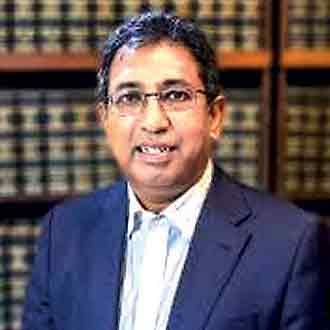
Reply To:
Name - Reply Comment
 Many actions by the Government run counter to its political rhetoric in the past
The rapid depreciation of the rupee is a matter of grave concern as it will directly affect the cost of living
The Government is compelled to take unpopular decisions to mitigate economic risks. Fuel prices are likely to surge further
|
Harsha de Silva |
Samagi Jana Balawegaya MP Harsha de Silva recently put up a social media post highlighting, among other things, that he was prepared to take up any challenge in the greater interests of the country. In the same post, he said that time had come for the country to usher in a new era.
The post has been created in a particular context, and it has given rise to speculation that he is planning to contest the next presidential election scheduled for 2029. At the same time, he struck a note of criticism of the Government. He asserted that he would not move away from his right-of-centre ideology though some wanted to dislocate him politically.
In a way, he has attempted to respond to concerns or allegations that he is soft-pedalling on the Government led by the National People’s Power, especially in his capacity as the Chairman of the Committee on Public Finance (CoPF).
His emphasis on being prepared to stand up to any challenge on behalf of the country has heightened talk in political circles that he is considering a presidential candidacy well ahead of time. It certainly leaves scope for such interpretation. And, if that is the case, Sri Lanka’s political landscape is already being shaped in view of the next national election – whether parliamentary or presidential.
This has been the norm for the past 10 to 15 years. When the Government of the day fails to gain popularity within a couple of years or so, Opposition parties and groups converge to put a spoke in its wheel for political ends.
The current Government, a novel political phenomenon in Sri Lanka, came to power with a barrage of promises. In electing the NPP, people booted out the traditional parties that had run this country since independence. They vented their anger and frustration against the traditional political system. They expected a corruption-free society and rapid development.
Almost two years into office, the Government faces the common allegation that it is slow in decision-making and implementation. Of course, the Government has moved ahead reasonably well with the International Monetary Fund programme and sustained a growth rate with improved revenue mobilisation and fiscal management. Yet, it has failed to accelerate growth while boosting domestic economic activity. An inhibited bureaucracy is also probably responsible for the stalemate.
Cyclone Ditwah and the Middle East war created formidable challenges for the Government, prompting it to adopt measures that are not populist at all. Constant fuel price hikes are an example in this regard.
Also, it has had to grapple with issues of its own making such as cyber thefts, the subsequent death of a Finance Ministry official, and irregularities in coal purchases. Many actions by the Government run counter to its political rhetoric in the past. Whenever anyone from the Government utters something, it often goes against the grain in terms of earlier rhetoric.
Now, the Opposition is waiting in the wings to take on the Government. Political activity is taking place across the country.
It is a different political scenario this time compared with the past two presidential elections. When the Yahapalana Government formed in 2015 started failing, people disappointed with its performance looked up to Gotabaya Rajapaksa as the potential candidate. In the wake of the premature collapse of the Rajapaksa administration, Ranil Wickremesinghe, the sole parliamentary representative of the United National Party at the time, was elected President for the interim period.
In the run-up to the 2024 presidential election, public support swelled in favour of the NPP, and current President Anura Kumara Dissanayake remained its clear leader.
Now, the political situation is different because there is no single leader whom the Opposition forces can commonly accept as their preferred candidate for the next election. Nevertheless, there are multiple aspirants trying to emerge as the principal challenger. No matter what, Opposition parties including the SJB, the UNP, the Sri Lanka Podujana Peramuna and the Sri Lanka Freedom Party are working together overtly and covertly against the Government.
It appears that their leaders yearn for presidential candidacy. Politics is always the art of the possible. SLPP National Organiser Namal Rajapaksa has already displayed his plans for the future, and so have SJB leader Sajith Premadasa, Dilith Jayaweera of Sarvajana Balaya, and Patali Champika Ranawaka of the United Republican Front (URF).
In politics, strategic decisions are made depending on circumstances and interests. One thing is clear: all of them are opposed to the Government tooth and nail and see it as their arch enemy. When the election draws closer, unless one of them is confident of outperforming the NPP in the event of a multi-pronged contest, they will attempt to pose a unified challenge, casting aside differences.
Until then, they will continue building their own bases. Whoever emerges stronger will prevail upon the others to throw their weight behind him. In the meantime, political undercutting and manipulation will certainly take place — a typical norm in multi-party democracies.
The Government is in a state of confusion amid formidable economic challenges. The rapid depreciation of the rupee is a matter of grave concern as it will directly affect the cost of living.
In addition to political issues, the Government is compelled to take unpopular decisions to mitigate economic risks. Fuel prices are likely to surge further.
The Government’s decision to allow vehicle imports has now become counterproductive. It certainly boosted State revenue through import taxes, but also resulted in a drain of foreign exchange. Along with the surging import bill and insufficient reserves, the rupee has started weakening rapidly. It could herald a difficult period for the Government. The administration may not be able to fulfil all the promises given to people ahead of the election.
The Opposition parties, bearing in mind the national elections ahead, will accelerate political activity. They will even exert pressure on the Government to conduct the Provincial Council elections, which have remained defunct since 2017. They believe the outcome of such elections ahead of the national polls could prove detrimental to the Government.
In the end, Sri Lanka is set to enter yet another phase of intense political realignment shaped by economic hardship and electoral calculations. The Government, despite maintaining macroeconomic stability under the International Monetary Fund programme, is increasingly weighed down by unpopular decisions, growing public frustration over the cost of living and poor economic performance.
As economic pressures mount and political manoeuvring intensifies, the period ahead is likely to test not only the Government’s resilience but also the Opposition’s ability to transform scattered ambitions into a credible alternative.