 SUSITHA FERNANDO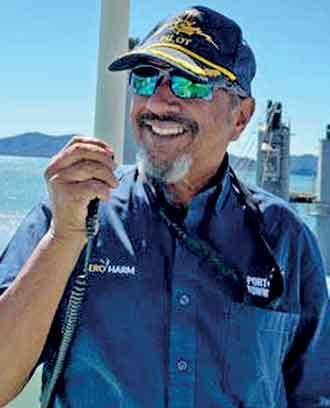
Reply To:
Name - Reply Comment
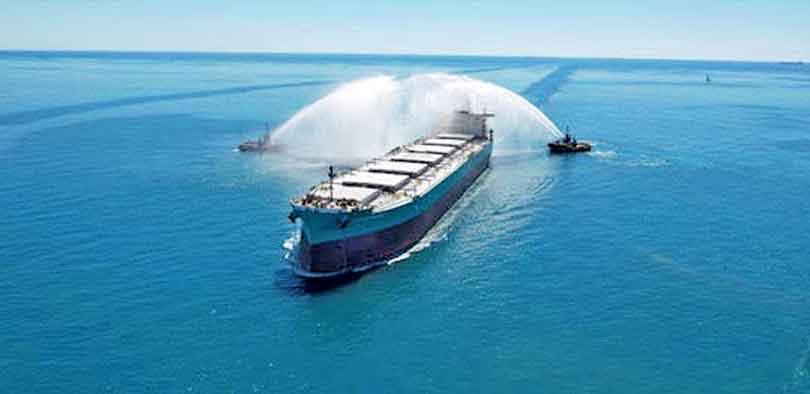
The water salute given to Captain de Silva as he retires after five decades at sea
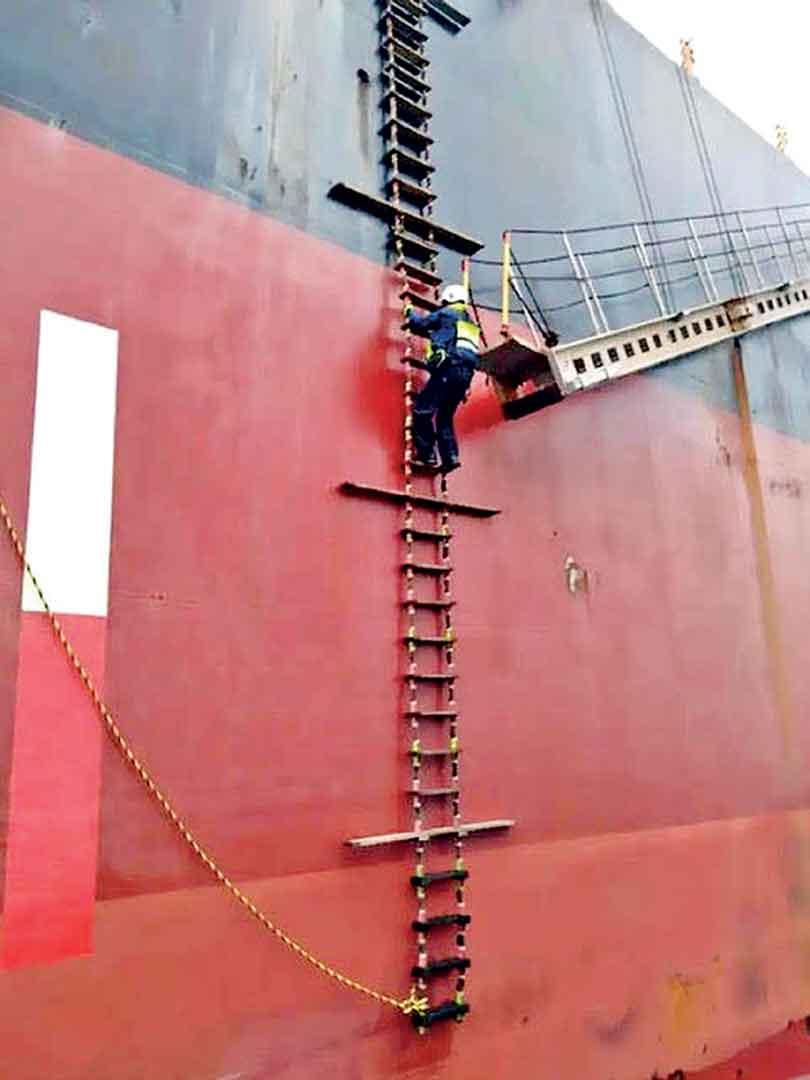
Captain Sardha boarding a ship about 12 km away from the harbour
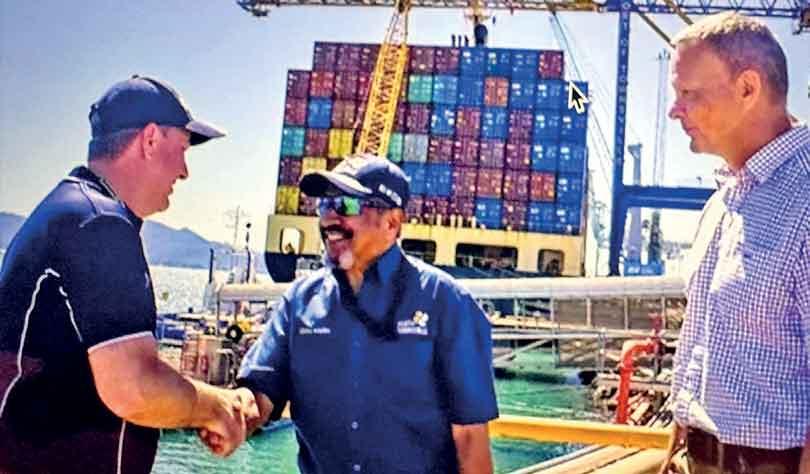
Colleague bids farewell to Captain de Silva as Port of Townsville General Manager Operations David McLoughlin looks on (picture right)
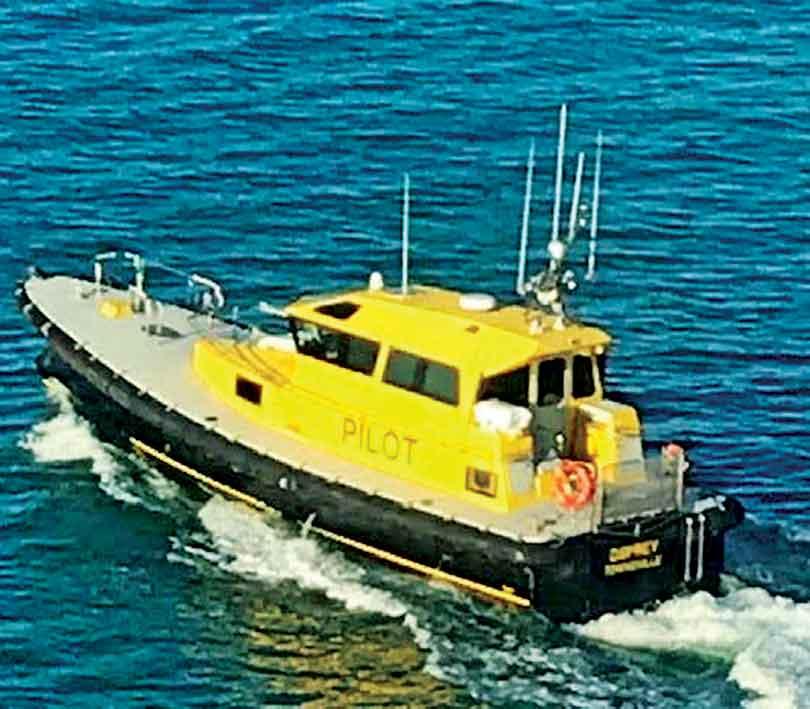
Pilot launch used by the captain
The most terrifying moment came around 2 am in Townsville, in heavy rain and rough seas. I slipped and ended up hanging from the last rung of the ladder, feet dangling and staring at death as the launch crew looked on helplessly, unable to come closer
|
Captain Sardha de Silva
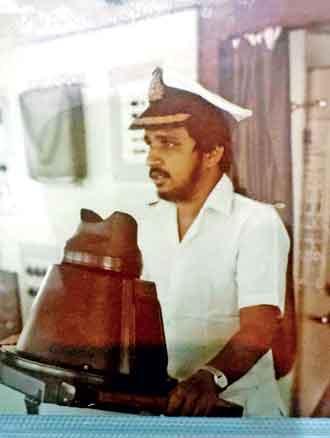
As a young officer |
Captain Sardha Gerard De Silva retired recently with honours and salutation at Australia’s Townsville port after more than five decades of dedicating his life to seafaring and “piloting”-- one of the most daunting tasks connected with ports and merchant shipping.
In a rare feat which can be called a great triumph, De Silva has completed 40 years as a Marine Pilot and nearly 53 years as a seafarer, piloting more than 23000 vessels.
“These vessels included small fishing crafts to massive container ships, cruise liners, livestock carriers, vehicle carriers, naval vessels, and even submarines,” the 73-year-old Captain who made his final journey on August 26, told the Daily Mirror.
“For nearly 53 years, my life was inseparably bound to the sea. From my school days in Moratuwa to commanding ships across the globe, and finally guiding vessels safely into ports as a Marine Pilot, my career stands as a testament to dedication, resilience and an enduring love for the ocean,” the 73-year-old captain, who is getting ready to enjoy his retirement travelling around the world said.
First batch of officer cadets
Most of his schooling was done at St Sebastian’s College, Moratuwa. His final years of study were at St Thomas’ College, Mt Lavinia. Captain De Silva was among the first batch of officer cadets who were recruited to the newly formed Ceylon Shipping Corporation (CSC) in February 1973, beginning his training on the renowned training ship Lanka Kalyani. Sailing on CSC vessels across the Far East and Europe, he rose steadily from the ranks -- Deck Cadet, 4th officer, 3rd officer, 2nd officer, Chief Officer- and in 1982 got his Command as Master.
“From there, I rose through the ranks. My maiden command was the Lanka Sagarika followed later that year by the brand new container vessel Lanka Muditha, which I took delivery in Japan in December 1982 becoming its first Master. I continued sailing with CSC until 1985, visiting ports around the world and gaining invaluable experience.
“It was a moment of pride to walk as Master on a brand new vessel carrying the aspirations of a whole nation,” De Silva who continued as Master on CSC vessels until July 1985 recalled.
With a family of growing children, he chose to step ashore that year, joining the Sri Lanka Ports Authority as trainee Marine Pilot. Over the next two decades, he guided ships of every type -- Container, Tankers, Naval vessels, Passenger vessels, Livestock carriers, Vehicle Carriers etc -- into Lanka’s major harbours in Colombo, Trincomalee, Galle and Kankasanthurai (KKS).
On duty during the height of war
During the height of Sri Lanka’s civil war, De Silva used to take military supplies including arms and ammunitions to the North.
“As a pilot, I sailed Mercs Colombo with heavy military equipment to KKS. The massive haul of explosives, arms and ammunitions was taken to start Operation Vadamarachchi. What I carried in Mercs was a top secret as the LTTE (Liberation Tigers of Tamil Eelam) would have definitely attacked it,” Captain De Silva recollected.
“I can remember that unloading took several days and every night, on the advice of the Navy, I took the ship to the deep sea off KKS as we feared the vessel could come under attack by the LTTE,” he added.
With the war still on in Sri Lanka and even at sea, Captain De Silva decided to leave Sri Lanka and settle in Australia where his daughters were studying.
“In January 2007, I migrated to Australia, where I joined the Port of Townsville as a Marine Pilot. My work there also took me to Abbot Point, one of Australia’s busiest coal ports, and to Lucinda, a sugar port which has the longest trestle in the southern hemisphere at 5.6 km,” he described.
Dangerous job
Doing one of the riskiest and most dangerous jobs in the world, De Silva has climbed the equivalent of more than 100 kilometres of vertical pilot ladders -- often in dark, rough seas or heavy rain.
Marine pilot’s job involves boarding a ship about 12 km away from the harbour and accompany her to the harbour. Aboard a pilot vessel, Marine pilots travel out to the shipping channel, then board the vessel to be brought in, via a vertical rope ladder before then guiding the ship into the port. He has to do the same when ships leave a port.
The pilot has to get closer to the ship in a boat or launch called the Pilot Launch, and while the ship and the boat both are moving has to board the ship from a pilot ladder.
“Many pilots have lost their lives either falling and getting caught to the propellers or in rough weather getting crushed between the launch and the ship,” De Silva cautioned about the dangers of his job.
“Though the pilot ladder we climb is a special ladder made as per regulations made by the International Maritime Organisation (IMO), it could still pose a danger.
“Piloting is a demanding and a dangerous job, and I have had my share of close calls. In Colombo, a ladder once parted beneath me, and I was fortunate to fall onto the launch. On another occasion, while disembarking in rough seas, the pilot launch struck me and I fell hitting my head on the pilot launch deck -- thank God! my helmet saved my life,” Captain De Silva recalled some of the most dangerous experiences he had gone through.
Terrifying moment
“The most terrifying moment came around 2 am in Townsville, in heavy rain and rough seas. I slipped and ended up hanging from the last rung of the ladder, feet dangling and staring at death as the launch crew looked on helplessly, unable to come closer. With all my strength, I managed to get one knee on to the rung and pull myself onboard. By God’s grace, I found the strength to put myself up,” De Silva described.
“Many Pilots around the world have lost their lives at such moments. Every year, at least five to six marine pilots die on duty,” the captain described the dangerous job he did throughout his life until he reached 73 years.
“I thank God almighty for protecting me throughout my career,” Captain De Silva, a strong Catholic by faith, said, rationalising his many miraculous escapes from mortality.
Given the large number of ships he had handled over four decades, Captain De Silva is undoubtedly among the most experienced marine pilots in the world. But he hasn’t forgotten how he started.
“I have never forgotten where it all began. I remain deeply grateful to the Ceylon Shipping Corporation for the solid foundation I received aboard the famous training ship Lanka Kalyani, and I thank the Sri Lanka Ports Authority for the exceptional training that set me on the path as a Marine Pilot,” he reminded with gratitude.
Recalled twice after retirement
After retirement, the Captain was twice recalled for duty just due to his experience. Even in his 70s, Captain De Silva was seen confidently climbing the ladder while strong tides were moving fast below him.
“I was forced to extend my retirement twice as requested by the port due to a shortage of pilots. I have mentored and trained many pilots in my career,” Captain Silva said with a grin.
“Many people have asked me how I can do this at my age of nearly 73 years. Mainly, you have to be 100% fit physically and mentally. I do regular exercises, play a lot of bridge, sudoku and scrabble.
Piloting ships for four decades, De Silva had his final assignments in August where he was greeted with the highest salutation and admiration by his colleagues at Townsville in Australia.
“My final assignments were deeply moving. On August 14, I brought the vehicle Carrier Genius Highway, in Townsville, where the Engage Marine Tugs honoured me with a magnitude ‘Water Salute’. Then on August 26 when I handled berthing, my very last ship --the bulk carrier Calypso Island -- to berth No. 2. At Abbot Point the tugs gave a spectacular water salute making my retirement unforgettable and most emotional,” the Captain recalled with eyes wet with happy tears.
“I am equally grateful to my peers, mentors, tug masters, and linesmen who have been a part of my journey, not forgetting the brave Coxwains and Deckhands who risk their lives in all weathers. They are the unsung heroes of every safe arrival and departure,” he said, recalling his colleagues emotionally.
“Captain de Silva was one of the Port’s longest serving pilots and he will be missed,” Port of Townsville General Manager Operations, Project Delivery and Safety David McLoughlin said, bidding farewell to his colleague.
“Gerard has been doing this for 40 years and been working at the Port of Townsville for 18 years,” he said. “Overall, he’s climbed about 100 kilometres of vertical ladders and we thank him very much for his service and dedication to our industry,” McLoughlin concluded.
A man of faith and someone whose heart is very close to his family, the Captain’s faith has been central to his journey. “I thank God for His protection and also my wonderful wife and family who stood by me in both good and bad times,” Captain De Silva said.
“Looking back, I feel privileged to have served both Sri Lanka and Australia across seven ports. It has been a career of challenge, danger and pride -- one that tested my limits but also gave me memories to last a lifetime,” Captain De Silva concluded.