Reply To:
Name - Reply Comment
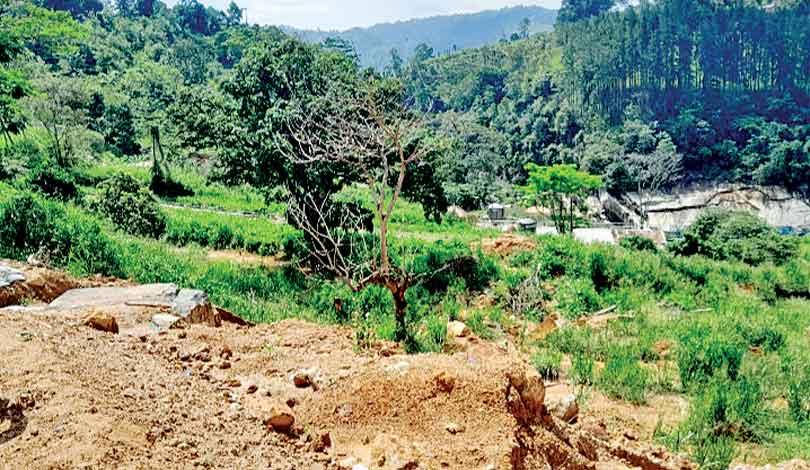
Destruction caused in the aftermath of a landslide
Photographs: Norwood Ranjith Rajapaksha
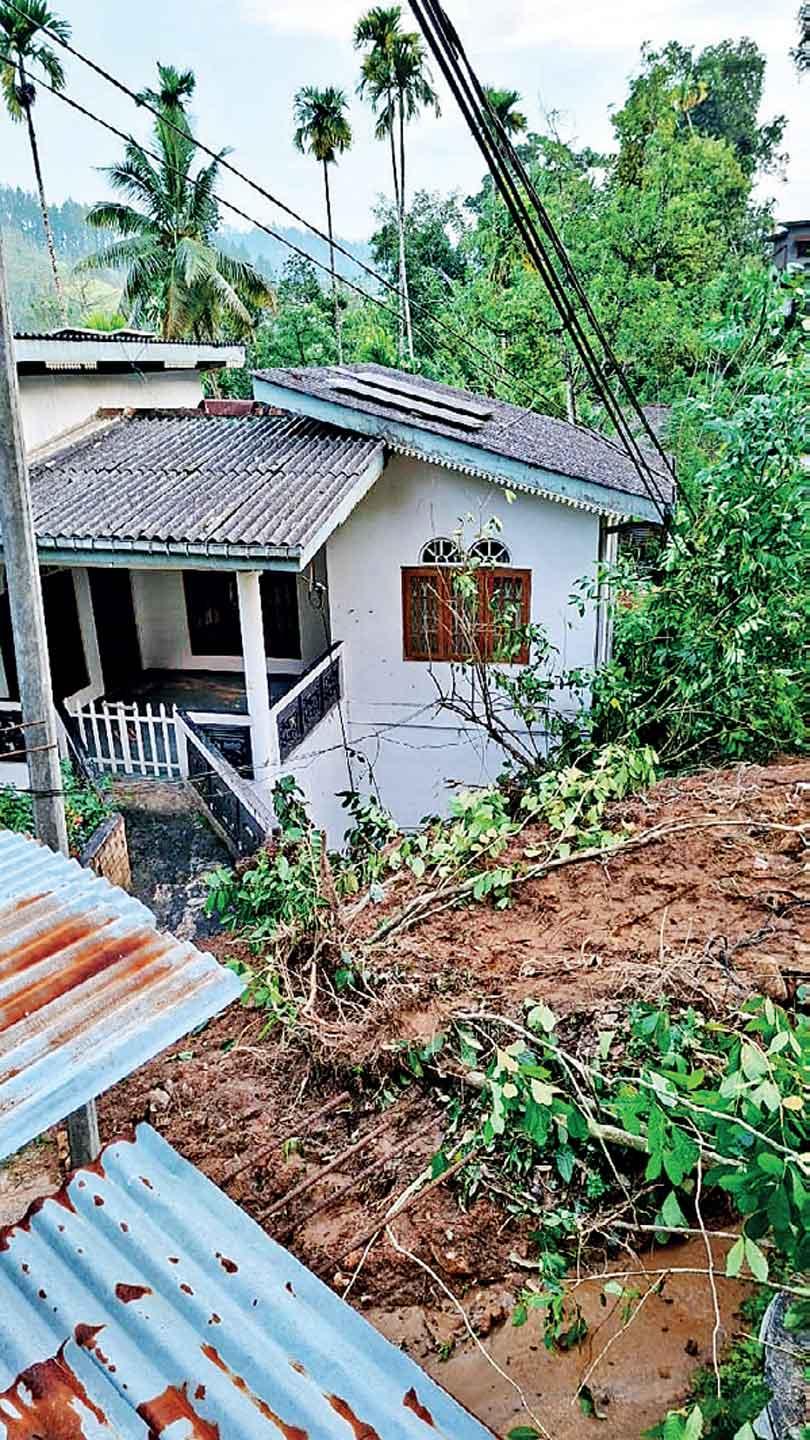
A house damaged by a landslide
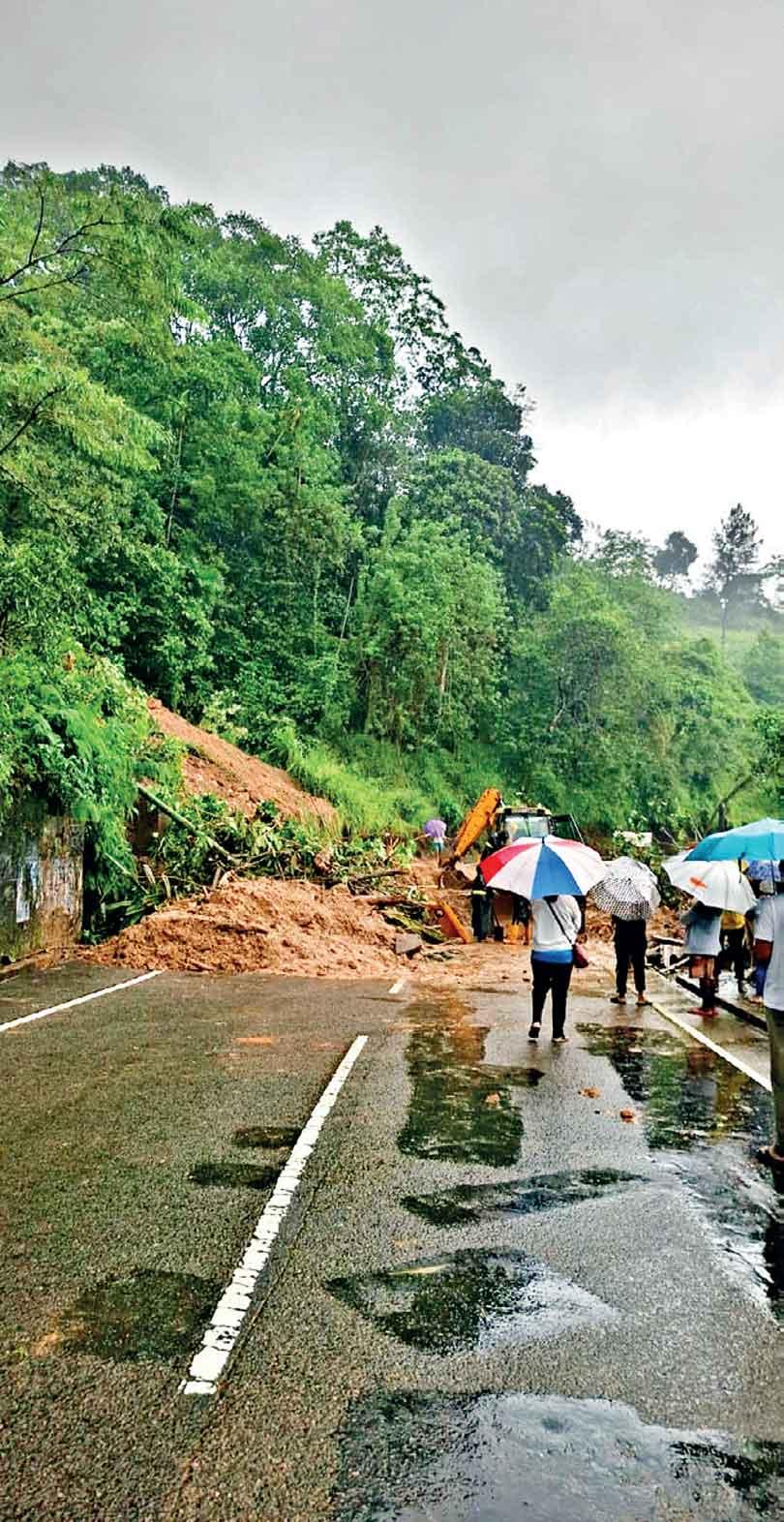
A landslide that has obstructed a road
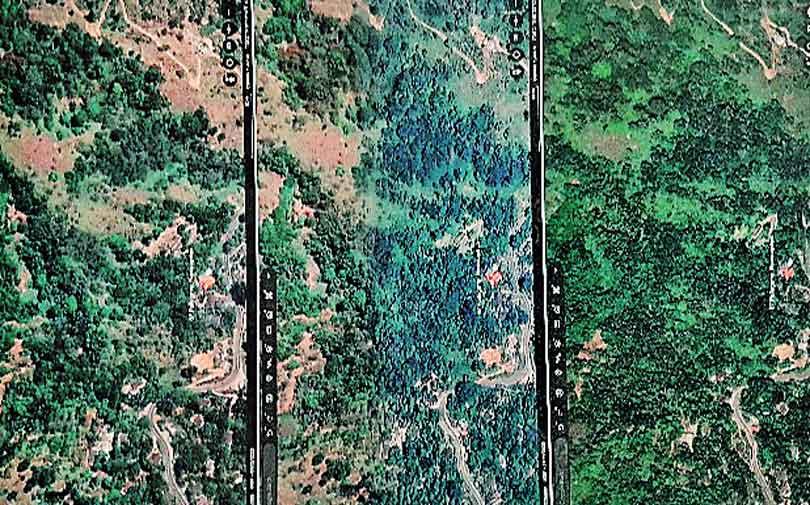
A satellite image of how the landslide occurred
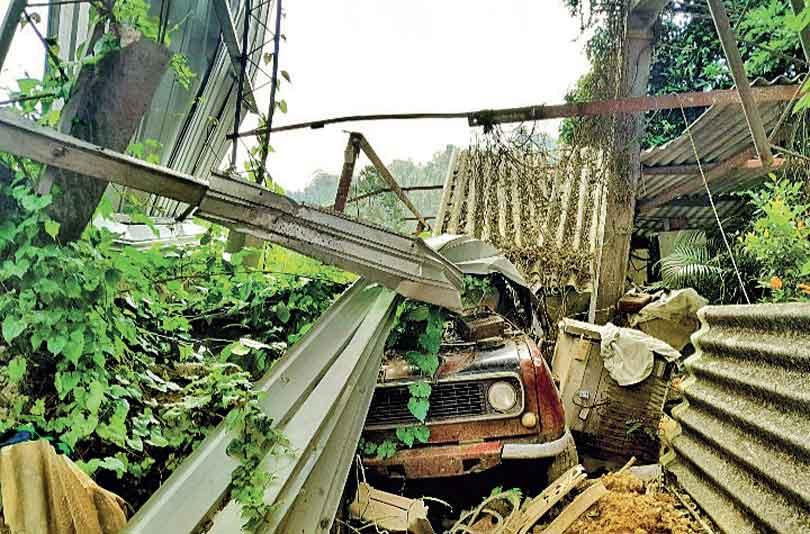
The extent of devastation
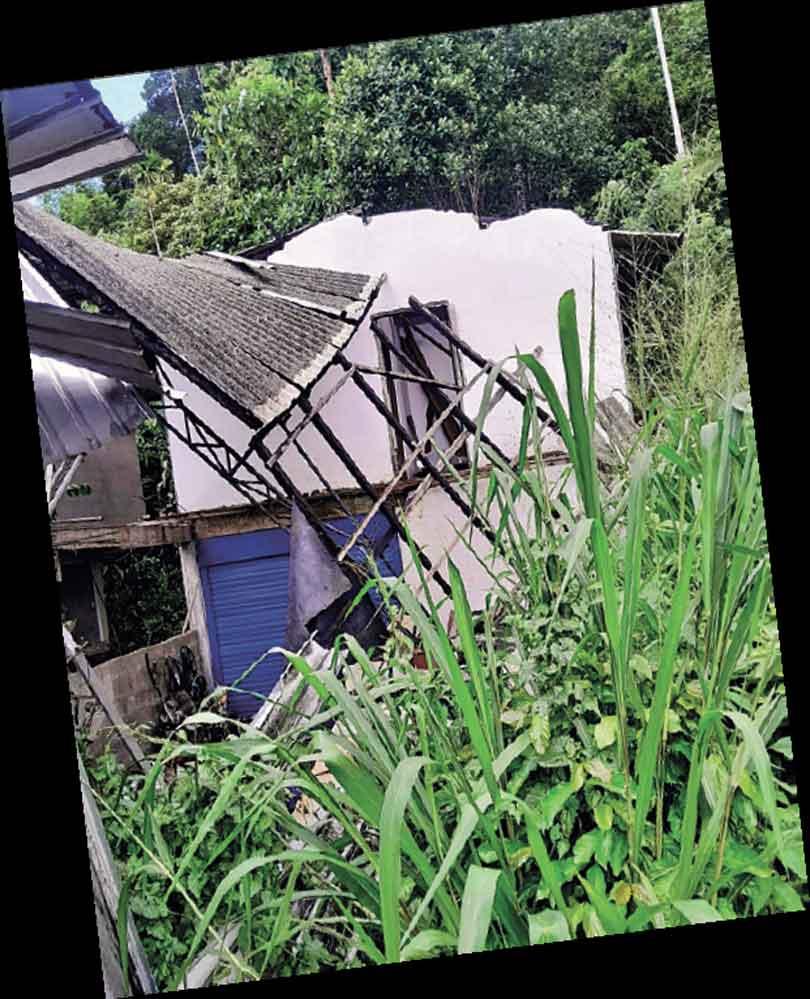
Damage caused to Kantha’s house
The data released by the Disaster Management Centre (DMC) and the Central Bank of Sri Lanka indicate that the Government of Sri Lanka (GoSL) has so far disbursed more than Rs. 24.4 billion in relief and compensation for those affected by Cyclone Ditwah. According to the data, the principal compensation payment has been the Rs. 25,000 house-cleaning allowance, which has been paid to 423,914 households. This represents more than 97% of the affected households. In addition, Rs. 50,000 has been provided for the restoration of damaged property and equipment to 115,757 households.
Furthermore, President Anura Kumara Dissanayake had instructed officials to complete compensation payments by the end of May, including Rs. 5 million for fully destroyed houses and Rs. 500,000 for partially damaged houses. However, the compensation process has now encountered serious difficulties, as thousands of affected individuals remain on waiting lists to receive compensation for both partially damaged and fully destroyed houses. The disaster relief policies and compensation mechanisms implemented by the Government have become a matter of significant concern.
A circular was issued to ensure the proper administration of compensation payments for damages caused by Cyclone Ditwah. This circular was issued under Budget Circular No. 08/2025. It served as the principal legal and administrative framework established by the Government for providing relief, compensation, and restoring public services for those affected by Cyclone Ditwah.
Under this circular, Divisional Secretaries were vested with the authority to engage public officials at the grassroots level and collect essential information required to restore public services that had collapsed in disaster-affected areas. Against this backdrop, a series of key circulars and guidelines relating to disaster relief for the year 2026 were issued.
These circulars and guidelines cover compensation for housing damage, temporary rental allowances, relief for those who have lost their livelihoods, assistance for schoolchildren, and procedures for the resettlement of families living in landslide-prone areas. In accordance with these circulars and guidelines, disaster relief services guidelines were issued. They provide for the systematic distribution of compensation for all houses and business premises damaged by Cyclone Ditwah in November. Divisional Secretaries were instructed to facilitate the free reissuance of documents that had been
destroyed as a result of the disaster.
The circular further authorises the National Disaster Relief Services Centre (NDRSC) and the National Building Research Organisation (NBRO) to work jointly in implementing programmes for the resettlement of landslide-affected and high-risk families. This circular was approved by the Ministry of Finance under Budget Circular No. 08/2025 (ii). Its primary objective is to implement programmes aimed at empowering individuals affected by the disaster.
However, despite the existence of numerous circulars governing the payment of compensation, it appears that certain officials continue to perform their duties within a framework of rules known only to them. As a result, many people affected by Cyclone Ditwah are still being forced to protest on the streets in their struggle for justice. Pallegama in Nawalapitiya, together with the nearby locality of Gadol Bokkuwa, was effected by landslides during Cyclone Ditwah, leaving residents with nothing, but the clothes they were wearing and claiming several lives.
D.P.N. Kantha, a successful entrepreneur engaged in air-conditioning repair services in the area, was a self-made individual who had built his life and business through sheer effort. Cyclone Ditwah inflicted devastating losses on him. His entire business was reduced to rubble, and the house in which he lived is now located within a high-risk landslide zone. Following the destruction of his business premises, the Pallekele Army Camp expressed its willingness to assist in clearing the debris and soil from the site. However, the camp informed him that a letter from the Divisional Secretary of Pasbage Korale, Nawalapitiya,
where he resides, was required before such assistance could be provided. In an effort to salvage at least the vehicles buried beneath the debris at his business premises, Kantha submitted a written request to the Divisional Secretary seeking the necessary letter. However, the Divisional Secretary reportedly refused to issue it.
Not stopping there, Kantha brought the matter to the attention of the Additional Secretary of the Kandy District Secretariat. Yet, to date, he has still been unable to have the landslide debris removed from the site. When steps were being taken to obtain compensation for both his residence and business premises, the Divisional Secretary reportedly informed the Kandy District Secretary that, according to her records, no business establishment existed at the location claimed by Kantha. In response, Kantha presented photographs of the premises along with business registration documents to prove the existence of his business. Subsequently, the District Secretary instructed the Divisional Secretary of Pasbage Korale to obtain a report through the relevant Grama Niladhari regarding the existence of the business establishment and to submit the findings accordingly.
Not stopping there, Kantha brought the matter to the attention of the Additional Secretary of the Kandy District Secretariat. Yet, to date, he has still been unable to have the landslide debris removed from the site. When steps were being taken to obtain compensation for both his residence and business premises, the Divisional Secretary reportedly informed the Kandy District Secretary that, according to her records, no business establishment existed at the location claimed by Kantha. In response, Kantha presented photographs of the premises along with business registration documents to prove the existence of his business. Subsequently, the District Secretary instructed the Divisional Secretary of Pasbage Korale to obtain a report through the relevant Grama Niladhari regarding the existence of the business establishment and to submit the findings accordingly.
According to probing done by the Daily Mirror, it was revealed that although the relevant Grama Niladhari submitted the required report, it has not been forwarded to the Kandy District Secretary even after four to five months. The Grama Niladhari concerned had submitted an eight-page report on Kantha’s business on two separate occasions. During this probing it also came to be known that Kantha had further stated that not only he, but many other residents in the area, had been subjected to unfair treatment by the Divisional Secretary.
The compensation circular issued by the Disaster Management Centre clearly outlines the procedures for granting compensation for losses caused by Cyclone Ditwah. These guidelines were explicitly communicated to Divisional Secretaries and District Secretaries through a circular dated 17 March 2026. The procedures are clearly set out under Section 7.1 and its sub-sections. The circular also specifies how compensation should be paid to individuals who lost their residences due to landslides or floods, as well as to tenants and unauthorised occupants.
Despite these provisions, Kantha alleged that the Divisional Secretary has failed to properly facilitate compensation payments to families whose homes were completely destroyed and who have been left homeless. The President had also instructed that rental assistance should be provided even to those temporarily residing in relatives’ houses. However, in order to obtain rental assistance, applicants are reportedly required to submit a copy of the title deed of the rented property together with a letter from a lawyer. Kantha claimed that such requirements are not imposed by other Divisional Secretariat offices. Daily Mirror’s probing also revealed that many residents within the Pasbage Korale Divisional Secretariat Division have had plead to obtain rental assistance.
Residents of the area also informed us that the Divisional Secretary initially required affected persons to produce extract documents in order to establish ownership of damaged houses. They stated that this was an unnecessary requirement which caused considerable hardship to disaster victims. In many cases, entire houses had been swept away, leaving no trace of their former location. In other instances, portions of houses had been destroyed by landslides, while title deeds and other valuable documents had been lost or destroyed in the disaster.
The circulars clearly state that affected families are entitled to Rs. 5 million for the construction of a house and a further Rs. 5 million for the purchase of a plot of land. However, the Kandy District Secretariat has indicated that land is available in the Mapakanda area of Nawalapitiya. Accordingly, compensation for the purchase of land is said to be provided only when no state land is available within a particular Divisional Secretariat Division. Such assistance is limited to the purchase of seven perches of land, with the government valuation fixed at Rs. 100,000 per perch. However, land is not available in Nawalapitiya at such prices. At present, land in safe, non-risk areas is being sold for more than Rs. 500,000 per perch. Therefore, land cannot realistically be purchased in Nawalapitiya at the values assumed by the Government.
Consequently, Kantha has decided to seek housing assistance to construct a house on a plot of land owned by his wife. The land had previously been mortgaged to a bank for business purposes in exchange for a loan of Rs. 3 million. Of that amount, approximately Rs. 1.6 to 1.8 million remains outstanding. The bank has raised no objection to the construction of a house on the property, as Kantha has continued to make his loan repayments on time. However, according to Kantha, the Divisional Secretary of Nawalapitiya has informed him that the Rs. 5 million housing grant will be released in instalments only after the outstanding loan has been settled and the property has been released from the mortgage. For a person who has lost all of his assets due to Cyclone Ditwah, finding Rs. 1.6 to 1.8 million at this stage is unthinkable. Such a requirement places an additional burden on a disaster victim already facing severe hardship. Probing by the Daily Mirror further revealed that similar requirements are not imposed by other Divisional Secretariat Divisions in Nawalapitiya and that this practice appears to be unique to the Pasbage Korale Divisional Secretariat Division.
Section 12.2.7 of the Cyclone Ditwah compensation circular states that where a business establishment is located within a high-risk zone, compensation may be granted to the value of Rs. 5 million to enable the business to be re-established elsewhere, without undertaking a valuation of the original site. There are numerous business premises in Nawalapitiya that are situated within landslide-prone high-risk zones, and an appropriate compensation mechanism for such cases has yet to be effectively implemented.
Kantha’s business premises is also located within a high-risk landslide zone. No construction is permitted on the site as well.
H.R. Sarath Kumara, a resident of Pallegama in Nawalapitiya, earns a living through casual daily work. As a result of the damage caused by Cyclone Ditwah, his house has developed cracks and has suffered ground subsidence. Following an inspection by the National Building Research Organisation (NBRO), Sarath was informed that the house was unsafe for occupation for a period of six months. He was advised to move into rented accommodation during that period. NBRO officials also instructed him to place markers across the wall cracks in order to observe whether the damage continued to worsen. Those markers have since split apart, indicating that the cracks have expanded further. Although Sarath was advised to relocate to a rented house, he has nowhere to go. He struggles to earn enough even for his daily necessities and is in no position to afford rent. In addition, he is currently undergoing medical treatment for health issues.
To date, Sarath has received only the initial compensation payments of Rs. 25,000 and Rs. 10,000, along with five kilograms of rice. As he had no alternative accommodation despite being instructed to vacate his house, he formally informed the Divisional Secretary of Pasbage Korale of his situation in writing. Eight months have now passed since Cyclone Ditwah struck, yet Sarath hasn’t received the financial assistance necessary to move into rented accommodation. He stated that he has repeatedly brought the matter to the attention of both the Kandy District Secretariat and the Pasbage Korale Divisional Secretariat, but no relief has been provided.
The retaining wall of the Sri Kaveeshwara Veluvanaramaya Temple in Nawalapitiya collapsed as a result of the damage caused by Cyclone Ditwah. Reconstruction work has still not commenced due to delays in obtaining the relevant report from the National Building Research Organisation (NBRO).
A school is situated adjacent to the temple premises, and the damaged wall poses a serious safety risk to the students. The Chief Incumbent of the temple, Ven Saddhalankara, has appealed to the authorities to expedite the report and complete the necessary work without further delay.
Gadol Bokuwa in Nawalapitiya is a well-known location. The landslide that struck the area was so devastating that it left no trace of what had previously existed there. According to Upul Ulapathana, who formerly operated a business at the site, there may still be around 30 unidentified bodies buried beneath the debris. His own business premises has disappeared. Since the disaster, the NBRO has not yet informed whether the Gadol Bokuwa area has been classified as a high-risk landslide zone. As a result, the residents have been unable to resume their livelihoods for the past eight months and continue to struggle to rebuild their lives.
The opinion of those affected by the cyclone is that the authorities have a responsibility to conduct the necessary assessments and ensure that affected individuals receive the compensation.
Attempts were also made to obtain comments from the Disaster Management Centre regarding these matters. However, no response was received.