 Moiz Mustafa
Reply To:
Name - Reply Comment
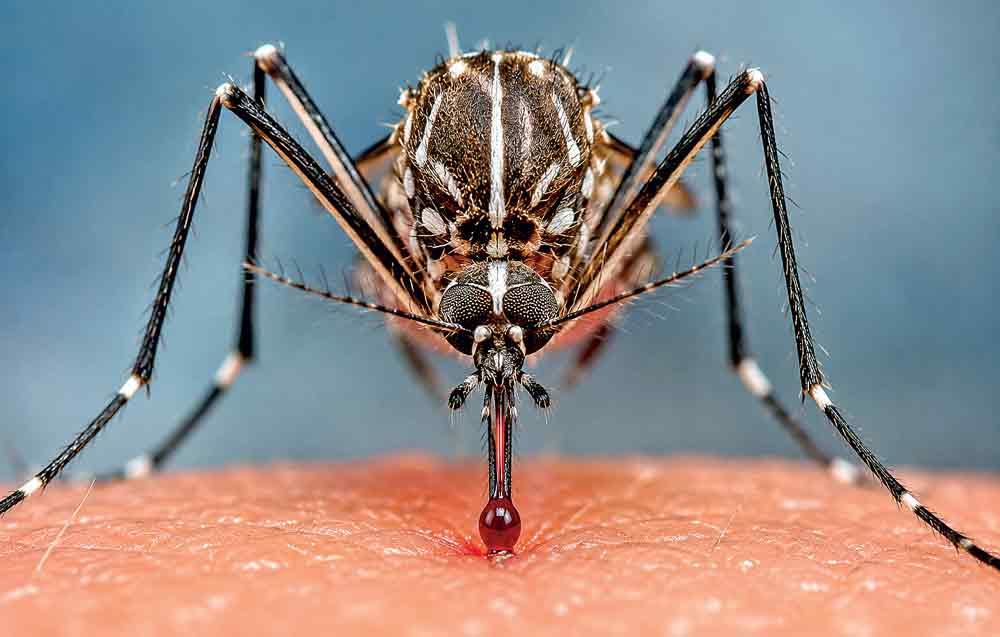
Dengue returns to Sri Lanka every year with the monsoon, and so do the same costly mistakes: mistaking it for flu, relaxing once the fever breaks, and missing the warning signs that matter most. Here is what every household actually needs to know, whatever year you are reading this in.
If you have had a fever in Sri Lanka during the monsoon, there is a reasonable chance someone in your house has asked whether it could be dengue. The honest answer from the people who treat it every day is that you cannot tell from home. Dengue and seasonal influenza look almost identical for the first two or three days, and that overlap costs lives every single year, not just during outbreak years.
Dengue is a mosquito-borne viral illness common in Sri Lanka year-round, with two seasonal peaks tied to the monsoons. Early symptoms (fever, headache, body aches) overlap heavily with flu, so doctors recommend a Full Blood Count test if fever lasts more than two days. The most dangerous phase often begins after the fever breaks, not before. Prevention centres on removing standing water around the home every week.
What is dengue, and how does it spread?
Dengue is a viral infection spread through the bite of an infected Aedes mosquito, the same family of day-biting mosquito responsible for chikungunya and Zika elsewhere in the world. In Sri Lanka, both Aedes aegypti and Aedes albopictus are established, native species, which is part of why the disease has become so difficult to eliminate entirely. The virus cannot spread directly from person to person. It needs a mosquito to bite an infected person and then bite someone else days later, which is why breaking the mosquito’s breeding cycle, not just treating sick patients, sits at the centre of national control efforts.
Once bitten, a person typically develops symptoms within four to ten days. The illness usually runs its course in under a week, though recovery and the platelet count returning to normal can take longer. Most cases are mild to moderate. A smaller share progress to severe dengue, which is the phase that requires hospital monitoring and, occasionally, intensive care.
Dengue or flu? How to actually tell the difference
With both illnesses circulating through much of the year in Sri Lanka, doctors raise a specific, recurring concern: families try to diagnose themselves at home, and get it wrong. Consultant Paediatrician Dr. Maheshaka Wijayawardena has been blunt about where that decision should actually be made.
“Dengue or influenza, decide it at the dispensary, not at home. If fever lasts more than two days, consult a doctor. Symptoms can overlap initially. A Full Blood Count helps to differentiate, “says Dr. Maheshaka Wijayawardena, Consultant Paediatrician.
The reasoning is straightforward. In the first one to two days, dengue and flu can both present as fever, headache, body aches and general fatigue. There is no reliable way to separate the two by symptoms alone in that early window, and a simple Full Blood Count test is what actually tells a doctor whether platelets are dropping or the blood picture looks like dengue rather than a viral flu. Waiting at home to “see how it goes” delays the one test that would have given a clear answer days earlier.
This overlap is not a rare coincidence. Influenza in Sri Lanka has its own seasonal peaks, typically from April to June and again from November to January, which lines up closely with the two periods when dengue transmission also tends to rise. Whatever year it is, this is the window where confusion between the two illnesses is most likely, which is exactly why health authorities run targeted surveillance in high-risk areas through both monsoon periods every year.
The fever breaks. The danger does not.
If there is one message Sri Lankan health authorities repeat every single year, it is this: the settling of fever is not a sign of recovery in dengue. Plasma leakage and bleeding complications, the features that make dengue dangerous, tend to show up in the 24 to 48 hours after the fever comes down, not before. A patient who looks like they are getting better is sometimes entering the riskiest phase of the illness.
Sri Lanka’s public health campaign against dengue has long centred on one simple message: spend just 30 minutes each week searching for places where mosquitoes can breed and eliminate them before they become a threat.
The advice may sound almost too simple, yet health officials say it remains the single most effective action households can take to prevent dengue, regardless of whether the country is facing an outbreak or a quieter season.
The mosquito that spreads dengue needs only a small amount of clean, stagnant water to lay its eggs. Discarded tins, plastic cups, coconut shells, broken flower pots and old tyres can all become breeding sites after even a brief shower. Water storage containers such as tanks, barrels, buckets, wells and toilet cisterns should always be kept tightly covered to prevent mosquitoes from gaining access.
Many breeding sites are hidden in places homeowners rarely inspect. Roof gutters clogged with leaves, flower pot trays, refrigerator drip trays and bird baths frequently collect standing water and are easily overlooked during routine cleaning. Reusable items such as tyres, buckets and wheelbarrows should either be stored under cover or turned upside down so they cannot fill with rainwater.
Construction sites, schools and industrial premises require even greater vigilance. Health inspectors routinely identify mosquito larvae at many of these locations during nationwide dengue control programmes, with construction sites often recording some of the highest infestation rates. A brief inspection after rainfall can prevent weeks of costly mosquito control efforts later. For site managers, school administrators and property owners alike, spending a few minutes checking for standing water is one of the simplest and most effective investments in protecting both public health and the surrounding community.
Dengue is not a new disease in Sri Lanka, nor is it one that will disappear on its own. More than six decades after the virus was first confirmed in the country in 1962, it continues to pose one of the nation’s most persistent public health challenges. Since 1989, dengue has been classified as endemic
Although cases are reported throughout the year, the disease follows a familiar cycle. Large outbreaks tend to occur every few years when monsoon rains create abundant mosquito breeding sites and changes in population immunity allow a particular dengue virus serotype to spread more easily. The pattern has repeated itself often enough to become a predictable feature of Sri Lanka’s public health calendar.
The country’s first confirmed nationwide outbreak occurred between 1965 and 1968. During that period, 51 dengue cases and 15 deaths were reported after two early virus serotypes began circulating. At the time, dengue was still regarded as a relatively uncommon disease, but the outbreak demonstrated its potential to spread rapidly under favourable conditions.
The scale of transmission grew steadily over the following decades. By 2002, Sri Lanka recorded nearly 9,000 cases, making it one of the largest outbreaks the country had experienced.
Just two years later, infections exceeded 15,000, highlighting the virus’s expanding geographic reach and the increasing difficulty of controlling mosquito breeding in urban and suburban areas.
Another major epidemic followed in 2009, reinforcing the recurring pattern of large outbreaks every few years. The country’s worst dengue epidemic arrived in 2017, when more than 186,000 cases were reported nationwide, the highest annual total ever recorded. The disease surged again in 2019, with infections approaching 100,000, confirming that dengue had become a permanent and recurring threat rather than an occasional emergency.
Today, dengue remains endemic across all 25 districts of Sri Lanka. The disease typically reaches two seasonal peaks each year, following the southwest and northeast monsoons, when rainfall creates ideal breeding conditions for the Aedes mosquito. While annual case numbers rise and fall, the overall trend has remained unchanged. Dengue continues to return, making sustained mosquito control and public participation the country’s strongest defence against future outbreaks.
The Western Province, particularly Colombo, Gampaha and Kalutara, has consistently carried the country’s highest dengue burden, driven by dense population, rapid urbanisation, construction activity and the kind of environmental conditions mosquitoes thrive in. That pattern has held across nearly every epidemic year on record, which is exactly why prevention guidance keeps returning to the same households and the same simple weekly habit, regardless of which year’s case count is making headlines.
Health authorities have confirmed Sri Lanka’s 2026 dengue outbreak has reached epidemic level, with national case counts crossing 50,000 for the year.
Officials trace this season’s surge to a specific trigger layered on top of the usual monsoon pattern. Dr. Prashila Samaraweera, a consultant community physician and spokesperson for the NDCU, has pointed to Cyclone Ditwah, which struck the island in late November, as the turning point.
The storm left behind widespread debris, and that debris quietly became thousands of new breeding sites for mosquitoes.
“We noticed this increase after the cyclone. A lot of debris was in our environment, so we noticed a lot of mosquito breeding places, and our entomological indices were high from that time,” said Dr. Prashila Samaraweera, Consultant Community Physician, National Dengue Control Unit
Cases nearly doubled between April and the first half of June, and by 22 June the NDCU had logged 13,689 cases for the month alone, up from 8,590 in May.
The government has authorised the army, navy and air force to join mosquito control operations alongside health workers, an escalation usually reserved for the most serious outbreaks. Hospital pressure has been the clearest sign of how serious the season is: the National Hospital of Sri Lanka and several other major hospitals recorded over 1,000 admissions in a single day in late June, and by 25 June, Dr. Chamal Sanjeewa, Chairman of the Doctors’ Trade Union Alliance for Medical and Civil Rights, said the latest weekly figures still put the daily patient load at around 700, continuing to strain wards and staff even as single-day peaks eased slightly.
Doctors have repeatedly linked this strain to uncollected garbage and stagnant water sitting for days in public spaces, including near the Health Ministry itself, creating fresh breeding sites within metres of the hospitals now struggling to cope.
That spread matters for how families should read local risk. A district being outside the Western Province headlines does not mean it is safe. Hospitals in Matara have also come under pressure this season, and the same household risks, stagnant water, uncovered tanks, discarded containers, apply just as much in a Galle garden or a Kandy construction site as they do in a Colombo apartment block.
None of the forces driving a bad season, whether it is a cyclone’s debris or a heavy monsoon, are within an individual household’s control. What is within your control is smaller and more immediate: checking your own surroundings every week, taking a fever seriously after two days instead of guessing at home, and watching most closely in the day or two after the fever breaks, not before it.
Sri Lanka’s doctors have been saying the same thing for decades. Whatever year you are reading this in, it is still worth listening.
Warning signs that mean go to hospital nowGet to a hospital or clinic immediately, even without a high fever, if you or someone in your care has any of the following: These warning signs often appear as the fever is settling, not while it is at its highest. That is exactly when many families relax. Doctors in Sri Lanka are clear that this is the most dangerous moment in the illness, not the safest one. |