Reply To:
Name - Reply Comment
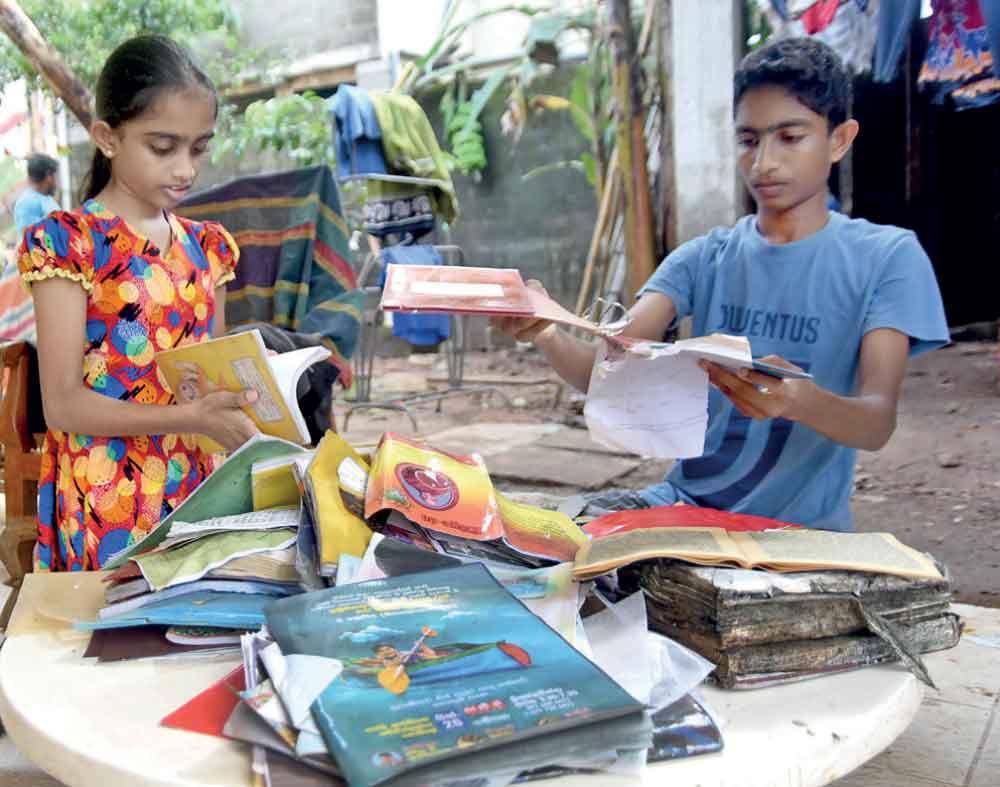
Mud, debris and damp weather are factors sure to drive you insane, but these children in Gampaha have done well to condition their minds and return to studies using whatever books that they could salvage after the storm in their lives
(Pic by Kushan Pathiraja)
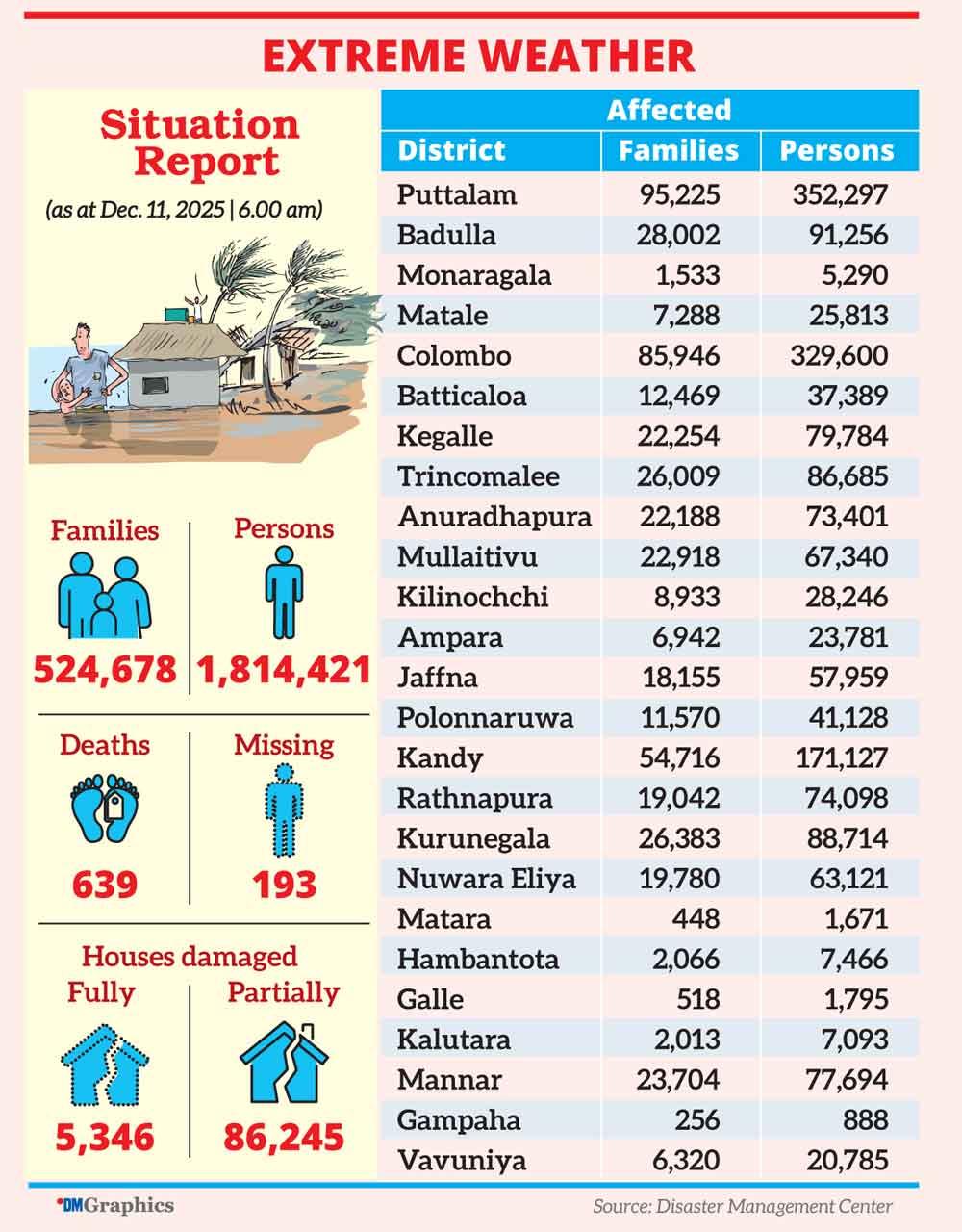
 Sri Lanka is currently reeling from its worst disaster since the 2004 tsunami after cyclone Ditwah unleashed days of relentless floods and landslides across the island. The Disaster Management Centre (DMC) reports that the death toll has risen to 639, with over 200 people still missing as rescue operations continue. More than 86,000 homes have been damaged and over one million residents have been displaced, underscoring the vast scale of devastation left in the cyclone’s wake.
Daily Mirror spoke to several victims of the recent floods and landslides who shared their experiences, ongoing hardships, and hopes for rebuilding their lives in the months ahead.
M. Azlif from Gampola described the situation his family faced after severe flooding affected their hometown: “Our house has never been affected like this before. In my 45 years of living here, we could never have anticipated such devastation. Even during previous floods, water would enter the house, but never to this degree. Usually, we prepare in advance because we know how and when the water rises, allowing us to move our furniture and valuables accordingly. But this time, the water level was completely unforeseen. Everything happened so fast - our home was damaged, and we lost all our belongings. The children’s education was disrupted, and all their school books were washed away. Besides my brother, the other family members are still staying at the allocated centres. So far, we only received support from our mosque and the local community, who helped clean the damaged houses and provide dry rations. The authorities visited and gave us forms to apply for compensation, but we do not know how long the process will take. What we truly need now is some financial support to restart our businesses, so that we can become self-sufficient once more and rebuild our lives,” he explained.
Sentiments divided
Public sentiments are rather divided, and many are expressing concerns regarding poor road management, ineffective flood warnings, and how it may have contributed to the disaster’s severity. Some have started questioning the government’s response to the situation, and remain uncertain about the compensation process or if it will even be sufficient to cover the loss.
R.L.D.K. Thilakarathne hails from Mawela, a village located in the Kotmale valley within the Nuwara Eliya District. “Tragically, my house, along with six other neighbouring homes, succumbed to the landslides. The last time something like this happened was 35 years ago, so this was entirely unexpected. About 40 perches of the lower part of our land was swept away, most of the walls developed cracks, and the foundation of the houses were extensively damaged. I am currently in Colombo, but my family is still at the temple in Mawela which was designated as a temporary shelter. My family wasn’t allowed to return home because the landslide debris hasn’t been cleared yet. I couldn’t visit them either, since all the roads were blocked, and they had no way of contacting anyone since they had no electricity and mobile signal for around 10 days,” he explained. Thilakarathne further noted that, aside from a Grama Sevaka official who came to inspect the damage, no other government authorities had visited the area to provide guidance or assistance in the aftermath of the disaster and issue forms so that claims for compensation could be arranged.
Atheef Ilyas from Akurana spoke about the suffering of his community, particularly in Rambuk-ela, where over 50 people, including some of his relatives, have been buried under landslide debris. “I’ve never witnessed such a catastrophe. Although we narrowly escaped, some of my relatives and neighbours were not so fortunate. The small village was destroyed in an instant, and families were trapped under the soil. Despite rescue efforts, many lives were lost, and Janazah (funeral) prayers had to be held even for those whose bodies could not be retrieved. It took me longer than usual to reach my family in Akurana, as many roads were blocked. Along the way, I saw countless homes completely destroyed. We had no electricity and water for days due to damaged cables and pipelines, and many in the affected areas continue to struggle to restore basic facilities and rebuild their lives,” he said, visibly disheartened.
Rizmila Thahir, a welfare volunteer from Wellampitiya, described what she witnessed while supporting affected families. “Children, single mothers, labourers, and people with medical conditions are among the most severely impacted. Many victims are daily wage earners who depend on a meager income, and their livelihoods have been completely disrupted. Even those who temporarily stayed in relief centers and later returned home found nothing left. Many houses in Wellampitiya were destroyed, and all personal possessions lost. I recently visited a kidney-failure patient whose family had gone days without food and had no proper clothing. Although people have been donating dry rations and other essentials, they are unable to cook because all their kitchen utensils and other household items were washed away. Some families are also hesitant, or rather embarrassed to ask for help and suffer silently as they were financially secure before. Meanwhile, the streets are in terrible condition, filled with garbage and an unbearable stench,” she remarked, noting that the risk of contagious diseases has significantly increased.
Rise in water-borne illnesses
According to medical experts, contaminated floodwaters have raised cases of water-borne illnesses like diarrhea, typhoid, and hepatitis A. Stagnant water has boosted mosquito breeding and the threat of dengue. People walking through dirty water face a higher risk of leptospirosis (rat fever), while poor sanitation and overcrowded shelters further increase infection risk.
L.B.A. Kumari from Gampaha explained that flooding occurs in their area annually, but this time it was far worse. “The roads were submerged under 12 feet of water, and around 6 feet of water entered our home. Since our house is two-storied, we stayed on the upper floor until the water gradually receded over the next two days. We are used to floods, so we usually move all our valuables upstairs, but the water level rose so unexpectedly this time that we couldn’t save some of our belongings. Many single-story houses in the area were almost completely submerged, forcing residents to seek shelter in a nearby temple,” she explained and added that while each family is expected to receive Rs. 25,000 from the government along with dry rations, it is not sufficient to cover the losses suffered, especially the households that lost furniture and electrical appliances. “What we have come to grasp is that flooding worsens whenever the Attanagalu Oya fills up, which causes the nearby canal to overflow. If this canal was properly cleaned and maintained, this could be prevented,” she concluded, hoping that the government will take necessary action.
Nilukshan Jeyavaasan from Akkaraipattu, in Ampara shared: “Our area was completely flooded due to the heavy rainfall, particularly in lowland regions such as Navatkadu, Kolavil, and the Alayadivembu division, roads were submerged under 3 feet of water. The force of wind intensified, causing trees to fall and damage electricity lines and telecommunication cables. Thus, we had no electricity or mobile network coverage for ten days. Some residents used generators, while many others had to rely on kerosene lamps and candles at night. Shops that depended on electricity and communication services were forced to close and fishermen were advised not to go out to sea. Farmers were the most affected, since their paddy fields were destroyed, so this season will be a great loss for them. Many livelihoods were severely impacted by this cyclone, it was truly a daunting experience for us all,” he remarked.
Sri Lanka’s socio-economic progress is facing a serious threat, and the most vulnerable are low-income and working-class households. For many agriculture-dependent families the losses are not temporary, entire seasons of income-generating harvests have been wiped out. Fishing communities were unable to go out to sea, cutting off their primary source of daily income. Small business owners and the self-employed, including those involved in food production, sewing, and handicrafts, have also suffered. Overall, the floods have seemingly deepened financial instability, widened existing inequalities, and pushed marginalized communities into greater hardship.