Reply To:
Name - Reply Comment
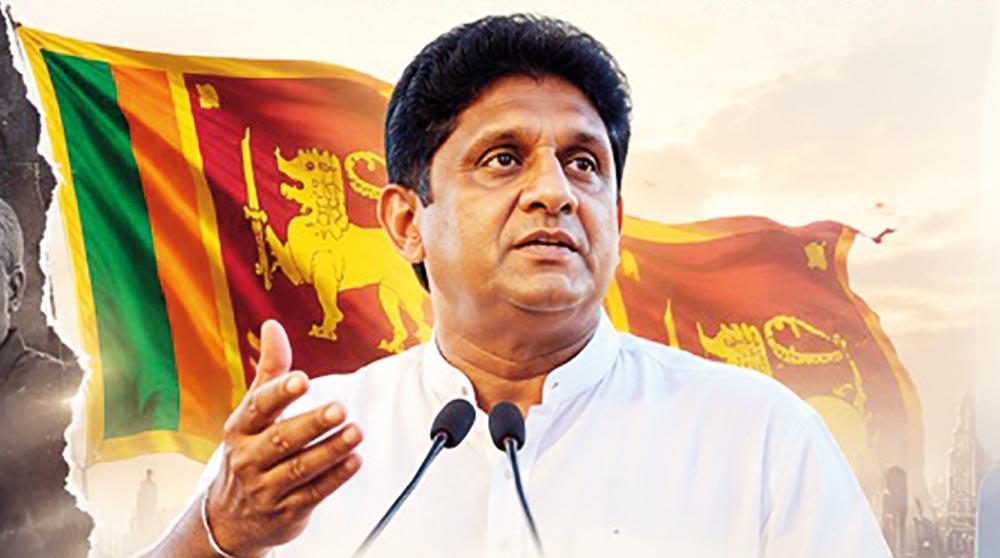
 The leadership cannot be manufactured by media commentators. Sajith Premadasa’s decades of grueling grassroots battles against the Rajapaksa stronghold in Hambantota, should be taken note of. Also should be noted is Premadasa’s refusal to form alliances with discredited political factions during the 2022 economic collapse whicih frames the Sajith as a statesman of rare democratic consistency who chose a difficult, principled path over short-term power grabs.
Ranga Jayasuriya’s recent Daily Mirror article of 14th May 2026 “What SJB Can Learn from the British Labour Party Revolt: Find a New Leader,” presents itself as an objective commentary on internal party democracy. In reality, it is a highly selective and politically motivated critique aimed at undermining the leadership of Sajith Premadasa. Its central weakness lies not in advocating internal democracy—an important principle in any modern political party—but in its failure to situate Sri Lankan politics within its actual historical and moral context.
A Conveniently Selective Narrative
The article seeks to portray Sajith Premadasa as a “serial loser” who should step down after electoral defeats. Yet this simplistic argument ignores a fundamental reality: the SJB was formed only in 2020 under extremely difficult circumstances after Sajith Premadasa challenged the entrenched leadership of Ranil Wickremesinghe within the United National Party.
Far from being a passive beneficiary of dynastic privilege, Sajith demonstrated political courage by breaking away from the Party that his father himself led, and creating a new party from the ground up.
This was not an inherited shortcut to power. His father, Ranasinghe Premadasa, never manipulated the UNP party structure to install his son in the UNP. Sajith had to earn his position after the father’s assasination through decades of grassroots political work challenging the formidable Rajapaksas in their own home turf. As an amateur political organizer he defeated Mahinda Rajapaksa in the Hambantota District in at least two elections. He became the Deputy Leader of the UNP by gaining the trust of party members and voters across the country. Sajith was elected through a proper party election for the post, under the leadership of Ranil Wickremesinghe.
Ignoring the Failures of Others
Jayasuriya’s criticism becomes even more questionable when viewed against the conduct of other political actors.
Both the Rajapaksa-led administrations and the coalition arrangements that followed—including alliances involving the UNP and sections of the Sri Lanka Podujana Peramuna—contributed to the erosion of public confidence in the political system.
Sri Lanka’s severe economic collapse in 2022 was not caused by the SJB. It was the result of catastrophic governance decisions taken by those who wielded state power.
As a Working Committee Member of the SJB, I was the petitioner of the Supreme Court Case SCFR 195 0f 2022 that proved as to who was responsible for Sri Lanka’s economic bankruptcy. In contrast, Sajith Premadasa consistently refused to engage in political expediency for the sole purpose of acquiring office. He did not join hands with discredited forces merely to secure short-term power. That restraint has strengthened rather than weakened his credibility. Sri Lanka needs leaders and statesmen with high credibility and we are fortunate to see such a leader in Sajith Premadasa as the leader in waiting.
The SJB Has a Distinct Ideological Identity
Another omission in Jayasuriya’s article is the ideological character of the Samagi Jana Balawegaya. The SJB has articulated a clear social democratic vision emphasizing economic justice, democratic governance, social welfare, and inclusive development. This places it in a distinct space between the failed populism of past governments and the still untested promises of the current administration.
For many Sri Lankans burdened by economic hardship and political distrust, the SJB represents the most viable democratic alternative within the constitutional system.
Leadership Is Earned, Not Manufactured
Political leadership cannot be created overnight through newspaper columns or the preferences of small circles of commentators. Leaders emerge through public recognition, organisational endurance, and national trust.
Sajith Premadasa remains the only opposition leader with island-wide visibility and appeal among Sinhala, Tamil, Muslim, and other communities.
There is no evidence that the electorate or the overwhelming majority of party members reject his leadership. On the contrary, the SJB continues to function as the Principal Opposition force because of the legitimacy and stature Sajith as a leader6 commands.
Misusing the British Labour Comparison
The comparison with the Labour Party is intellectually attractive but politically superficial. Britain’s political traditions evolved over centuries within a vastly different institutional context. Sri Lankan parties certainly need stronger internal democracy, but leadership questions cannot be reduced to mechanical imitation of foreign systems.
Moreover, even in established democracies, leadership changes occur when a credible and broadly accepted alternative exists. At present, no such figure within the SJB possesses Sajith Premadasa’s national standing.
The Need for Responsible Political Commentary
Political columnists have every right to criticize leaders and institutions. However, such criticism should be balanced, historically grounded, and ethically responsible.
When analysis descends into ridicule and loaded language, it ceases to inform public debate and instead becomes a vehicle for partisan agendas.
Sri Lanka needs thoughtful commentary that strengthens democratic culture rather than destabilising the principal opposition through speculative attacks.
The real question is not whether Sajith Premadasa should be replaced, but whether Sri Lanka can afford to weaken the most credible opposition leader at a time of profound national uncertainty. He has shown consistency, restraint, and the determination to build an alternative political movement rooted in social democratic values. In a political environment where many leaders compromised their principles for power, Sajith Premadasa stands out as a leader who chose the more difficult path. That is why he continues to command public respect and remains one of the country’s strongest hopes for democratic renewal.