 Kamanthi Wickramasinghe
 Reply To:
Name - Reply Comment
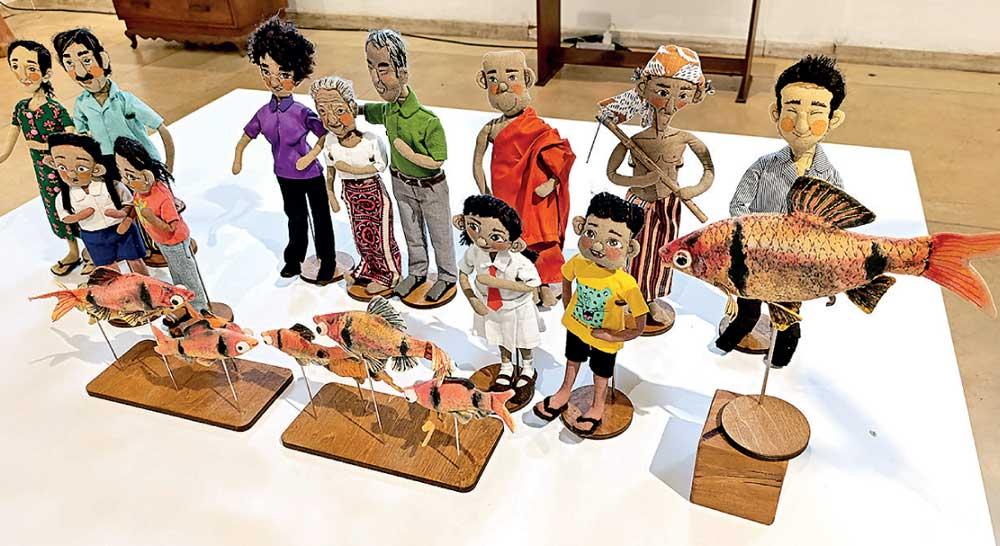
Puppet table top installation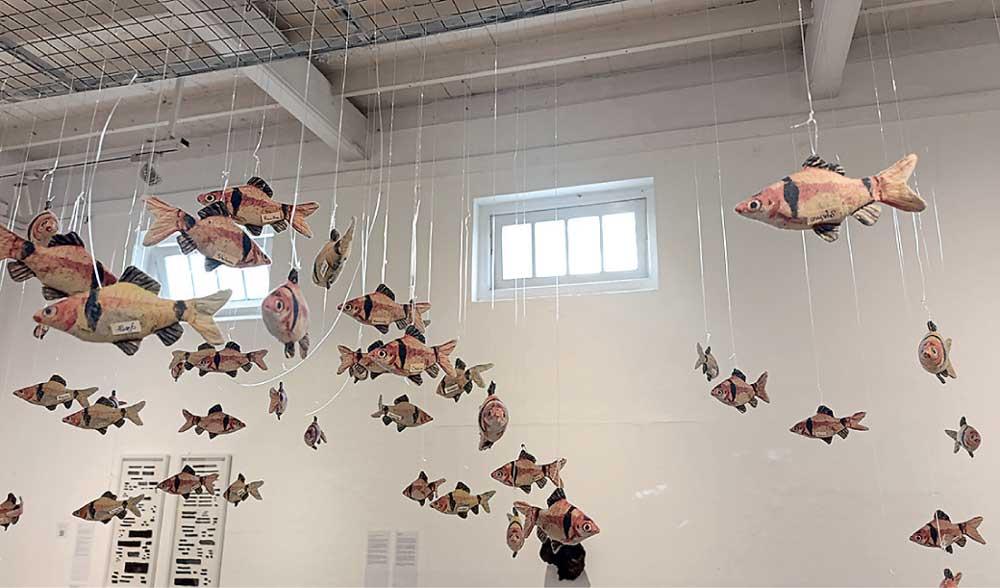 100 Fish Suspension of the Bandula Barb
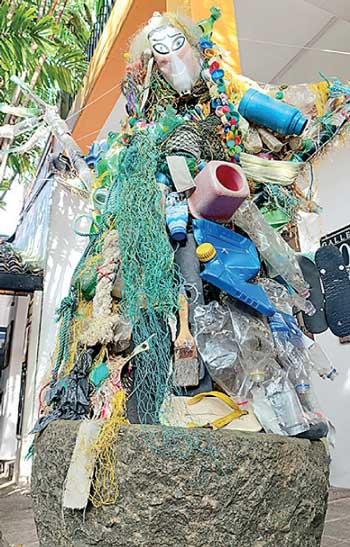 |
| Life-sized monster made of fishing industry debris |
Two life-sized monsters made of fishing industry debris greeted visitors who stepped into the Barefoot Gallery. The two monsters were exhibits of an ongoing exhibition that made visitors experience a climate-positive future. The Climate Positive Exhibition presented by the Creative Catalyst Fellowship (CCF) made visitors pause for a moment and think about not only sustaining the environment they live in, but also what happens if it could be regenerated.
A closer observation of the two monsters revealed something quite serious: that each one of these items, from fishing nets to numerous amounts of plastics, abandoned rubber slippers, and shopping bags, was collected along the shores of Kalpitiya. The artist, Dilisiri Welikala, had been advocating for a cleaner ocean for many years. His exhibits at this exhibition reflect his dedication to keeping his home beach in Kalpitiya clean. An environmental art film titled ‘The Monster’s Cave’ allowed visitors to catch a glimpse of Welikala’s efforts to raise awareness among his community on the importance of keeping the beach clean. Flipping through a scrapbook made by him once again made visitors understand the public response to the government’s initiatives, such as plastic collecting points, which were often empty and vandalised.
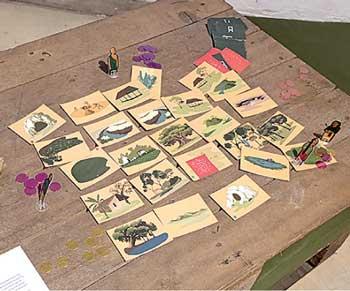
The tabletop puppet installation by Lakshika Rajapakse, a self-taught soft sculpture artist and storyteller, narrates the story of a group of scientists who discovered the alarming decline of the Bandula Barb, a critically endangered freshwater fish found nowhere else on Earth, back in the 2000s. The 100 Fish Suspension presented itself as a powerful tool for education and storytelling and had been used in interactive workshops for children.
 “The intention was to build a body of work which was climate positive, which is also the title of the exhibition, so that we can engage, encourage and inspire the public of Sri Lanka to reimagine a climate positive future for the country”
Randhula De Silva, CCF Programme Director
A personal favourite of this writer is the exhibit by Dinoj Mahendranadan titled ‘Bird Call’. Here, visitors were asked to pick up the tablet and make a call. But when you ‘Dial a Forest’, no one would answer from the other side. Instead, you would hear songs of birds, responding to your dial tone with feelings, and it all depends on how you choose to listen. Dinoj creates music by blending environmental waste materials with digital audio workstations (DAWs), crafting compositions that merge sounds of nature with innovation and sustainability.
Sandranathan Rubatheesan, a journalist and documentary photographer from Jaffna in his exhibit showcased how Mottai Karuppan, a popular heirloom paddy variety in the North, was conducive to climate change when compared to hybrid varieties. “For this, I selected Mottai Karuppan, a well-known local heirloom variety in limited paddy land plots. They survived the severe flooding situation during the last Maha season (2024), whereas land plots where other cultivar and hybrid varieties were cultivated were submerged in water. We were able to harvest only the leftovers. But the land plots where Mottai Karuppan were cultivated survived mostly due to their resilience to adverse weather conditions. However, the yield was significantly low compared to other varieties, and it also took over four months to mature,” he explained, speaking to the Daily Mirror.
 |
| Interactive games based on nature |
Artworks from recycling everyday items to sustainable, aesthetic and efficient products to a photographic narration of human-elephant coexistence, reflection of planetary healing on our bodies inspired by ancestral practices and childhood memories, a deep dive into the tank cascade system with interactive games depicting the battle between humans and nature and keeping wetlands alive, photographic narratives bridging the past with the future, reflections of Sri Lanka’s tangible and intangible heritage, a glimpse into traditional farming practices and heirloom varieties that adjust to climate change in the North highlighted the complexity of climate issues at hand with a touch of creativity. The 10 artistes include Dilsiri Welikala, Dinoj Mahendranadan, Kanil Abeyagunawardene, Kaushalya Nandasena, Krishnapriya Tharmakrishnar, Lakshika Rajapakse, Mahesha Kariyapperuma, Munira Mutaher, Poornima Jayasinghe and Sandranathan Rubatheesan.
Speaking to the Daily Mirror, CCF Programme Director Randhula De Silva said that the intention of the Fellowship was to bring diverse practitioners from different parts of Sri Lanka together and give them the space and opportunity to engage and connect with different disciplines, going beyond creative disciplines. “They connected with scientists, researchers, people from the industry and other different sectors so they could understand the critical issues and the critical work happening around the theme of climate and climate consciousness. The intention was to build a body of work which was climate positive, which is also the title of the exhibition, so that we can engage, encourage and inspire the public of Sri Lanka to reimagine a climate positive future for the country,” she added.
But finding a sponsor who understood the importance of connecting art with other sectors, and onboarding various experts to connect with the artistes, were some challenges the organisers had faced initially. “We then found a programme and a project which understood what we wanted to do, funded by USAID. With that, the project kicked off last year. The biggest challenge happened earlier this year when the US government issued a stop order on all international grants. Thereafter, the programme immediately stopped, and we were left more than halfway through into the programme without funding to continue the work we had started. When that happened, the artistes were already preparing for the exhibition. So we didn’t want to let it go because this is something that we wanted to give birth to in this country and something we wanted people to see. So, in order to gather funds, we once again turned to local allies, local partners and people who saw this as something worthy of supporting. Along the process, there were individual contributions and a lot of people who supported in kind with their time and resources that really helped us to bring this exhibition to life,” she added.
She further explained how the entire exhibition was curated to ensure that it was more of a narrative creator than just another aesthetic exhibition. “It’s an exhibition for people to immerse in and experience the change within themselves,” De Silva further said.
When asked about future aspirations, she said that she wants to showcase the work of the artistes in and around Sri Lanka. “Unfortunately, we don’t have the means to do that, but I hope we can find allies, partners and supporters to take this exhibition to other audiences. We also plan to do another few rounds of this fellowship with new artistes with other similar topics and to build another cohort next year,” she said in conclusion.
The Climate Positive exhibition is open for public viewing at the Barefoot Gallery until August 9.