Reply To:
Name - Reply Comment
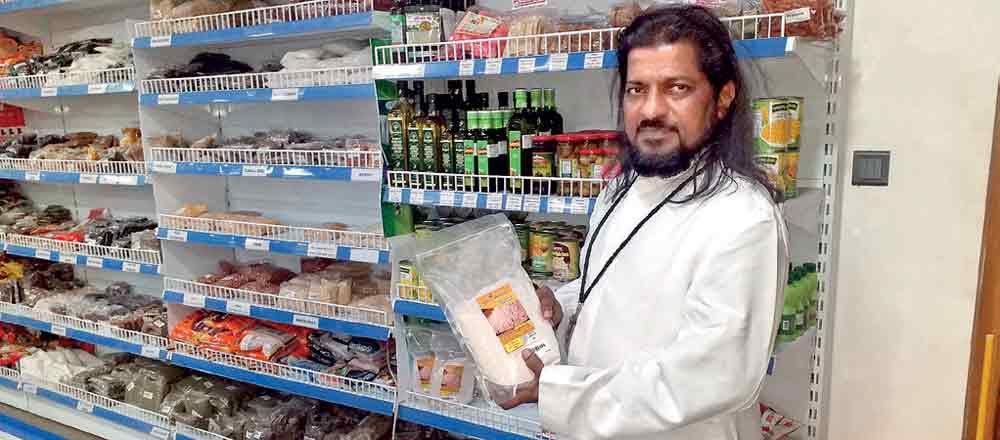
Rev. Fr. Dr. Paul Robinson, Director of the Eastern Human Economic Development Centre (Caritas-EHED) displays a food item at the goods store
By Quintus Colombage
A derelict building situated atop the beautiful beach in Trincomalee has been brought back to life through transformation from being an unutilised building into hope.
Today, Caritas Food City helps less affluent families, uplifts women business leaders, and creates sustainable income for humanitarian programmes in Eastern Sri Lanka.
Launched on May 22, 2024, at the Eastern Human Economic Development Centre (Caritas EHED), under the direction of Rev. Fr. Dr. Paul Robinson, Director of EHED at the Diocese of Trincomalee, this project is much more than just a supermarket.
This project is a completely new approach to community development where business and compassion can go hand-in-hand and build livelihoods through sustainable self-sufficiency.
Located near Trincomalee’s busy beachfront, Caritas Food City has quickly become a popular shopping destination for local residents and evening visitors.
 ”One of our biggest assets has been building good relations with the local suppliers. We have worked well together, setting out fair prices, quality levels, and supply chains, so that everyone benefits”
-Rev. Fr. Dr. Paul Robinson, Director EHED at the Diocese of Trincomalee
The supermarket stocks nearly 1,000 products, ranging from rice, flour, spices, groceries, chocolates and ice cream to school stationery, all displayed on well-organised shelves.
A sustainable business
Through market surveys on a weekly basis, prices can be kept low compared to the market price, thus helping those families that are affected by the cost-of-living problem within the country.
However, the significance of the project goes far beyond this benefit since the food city has been developed as a sustainable business that is aimed at enhancing humanitarian programmes.
Fr. Robinson said that Caritas Food City serves as a permanent marketplace for beneficiaries and small-scale entrepreneurs, enabling them to earn fair profits while providing affordable goods and free monthly vouchers to vulnerable families, alongside promoting home gardening, organic farming, and practical livelihood initiatives that strengthen food security and build long-term community resilience.
“Supporting livelihoods and promoting local products remain our central priorities,” Fr. Robinson told the Daily Mirror.
In order to realise this dream, Caritas undertook market research, sourced from suppliers and local producers, set up the infrastructure for the supermarket, and employed staff for the supermarket.
“One of our biggest assets has been building good relations with the local suppliers. We have worked well together, setting out fair prices, quality levels, and supply chains, so that everyone benefits,” says Fr. Robinson.
The Food City works with 42 village-based suppliers and 171 national-level suppliers. Many of the local producers are widows, single mothers and women from remote rural communities who previously had limited access to formal markets.
Challenging early months
Fr. Robinson said that the early months of the project were challenging, as suppliers played a crucial role by providing goods on credit and accepting delayed payments, trusting the long-term vision of the initiative.
He recalled that one supplier requested nearly Rs. 7 million worth of stock, while EHED could initially afford only Rs. 3 million.
“I explained our vision for this sustainable project and the difficulties we faced in making immediate payments. However, we assured them that we would fulfil our commitments and repay them responsibly,” he said.
A voucher programme allows poor families to buy necessary items, while a loyalty programme is designed to encourage loyal clients. The training programmes are helpful for local farmers to enhance their products. This helps them generate sustainable local economic development.
Caritas-EHED invested about Rs. 25 million in the project, creating 16 direct jobs, supplying affordable products, supporting 42 village suppliers, and reinvesting nearly 60 percent of its profits into livelihood support, peacebuilding, food security, education, women’s empowerment, and humanitarian aid programmes.
 “Caritas supply chain is giving us a better opportunity to reach customers and earn an income”
- Mary Amalautpavam, 38-year-old widow
Each week, 38-year-old widow Mary Amalautpavam manages to juggle raising her four-year-old child with making homemade rice flour, chili powder and other products, earning close to Rs. 10,000 each week from an income she never thought was possible two years ago.
For years, she relied on middlemen who bought her products at unfairly low prices, leaving little profit because her village lacked a reliable market. Everything changed when Caritas Food City opened its doors.
“Caritas supply chain is giving us a better opportunity to reach customers and earn an income,” Amalautpavam told the Daily Mirror.
Amalautpavam is one of 42 local entrepreneurs trained in food safety, packaging, labelling, business development, and QR code systems.
“Middlemen paid us almost nothing. Now I feel proud because my work has value,” she said.
Anura Sebastian, 52, a father of three, who once struggled to find stable employment, now works as a customer service officer and deputy manager at the supermarket.
“There were months when I could not properly support my family,” he recalled. “Some jobs lasted only a few weeks.”
Today, he takes pride in knowing that his work contributes to a greater cause. “We know the profits are helping vulnerable families and widows. When we work here, we feel we are serving people, not just selling products,” he said.
“This place is helping the whole community,” he said.
The Food City uses modern inventory and accounting systems to digitally track stock levels, customer purchases, salaries, product expiry dates, and staff attendance.
“We know the profits are helping vulnerable families and widows. When we work here, we feel we are serving people, not just selling products”
- Anura Sebastian, 52, a father of three
The monthly voucher programme provides Rs. 2,500–5,000 worth of vouchers to 30–40 low-income families, enabling them to obtain essential household goods free of charge each month and easing their financial burden.
Shirani Ariyawansa, a government employee from Trincomalee, said he visits the food city every week to purchase household essentials for his family.
“One of the biggest benefits is that the prices are affordable. By shopping here, we are not only meeting our own needs but also supporting a valuable service for vulnerable families. We feel proud that our purchases contribute to this worthy cause,” she told the Daily Mirror.
Fr. Robinson engages with customers daily, gathers their feedback, and explores new ways to improve services and expand the Food City’s impact.
“From morning until evening, people came to us seeking financial assistance,” Fr. Robinson recalled.
“Many were widows, elderly people, and mothers struggling to feed their children. I realized temporary assistance was not enough; we needed a sustainable solution restoring dignity, independence, and hope,” said the priest.
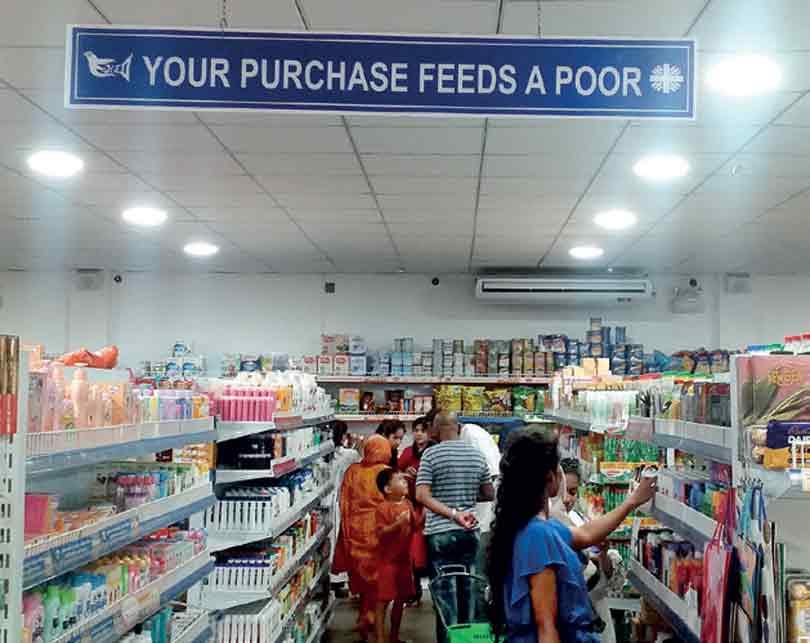
Caritas Food City project in Trincomalee
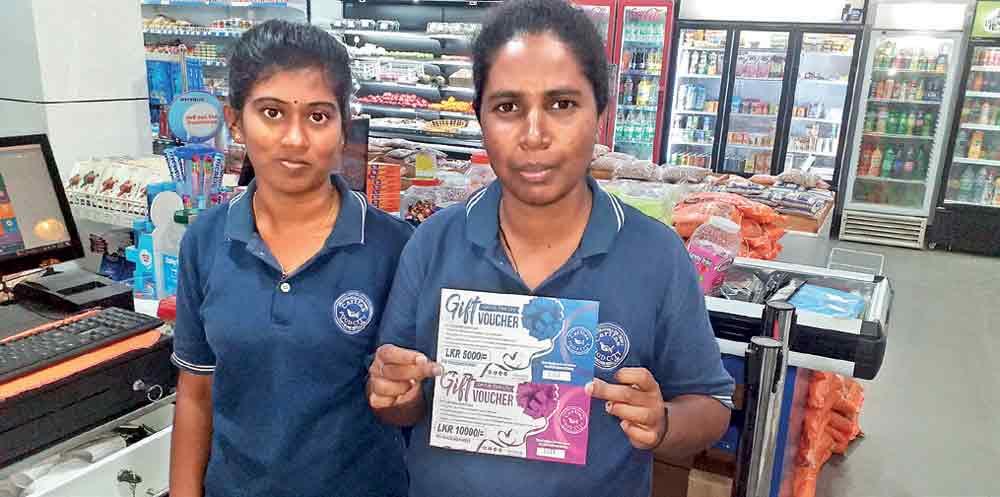
Two employees of the food city display vouchers for free food for vulnerable families