Reply To:
Name - Reply Comment
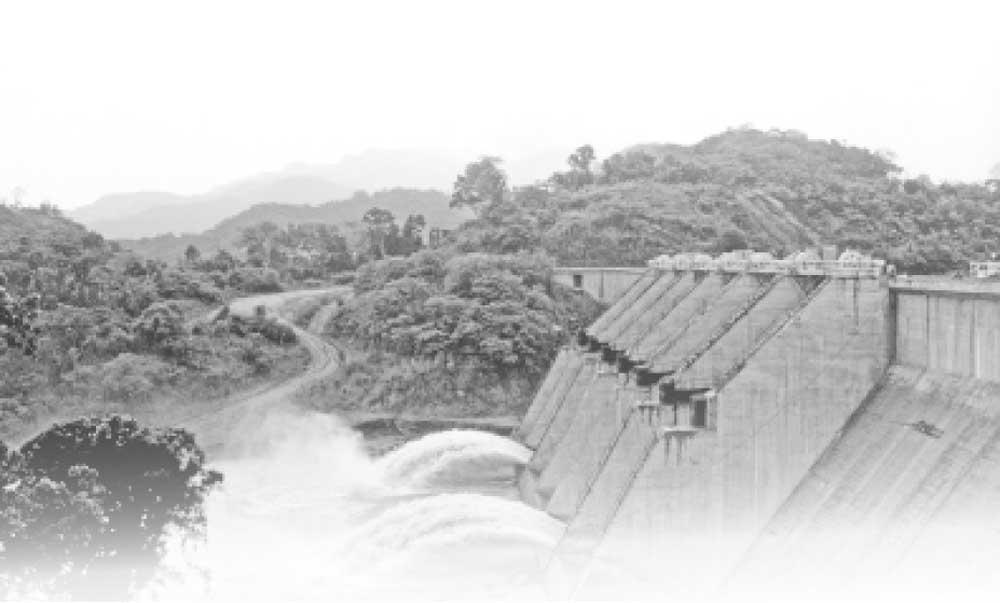
The picture shows water being released from the Bowatenna Reservoir.
 The Bowatenna project was initiated on March 1973 by then Prime Minister Sirimavo Bandaranaike
The Bowatenna Reservoir is a gigantic project in the field of irrigation in the country
This multi-purpose reservoir scheme feeds several tanks and reservoirs in Rajarata region

Bowatenna reservoir, one of the main reservoir projects under the Mahaweli Development Programme, bordered on Pilihudugolla Village in the Naula Division in the Matale district is the main source of water supply to the Rajarata region.
Completed on March 18, 1976, Bowatenna reservoir is 50 years now.
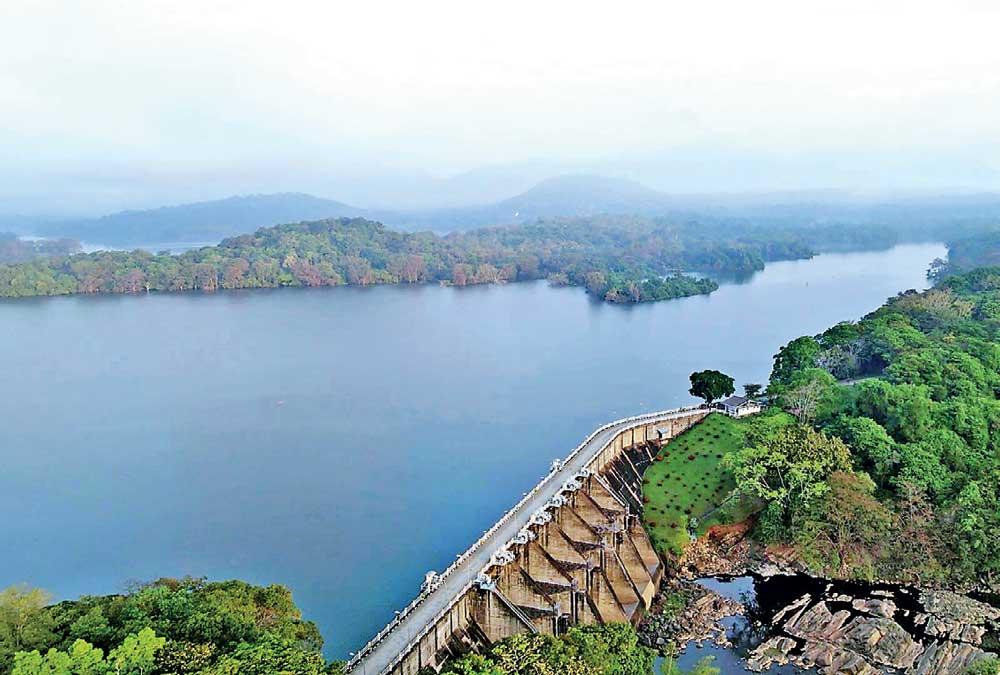
Equipped with six spill gates and a gravity dam that’s 30 metrs in height, the reservoir is located about 3.5kms off Pilihudugolla Upper and Lower Grama Niladhari areas by Matale-Dambulla A9 highway.
It depends on Weralu Gaha Kanda Forest Reserve, a highly sensitive environmental zone rich in bio diversity and a national heritage, as its main catchment.
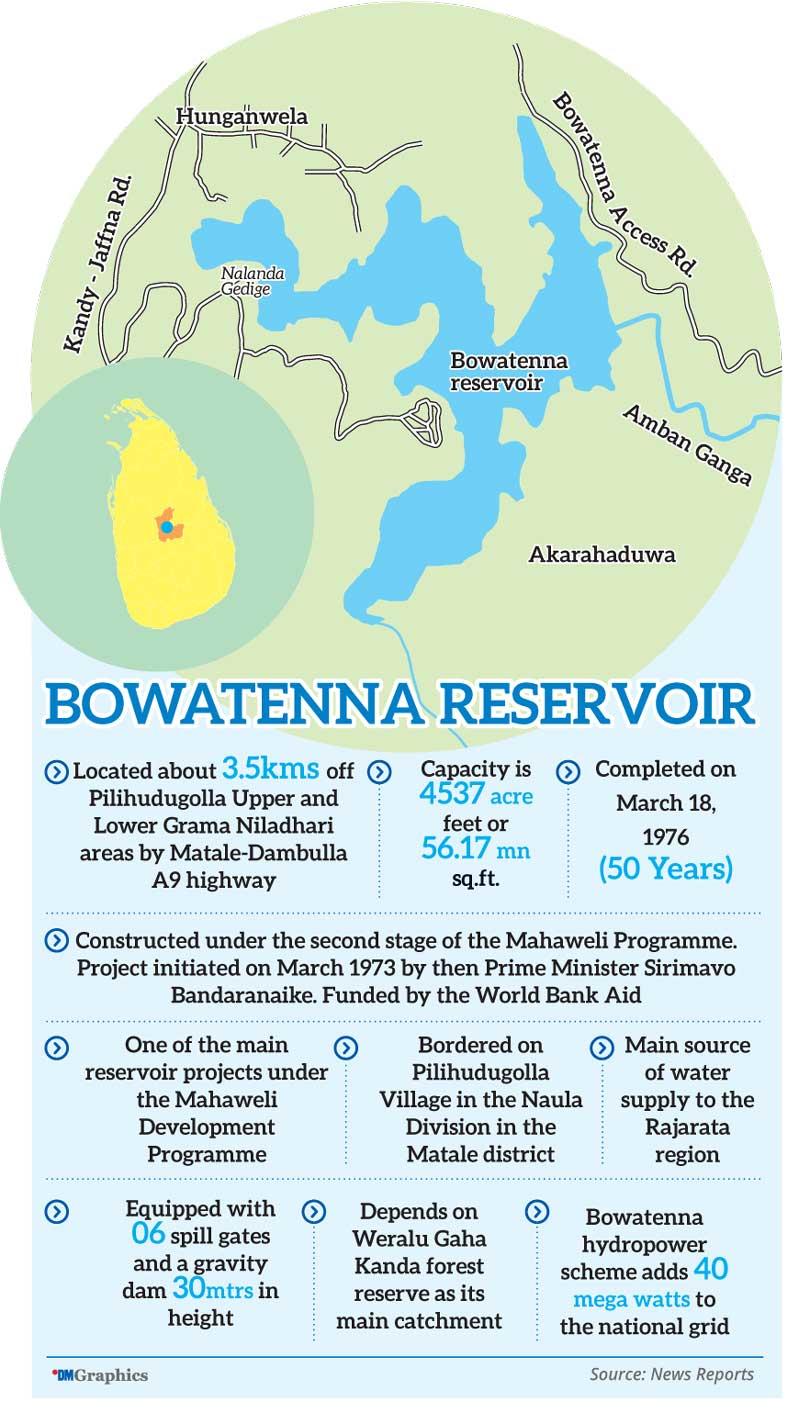
The capacity of the Bowatenna Reservoir is 4537 acre-feet or 56.17 million square feet.
It is worthwhile to recall the important events interwoven with the Bowatenna Reservoir, a gigantic project in the field of irrigation in the country to create awareness among those in the present generation and to stir the memory of its history.
Engineer in Charge of the reservoir Buddhika Nawaratne is a resourceful person regarding facts about the reservoir.
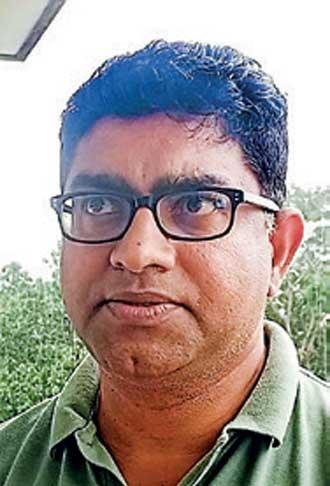
 “The Bowatenna Project, which is fed by Polgolla through Suduganga and Ambanganga rivers, transmit water to Girithale, Minneriya, Kaudulla, Kandalama, Huruluwewa and Ibbankatuwa tanks and reservoirs. Bowatenna hydropower scheme adds 40 megawatts to the national grid and another nine small scale hydropower plants add 35 megawatts. However it is a matter of concern that the capacity of the reservoirs has reduced by an alarming proportion owing to silting”
- Buddhika Nawaratne, Engineer in Charge of Bowatenna Reservoir
|
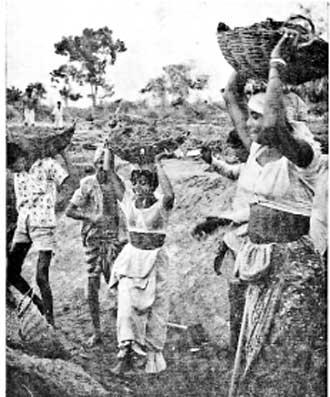
A group of women from the old villages who participated in the construction of the Bowatenna Reservoir |
|
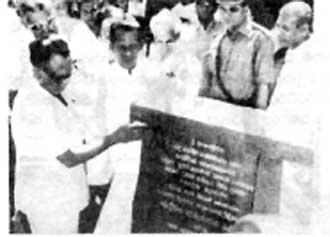
A moment is captured on camera when the nameplate of the Bowatenna Reservoir was unveiled |
He believes that the Bowatenna reservoir is a landmark project in the history of multi-purpose reservoir schemes in the country and feeds several tanks and reservoirs in Rajarata region.
“The fifty year history of Bowatenna reservoir accounts for a half century of the country’s development. It was a great achievement for the country and the people who made many a sacrifice of their land and property.
“Bowatenna was constructed under the second stage of the Mahaweli Programme, the first being the Polgolla project. The Bowatenna project was initiated in the month of March in 1973 by then Prime Minister Sirimavo Bandaranaike. It was completed on March 18, 1976. The project funded by the World Bank aid included the main dam, the tunnel way, and the construction of the eight kilometre long Huruluela and cost only Rs.120 million at that time. Ceylon Engineering Company was the contractor of the project that employed only local engineers and workers,” said Buddhika Nawaratne, the Engineer in Charge of the reservoir.
According to him, more than 250 families in several villages including Pilihudugolla, Wambotuyaya and Nalandawa in the Naula Division that ‘went under the project’ were resettled in Hurigaswewa, Galnewa and Bulnewa areas in the Anuradhapura district.
Today they are living a contended life and are pleased about the project providing them with irrigation facilities and drinking water, done under the Mahaweli Project.
“The Bowatenna Project, which is fed by Polgolla through Suduganga and Ambanganga rivers, transmit water to Girithale, Minneriya, Kaudulla, Kandalama, Huruluwewa and Ibbankatuwa tanks and reservoirs. Bowatenna hydropower scheme adds 40 megawatts to the national grid and another nine small scale hydropower plants add 35 megawatts.
“However it is a matter of concern that the capacity of the reservoirs has reduced by an alarming proportion owing to silting. The reservoir with a normal capacity of 56 million cubic metres at the inception had reduced to 23 million as revealed by a survey in 2014. The capacity of the reservoir has reduced almost by 50 percent,” said Nawaratne.
Pollution of drinking water
|
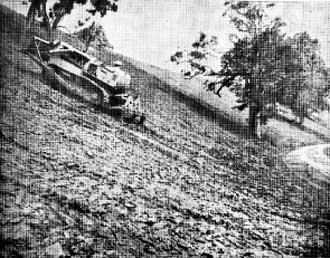
A machine being used to prepare the dam of the Bowatenna reservoir |
Ill-planned and unauthorised construction work and the flow down of muddy water from the hills could have resulted in this situation. “We have taken step to clear the silt and remove about six tons of solid waste each month including glass and plastic. Pollution of drinking water in this manner should be prevented through safe garbage disposal. This can be done through a thorough garbage management programme. It is a social obligation too,” he said.
According to him, threefold of the capacity of Kalawewa is required to irrigate 25,000 hectares of paddy in the Mahaweli ‘H’ Zone. The capacity of the Kalawewa Tank is 104 million cubic feet and threefold of it is required to irrigate paddy cultivation in the ‘H’ Zone. The normal capacity of the Kandalama Tank is 34 million cubic feet and threefold of its capacity is required to irrigate 4000 hectares.
“In the case of Huruluwewa, we transmit 20 million cubic feet of water from Bowatenna for which we obtain water from the Kotmale River. This requires efficient management of water. When the Ditwah Cyclone hit the country on November 27, the entire staff was on duty. By 10.30 pm the reservoir had received 9000 cubic feet of water per second and the following morning we collected Data pertaining to the capacity of water which we managed well. In fact we update Data pertaining to the prevailing capacity of the reservoirs and the rainfall,” he explained.
“It is a pleasure that the construction works of the reservoir has been of high standard and that it hasn’t developed any leaks,” he added.
The Director, Water Management Secretariat decides on the extent of land to be irrigated for a cultivation season. However, the release of water would be affected if the monsoon rains fail. “Yet we have been able to irrigate paddy cultivation and other agricultural land uninterrupted under Bowatenna reservoir since its inception. Thanks to former Director R.S.K Aruppala, our reservoir system has been raised to the international standards,” said Nawaratne.
“We launched a tree planting campaign to mark the 50th anniversary of the reservoir and planted 2000 trees in the reservoir reservation. Religious activities included an all-night Pirith Chanting and an alms given for 100 Buddhist monks to bless the reservoir. The former Engineers and the employees were felicitated at a ceremony on the Bowatenna dam,” Nawaratne said.
He pointed out that Bowatenna is a symbol of sacrifices made by the people representing 225 families for the sake of many generations that are to be born. He added that the reservoir would exist for ages, provided that the present generation fulfilled its duties. He stressed that it is the paramount duty of all those concerned to prevent the haphazard disposal of garbage, which causes environmental pollution of the reservoir used by tens of thousands of people, who depend on it for drinking water and irrigation facilities.
Note: Asst. Engineer Dilan Rangana Tilakaratne provided the old pictures of important events relating to the project.
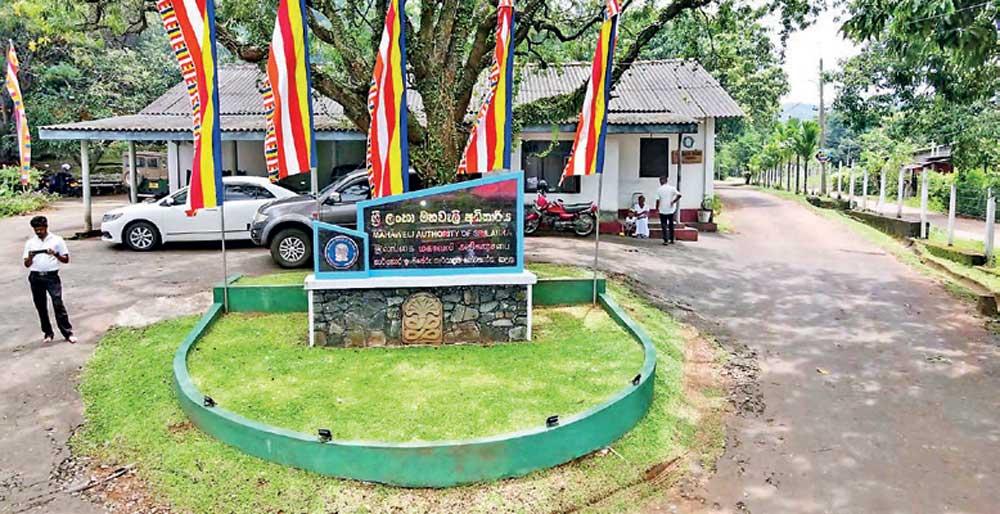
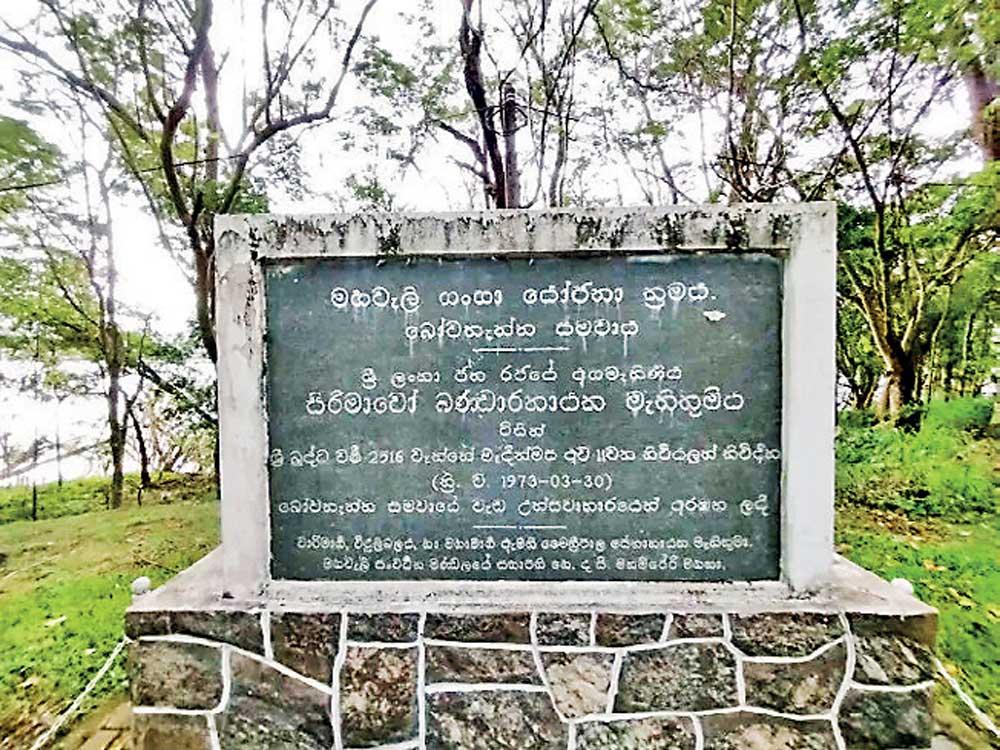
Nameplate at Bowatenna Reservoir which indicates that the work at the project began on March 30, 1973
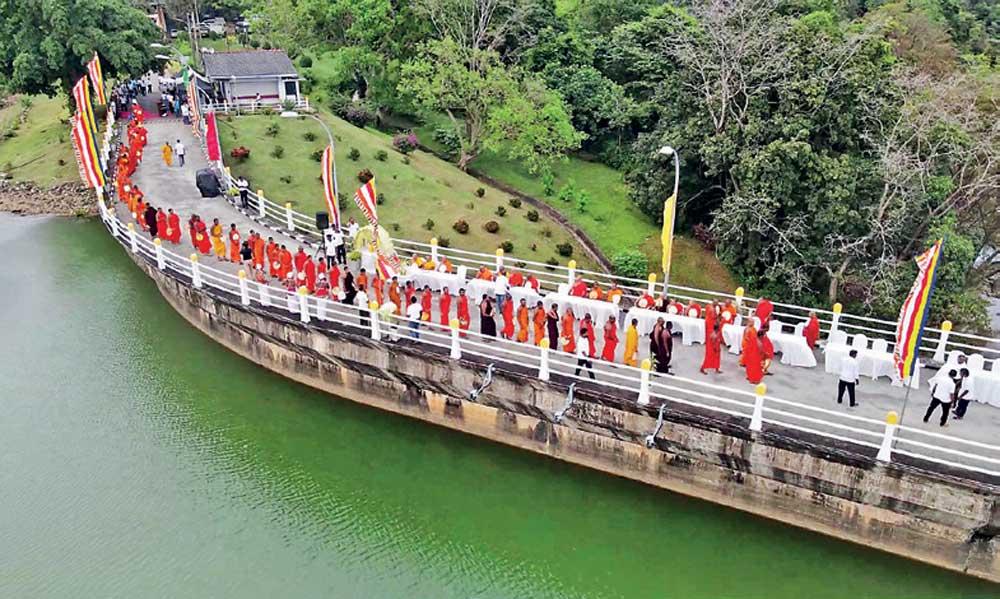 The picture shows the occasion when members of the Buddhist clergy are walking towards the reservoir to commence religious ceremonies to mark the 50th anniversary of the Bowatenna Project
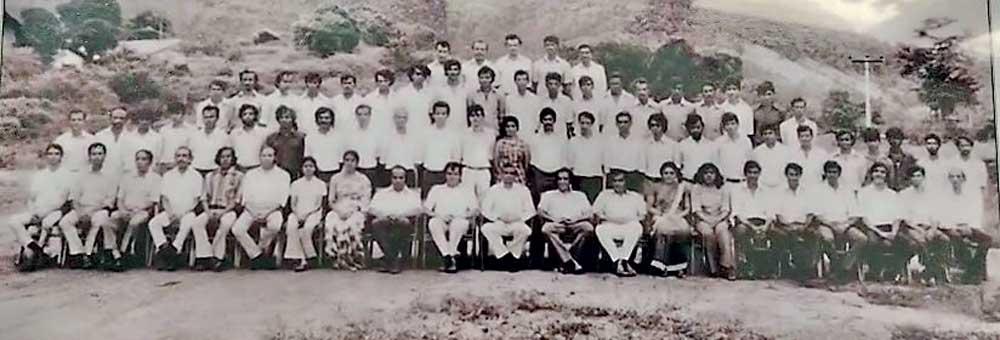 A picture taken in 1976 shows the staff who worked at the inception of the Bowatenna Reservoir
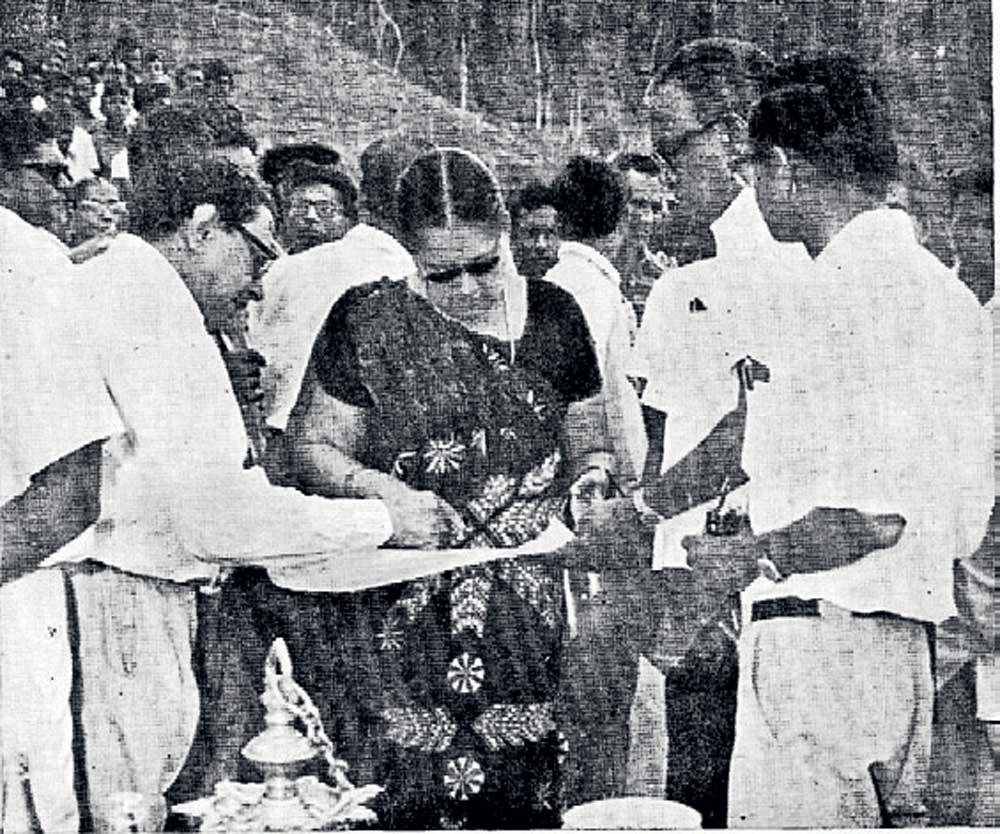 Prime Minister Sirimavo Bandaranaike is seen inspecting the construction of the Bowatenna Reservoir
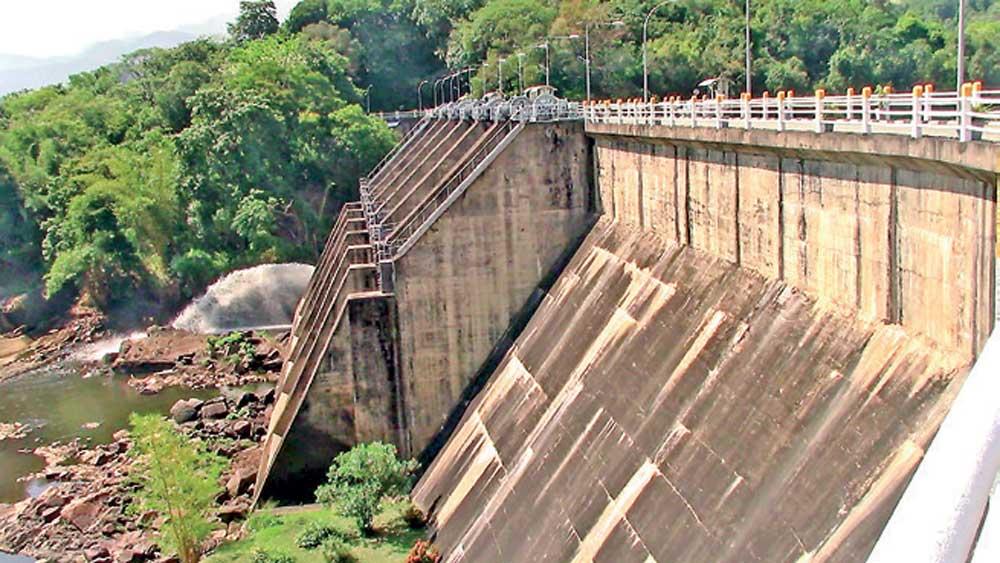
Picture shows how the Bowatenna Reservoir appears today