Reply To:
Name - Reply Comment
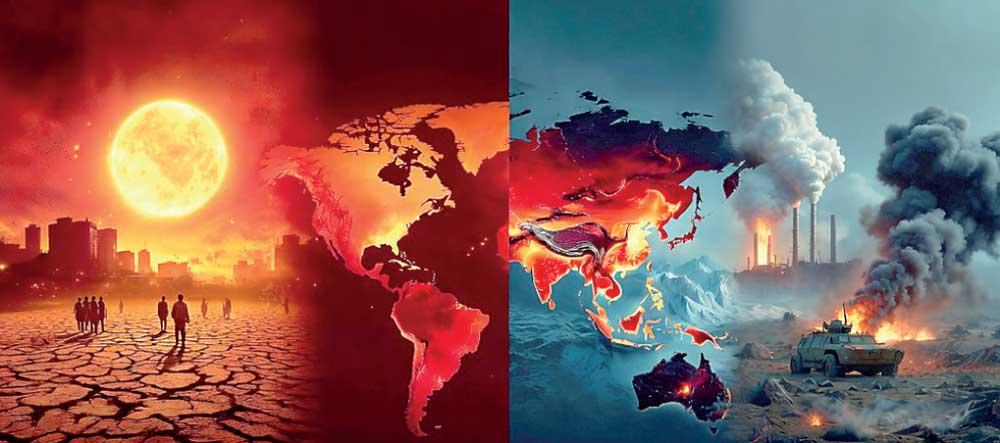
 Asia is currently grappling with a relentless surge in temperatures that transcends mere seasonal variation, signaling a profound transformation of the Earth’s climate system. Driven by a volatile combination of human-induced global warming and the impending re-emergence of El Niño in mid-2026, the region faces intensifying heatwaves and prolonged droughts. Beyond natural cycles, research reveals that armed conflict and military fossil-fuel consumption further exacerbate this crisis, leaving vulnerable communities to navigate an increasingly unforgiving and unstable environment.
Today’s relentless heat can no longer be casually dismissed as ordinary weather. It feels heavier, more suffocating, and more persistent than before. Across Asia, rising temperatures are no longer rare; they are becoming part of daily life, signalling a rapidly shifting climate rather than simple seasonal variation.
One natural climate system influencing this situation is El Niño. It occurs when surface waters in the central and eastern Pacific Ocean warm abnormally, disrupting global weather patterns. In Asia, El Niño typically brings hotter, drier conditions. Climate authorities warn that El Niño is likely to re-emerge between May and July 2026, increasing the risk of more intense heatwaves and possible droughts across the region.
Yet this is not only a story of natural cycles. The deeper and more alarming issue is climate change. The Intergovernmental Panel on Climate Change (IPCC, AR6 Report) states that “it is unequivocal that human influence has warmed the atmosphere, ocean, and land.” This warming baseline means that natural climate variations now hit harder, last longer, and affect far more people than before.
The reality of this is already unfolding across Asia. In India, several regions have endured extreme heatwaves exceeding 45°C in recent years, with temporary school closures reported in some areas as authorities struggled to protect children from heat-related illness. In Thailand, Bangkok has recorded record-breaking temperatures during recent heatwaves, prompting the opening of emergency cooling centres for vulnerable communities. Vietnam has experienced severe drought in certain regions, threatening agriculture and water supplies. Meanwhile, in Sri Lanka, meteorological warnings suggest that an intensified El Niño could prolong drought, raising serious concerns for farmers and households already dependent on limited water resources. Behind every statistic lies a lived reality, with families adjusting their routines, workers pushing through unbearable heat, and communities trying to cope with conditions that feel increasingly unforgiving.
Reports from the Intergovernmental Panel on Climate Change (IPCC) and the World Meteorological Organisation (WMO) confirm that extreme weather events, especially heatwaves, are now occurring more frequently, becoming more intense, and lasting longer due to rising global temperatures, thereby affecting millions of lives worldwide.
War and climate change
Beyond natural and environmental factors, armed conflict also indirectly contributes to climate change, an aspect often omitted from public discussion yet deeply significant. Research from organisations such as the Stockholm International Peace Research Institute (SIPRI) shows that military activities are highly fossil-fuel-intensive and contribute significantly to greenhouse gas emissions, although these emissions are often underreported in global climate accounting.
Environmental science research published in journals such as Global Environmental Change identifies multiple pathways through which armed conflict worsens environmental conditions:
Post-conflict reconstruction adds another layer of impact, as rebuilding relies heavily on carbon-intensive materials such as cement and steel. As a result, the environmental cost of war continues long after the conflict ends.
Human impact
Perhaps the most painful reality of this rising heat is its direct impact on ordinary people. Farmers are losing crops to heat stress and unpredictable rainfall, watching seasons they once relied on become uncertain. Outdoor workers endure long hours in dangerous conditions, where exhaustion becomes routine. Cities, built from concrete and asphalt, trap heat and turn urban spaces into intense heat zones. Health risks are rising, especially heat exhaustion and dehydration, among vulnerable groups who have no choice but to continue their daily lives.
What makes this situation even more concerning is how quickly it is becoming normalised. Conditions that once seemed extreme now feel expected. Scientists warn that this is a clear sign that the planet is warming, becoming more unstable, and increasingly unpredictable.
The combination of El Niño and climate change is particularly dangerous. El Niño follows a natural cycle, but climate change intensifies its effects.
In simple terms, a naturally occurring event is now unfolding on an already overheated Earth, making the impact more severe and harder to endure.
Ultimately, the rising heat across Asia is not just about weather patterns. It reflects a changing planet shaped by natural systems and human activity, including climate change and the indirect environmental impact of global conflict, as documented in climate and security research.
Scientific evidence is increasingly clear: this is not a temporary disruption but a long-term transformation of the Earth’s climate system, one that humanity is already living through.