Reply To:
Name - Reply Comment
By Chaturanga Pradeep Samarawickrama
The rapid spread of dengue has disrupted higher education, forcing several university faculties to switch to online lectures after dengue clusters were detected, while the Education Ministry is also closely monitoring schools for signs of possible outbreaks, the Daily Mirror learns.
Several leading universities have either shifted to online teaching or temporarily suspended on-campus activities following a sharp increase in dengue infections among students.
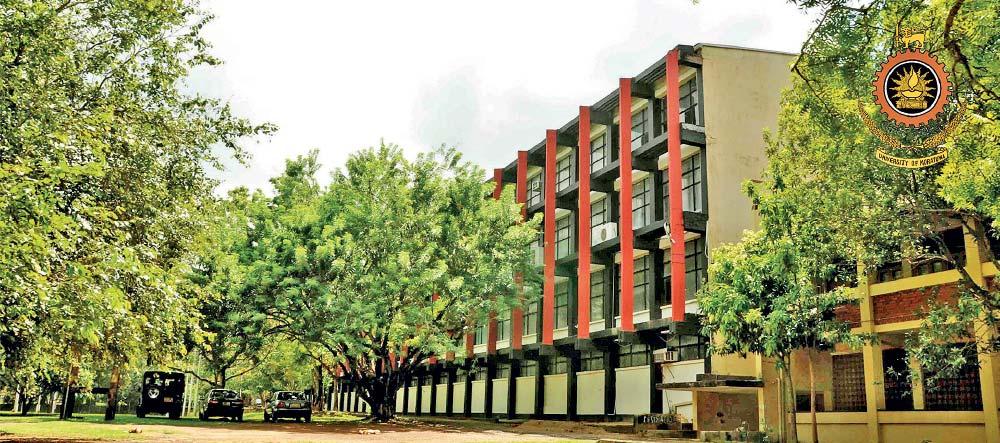
Acting on updated health guidelines, the University of Colombo moved several faculties to online and hybrid learning, while the University of Moratuwa suspended all on-campus academic activities for two weeks to facilitate extensive cleaning and mosquito control measures. The University of the Visual and Performing Arts also temporarily closed its premises after reporting dengue cases.
Revealing the extent of the outbreak, University of Colombo Vice Chancellor Professor Indika Mahesh Karunathilake said 71 students had tested positive for dengue, with five currently receiving hospital treatment.
He said the Faculty of Arts recorded the highest number of infections, prompting the university to shift several academic activities online to curb further transmission.
The closures come amid a sharp rise in dengue cases nationwide, raising concerns that universities could become major transmission hotspots during the current outbreak.
The developments have also exposed an apparent communication gap between universities and the University Grants Commission (UGC).
A senior UGC official said several universities had failed to promptly inform the Commission after deciding to suspend physical lectures, with the UGC becoming aware of some closures only several days later.
The official said the UGC does not maintain records of university closures, as such decisions are taken by respective Vice Chancellors in consultation with relevant Medical Officer of Health (MOH) officials based on local health assessments.
Meanwhile, the Education Ministry said it has intensified dengue prevention measures across government and private schools, preschools and other educational institutions while closely monitoring the situation for possible outbreaks.
The Ministry has issued a circular instructing provincial education authorities to identify and eliminate mosquito breeding sites, organise clean-up campaigns and conduct awareness programmes involving students, teachers, parents and local communities.
A senior Ministry official said no significant dengue clusters have so far been reported in schools, unlike in several universities.
“Schools have been instructed to strictly follow dengue prevention guidelines, and we are continuously monitoring the situation,” the official said.
The official added that health authorities had advised university Vice Chancellors to adopt online or hybrid teaching whenever local conditions required such measures.
The differing situations in universities and schools have raised questions over whether dengue surveillance and preventive measures were implemented early enough in higher education institutions, as authorities race to contain the outbreak before it causes further disruption to the academic calendar.
Earlier, Health Minister Dr. Nalinda Jayatissa said nationwide dengue inspections had revealed a high prevalence of mosquito breeding sites in schools.
He said around 41% of locations inspected within the school system were found to contain dengue mosquito breeding sites. Inspections also detected breeding sites in 28% of religious institutions and 26% of industrial premises, highlighting the widespread nature of dengue risks across the country.