 KELUM BANDARA
 Reply To:
Name - Reply Comment
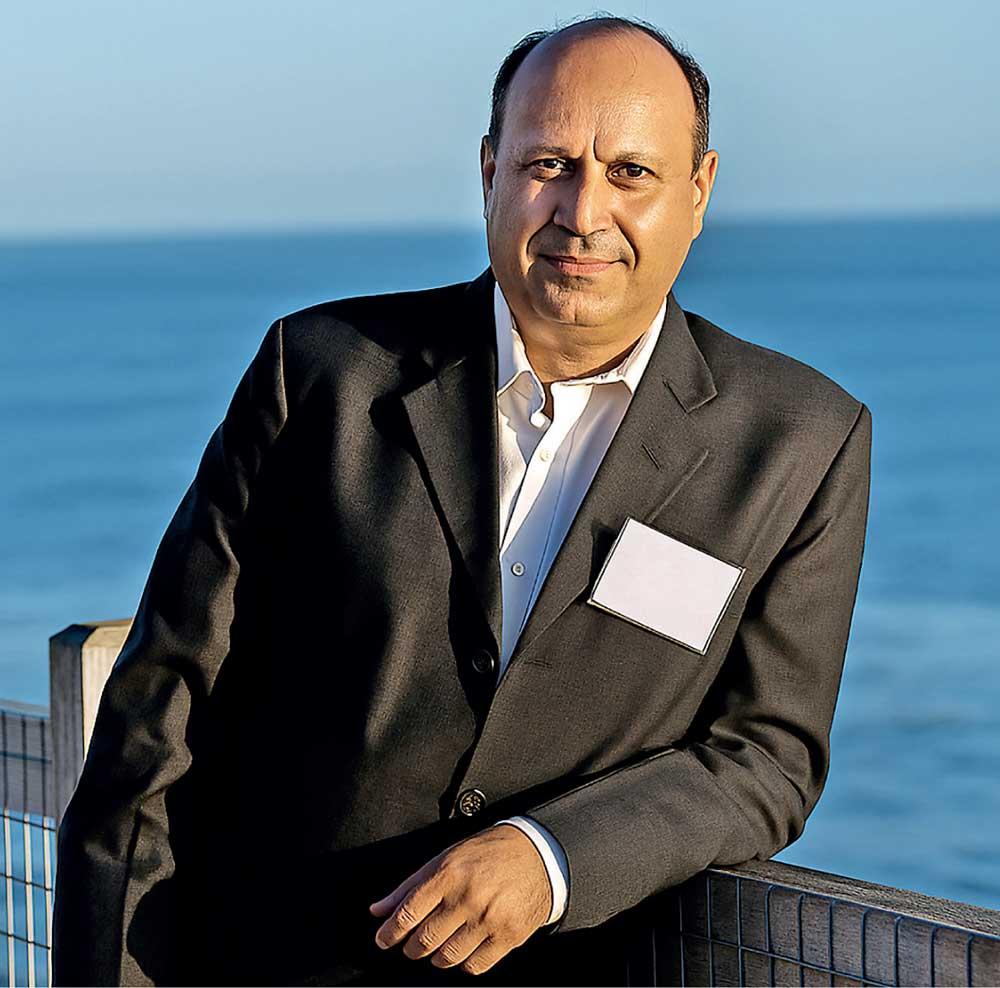
In the development of economies in the world, the countries adopt various methods and techniques to combine private sector efficiency with government oversight for better delivery of services to people. Public Private Partners (PPP) and asset monetization are two concepts that have delivered. Recently, the Indian High Commission , in collaboration with the Ceylon Chamber of Commerce and the Indo-Lanka Chamber of Commerce and Industry, organised an event on Public Private Partnerships, titled “PPP: Partnership & Prosperity for People” on November 04, 2025. Kushal Kumar Singh, a partner in Deloitte India, who attended the event, shared Indian experience in achieving success. After the session, he took questions from Daily Mirror regarding the PPP model and asset monetization. He is a specialist in the infrastructure sector and Public Private Partnerships (PPP). He also leads the Consumer and Industrial Products sector for Deloitte in India.
Excerpts from the interview.
 Q The PPP model is misconstrued as privatization. How do you define the model and its validity in the modern world?
PPP is nowhere near privatization. What is ensured is better development, better operations, and maintenance of infrastructure with people being outrightly responsible for doing that. It is always the government that is the owner of that asset. Very few cases of PPP have been converted to privatization. But, as I mentioned, close to 98 percent of the projects that have happened through PPPs are actually PPPs. They have nothing to do with privatization.
Q What are the ideal sectors where we can use this model for developmental targets?
The government has its own obligations, social development, poverty alleviation, and providing better amenities to the people. The private sector does not have these requirements. The private sector is looking for a return on investment. So, in any sector where these two requirements align —the government’s requirement of poverty alleviation, better infrastructure, better facilities, and better user amenities along with returns to the investor, it is possible to go for PPP.
Q How unique is the PPP model?
We’ll take an example of a road. We see what happens in three models. Under model one, the road is developed by the government. We have so many roads in India that are developed by the state Public Works Department, which is the government. The quality of development is not good. Operations and maintenance are weak. There are a lot of potholes, and people suffer because of that. That is when a road is developed by the government.
Can the private sector develop a road? No, a road is a public asset. So, the private sector cannot develop it. Now comes the third model, which is a PPP, wherein the government says this is the road that has to be developed and this is how it is to be managed. The private sector comes and develops it. The construction quality is definitely better than what the government constructs because the private sector knows that it has to operate and maintain it for the next 20 years, for example.
So, if I don’t do good construction, my cost of maintenance will be very high. Then there are yardsticks mentioned in the PPP contract which state what should be the condition of operations and maintenance. If a pothole is found on the road, then it has to be filled within 24 hours. If it is not filled, financial penalties are imposed.
If the government itself is doing that management, do you think the government will put penalties on its own officials? It cannot. But if the road is managed by the private sector, the officials will, at the first instance, penalize the private sector. Who, in turn, benefits from that? The people. Therefore, the development of a road through PPPs ends up providing much better services to the people.
In India, there is a road that connects Delhi to one of the suburbs called Gurgaon. It’s a 30-kilometre road developed through a public-private partnership. The kind of traffic on that road, you can’t imagine. The traffic is counted in PCUs, passenger car unit equivalents. Close to 500,000 PCUs use that road every day. Still, it’s been 15 years and that road is pothole-free. Would that have been the case if the government had done it themselves? Not really.
Q You mean to say that PPP is the best model for the development of highways and expressways?
If the private sector knows that it has to operate and maintain the asset for the next 20 years, it will use the best technology and the best material so that its operations and maintenance costs are reduced. It is not the case with the government because government officers change every three years or so.
Q Can you elaborate more on India’s success in this regard?
In India, we have something called the National Infrastructure Pipeline, which is running into trillions of dollars. What we have said is that this is the overall investment that we require. We are not saying that the entire money will come from PPPs. What we have said is that 20 to 30 percent of the requirement will come from public-private partnerships.
PPP is a mode of development; it’s not a mode of funding. So, you identify infrastructure projects or identify projects that are financially viable, and then you pick them or structure them as PPPs.
Projects that are marginally unviable can be made viable through viability gap funding. But projects that are inherently unviable cannot be made viable through PPPs. In such cases, some other modes of development will have to be looked at.
Let me give you an example. Take school education. Suppose the government decides that students should not be charged any fees. Meanwhile, the private sector is made responsible for everything, infrastructure, teachers, teaching methods, and overall management. Within these conditions, is such a project financially viable? No, it isn’t. Why would the private sector take part in it?
Therefore, the solution lies in one of two approaches: either allow the private sector to charge students within a regulated framework, or let the government pay the private operators on a per-student basis for providing education.
We have examples of both approaches. In some cases, we have allowed the private sector to charge students, but with a ceiling, meaning they cannot charge beyond a specified limit. In other cases, we have said that the private sector should not charge students at all. Instead, we will pay them a fixed amount per student, and the rate of payment, along with its annual increment, has also been clearly defined.
However, what we will do is evaluate your performance, how effectively you are running the school. One of my slides referred to the example from Punjab. These are schools where students are not charged any fees.
The infrastructure is built by the private sector, the operations are managed by the private sector, and the teachers are also hired by the private sector. But the government makes the payment on a per-student basis.
These schools are, therefore, equivalent to government schools, yet, today, there are waiting lists for admission. Parents prefer sending their children to these schools rather than traditional government schools because of the superior quality of education.
Q Is there any scope or possibility for India-Sri Lanka partnerships in this case?
I have spoken to a number of private sector players in India and also discussed Sri Lanka’s plans for private sector participation, including the existing project pipeline and related initiatives. The overall response has been very positive. The reasons are quite clear: geographical proximity, ease of management, accessibility, and the shared cultural and linguistic ties between the two countries.
For instance, both northern Sri Lanka and southern India have large Tamil-speaking populations, which naturally facilitates engagement and collaboration.
That said, the devil lies in the detail. Unless we are able to prepare bankable and viable PPP projects, we can keep talking about investment interest, but investors will only come where there are real projects. Hence, project preparation becomes crucial. As Dr. Jayawardhana rightly mentioned, efforts are underway to develop a project pipeline along with guiding documents and frameworks. I have seen drafts of several of these documents, and they appear very promising and forward-looking. I believe that in the foreseeable future, we will see a number of projects where Indian investors will be keen to participate and invest in Sri Lanka.
Q You mentioned asset monetization. How is it different from the PPP model?
Monetization refers to an asset that has already been created. In a typical PPP, the idea is to develop, operate, and maintain a new project, which requires significant capital investment. In contrast, monetization starts from an existing government-owned asset in which the government has already made that investment.
The question then is: can that asset be used to generate additional revenue for the government, especially if it is underutilized or not earning sufficient user fees?
Take the example of airport development. In Lucknow, the Airport Authority of India (AAI), a government entity, invested around 100 million dollars to develop the airport. Later, the government decided to enter into a public-private partnership under the Operate, Manage, Develop, and Transfer (OMDA) model.
Under this arrangement, the airport operations were divided into two parts: the aero side, which includes the runway, air traffic control, and navigation, remained under government control; and the non-aero side, which includes passenger terminals, parking, and commercial space, was handed to the private partner.
The terms were straightforward: the private operator had to pay the government the initial investment of 100 million dollars upfront. Additionally, they were required to pay a fixed amount per passenger, say, 100 rupees, based on projected revenues. This allowed the government to recover its original investment immediately and generate a steady cash flow tied to passenger volume.
The private partner, meanwhile, was allowed to expand the airport, develop real estate such as hotels and commercial complexes, and improve overall service quality. Performance benchmarks were clearly defined, from terminal ambience and temperature control to passenger service standards, and penalties were stipulated for non-compliance.
In the end, the model benefited both sides. The government recovered its investment and ensured better service delivery, while the private sector gained opportunities for expansion and revenue generation. It was a true win-win arrangement.
Economically speaking, this demonstrates the distinction between privatization and public-private partnership (PPP).
In a PPP, the government and private sector collaborate under clearly defined contractual principles. The public partner sets the output specifications and service standards, while the private partner delivers and maintains them, and is held accountable if performance falls short.