 KELUM BANDARA
Reply To:
Name - Reply Comment
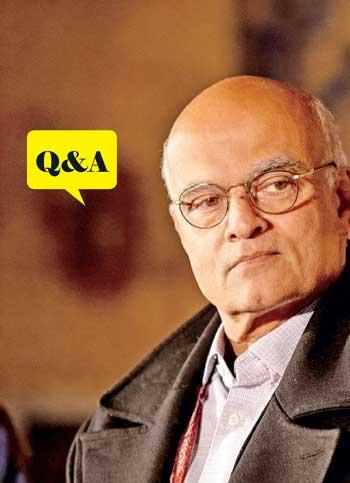
India’s former National Security Adviser and Foreign Secretary Shivshankar Menon, in an interview with Daily Mirror, discusses how India- Sri Lanka relations have evolved over the time and India’s role in ending the war against the LTTE. Mr. Menon was in Sri Lanka to attend the Indian Ocean Conference organized by Pathfinder Foundation. As the Foreign Secretary of India during the last leg of war in Sri Lanka, he was a member of the Troika Mechanism established on the part of India to engage Sri Lanka diplomatically and take vital decisions related to the conflict.
 QHow have India –Sri Lanka relations evolved since the wartime when you were India’s Foreign Secretary?
I was Foreign Secretary during the war. I was also here as High Commissioner during the war. By the time I became the National Security Advisor, the war was over in 2009. But I’ve written about the last phase of the war in my book ‘Choices’ already.
For me, from an Indian point of view, we have a relationship with Sri Lanka. Sri Lanka is a very important neighbour. There’s no question that our faiths are linked. Across the Palk Strait, we’re so close in every respect. Our security is linked. Our prosperity is linked. Irrespective of governments coming and going, despite good times and bad times, that relationship between India and Sri Lanka has endured . We have consistently built that relationship.
We’ve tried very hard to build it. Even in the middle of the war, we did the Free Trade Agreement (FTA). I think it helped both sides. There’s no question for me. This is a very important relationship for India. I was the National Security Adviser. So, it is so obvious from a security point of view that we have worked together. It’s important.
But more than that, it’s also important in terms of regional cooperation, the Indian Ocean, fisheries and the livelihood of our people. There are common ethnicities across the border. As a result, the welfare of our peoples and all these things matter.
QOnce you mentioned that Sri Lanka is more like a permanent aircraft carrier. Is that the reason?
Out of the Indian coast. Well, it could be. Our security is linked. What happens in India affects Sri Lanka. What happens in Sri Lanka affects India. We are so close.
QHow does India reconcile its security sensitivities with Colombo’s sovereign right to engage with partners like China?
We don’t say that we have some exclusive relationship. We don’t say “if you talk to me, you can’t talk to anybody else”. So we never say that. But Sri Lanka is a sovereign, independent country. She makes up her own mind. But, it seems to me that given our situation, we have common interests. We have a mutual interest, not just in security, but in prosperity in the region. It makes sure that we both develop. China, in that sense, is an external power to South Asia. She has interests. She certainly has an interest in maritime security in the Indian Ocean. Her goods, her oil, her energy imports all go through Sri Lanka. We never say don’t do anything with China. I don’t think China tells you ‘don’t talk to India’.
We are all independent, sovereign nations. But we also expect that both sides will respect each other’s sensitivities that we follow. I don’t see a conflict of interest.
QFor example, Chinese research vessels coming to Sri Lanka. Sri Lanka is not in a position to decide independently in this regard because of New Delhi’s resistance. What is your view?
I don’t think that’s true. I think this is a decision that Sri Lanka takes for herself. Ultimately, it’s Sri Lanka’s decision. But Sri Lanka will take into consideration all the factors that affect her. I think Sri Lanka also is naturally sensitive to being caught into other people’s issues. If India-China relations are difficult, Sri Lanka doesn’t want to get stuck in the middle or start choosing sides and so on. If I were Sri Lankan, I would say why I should get into your quarrel. But the decision is Sri Lanka’s.
We can’t tell Sri Lanka what to do. We will tell Sri Lanka what bothers us. We will tell Sri Lanka how we feel and how we see issues. Then it’s up to Sri Lanka to make up its own mind. Sri Lanka is an independent country.
QIn the aftermath of this economic crisis in 2022, India came in a big way. India offered financial assistance amounting to US $ 4 billion. In that context, how have relationships evolved?
Well, I think because India has always seen Sri Lanka’s progress, Sri Lanka’s unity as being in India’s interest. We want a peaceful periphery so that India can develop.
Sri Lanka is a very important part of our periphery. So, even for selfish reasons, we want Sri Lanka to prosper. We want Sri Lanka to be peaceful. Why did over a thousand Indian soldiers shed their blood and lives for Sri Lanka’s unity? That is because Sri Lanka’s progress, unity, and peace are in India’s interest. It’s our periphery. It’s like you also don’t want a periphery which is chaotic. It works both ways. This is why I say we have a common interest here. That has grown.
When Sri Lanka was in difficulty, when the world was taking its own time to help Sri Lanka after the default in 2022, India stepped in and helped. In the aftermath of cyclone Ditwah, India offered to help immediately.
This is normal. We are neighbours. We are going to be good neighbours. I hope we stay good neighbours to each other.
We worry about Sri Lanka. Sri Lanka, I presume, worries about us also. At least, in my experience, I first came to Sri Lanka long ago when I was young to play cricket. It was as a school boy.
I came as High Commissioner in 1997. Ever since then, my experience has been that. Sri Lanka makes its own mind, makes its own calculus, but is also interested like us in having peace, security and prosperity. In domestic politics in both the countries, relationships are referred to. In Tamil Nadu, Sri Lanka used to be an issue. In Sri Lanka also, India is often used as an issue to beat your opponent to say something. We both love politics. I expect some noise in the relationship. Basically, if you look at the trend of the relationship, it’s been solid and positive. But the noise is normal. Frankly, journalists, diplomats need this noise.
QHow important is it for Sri Lanka to address this Tamil issue by implementing the 13th Amendment?
Honestly, I think it’s in Sri Lanka’s interest to address its own domestic issues. It’s Sri Lanka’s domestic issue. But you don’t want issues festering. It’s in your own interest. It is going to be resolved and resolved by Sri Lanka itself. India is ready to help if Sri Lanka wants any. At different times, Sri Lanka has asked for different kinds of help. We’ve extended that. But ultimately, it’s Sri Lanka’s domestic issue.
QDuring the last leg of the war, you were part of this Troika mechanism established by the two countries to deal with decisions related to the war during the last phase. You used to make brief visits to Sri Lanka. You’ve written about it. How did these Troika mechanisms of both sides work?
Actually, it confirmed my beliefs that Indians and Sri Lankans were working together and making sure that they knew each other’s point of view. At that time, developments were happening very fast. So, we would tell each other how we saw them, what we felt, what interested us.
By working together, we can be very powerful and effective. That lesson is not only there. You can look at the economic relationship and how it has grown. I think there’s a whole lot of things. If you look all the way back to the Law of the Sea, where India and Sri Lanka worked together in the UN to develop the United Nations Convention on the Law of the Sea (UNCLOS). I think it’s a powerful combination, when we choose to work together and closely. Mechanisms, you can choose or devise.
QAt that moment, did India actually want the LTTE to be decimated?
You know, what we wanted, as I said, it is for Sri Lanka to sort out its own domestic issues. But we didn’t want it to have a humanitarian effect across the border because of cross-border ethnicity. So, there’s a sensitivity in India also. We wanted civilian casualties minimised to the extent possible. But we also wanted to help to reconstruct. We came immediately to bring life back to normal for the people and for all Sri Lankans, whether Tamil or Sinhala. We had an interest, actually, in a peaceful, calm territory. That’s our fundamental interest. How you seek it and under what circumstances vary. Events will keep changing. Contingencies change. That was our core interest.
QWere you not afraid that there will be an exodus of displaced people to the Indian side?
All that, obviously. You think of all the contingencies. You plan for various things. That’s the government’s job. You have to think of what could happen- all the possibilities. I’m sure that all these calculations were made. But basically, the interest was how you get to a situation of peace, prosperity, and calm.
QWhat was India’s position on the LTTE?
Well, you must remember that the LTTE was a terrorist group which had killed an Indian Prime Minister. So, we were not worried. We were worried about the Tamil civilian population and what happened to them. We were worried about what happened to the Sri Lankan population also. We didn’t want Sri Lanka to be left in a situation which was worse than it started with. Wars are unpredictable things. You don’t know where it’s going. Therefore, you worked together to try and minimise the harm.
QAt that time Tamil Nadu was politically volatile, and even the Congress government in New Delhi was under pressure, with national elections approaching. How much did those domestic political compulsions influence India’s policy decisions toward Sri Lanka during that period?
Yes. We can manage because we talk to everybody in India and here.
We made it clear that this was our interest. There are some lines. We can’t interfere in Sri Lanka’s affairs. We can’t tell. We can’t run Sri Lanka. Sri Lankans will run Sri Lanka. Sri Lanka will decide for Sri Lanka, how it deals with its problems. But we will tell our Sri Lankan friends that these are our interests, these are the things that worry us, and this is what we think. They will tell us what they think. We’ll work together.
QNow the U.S-China tension is there in the world. India and China are trying to normalise ties with each other. How do you view it?
China is our second biggest trading partner. We did US $135 billion worth of trade last year. Yes, we have a difficult political relationship, especially since the Galwan valley incident in 2020.
We had clashes on the border and people died for the first time in 45 years. We have a complicated political relationship. But, at the same time, we talk to each other. We work with each other. We have a solid economic relationship. My advice to Sri Lankan friends would be: You do what’s in Sri Lanka’s interest and don’t get involved in India-China’s problems. I don’t think you want to have to choose between all your friends.
QAs long as India and China normalise their relations, it will be less burdensome for Sri Lanka as well, because India won’t be paranoid about Chinese involvement in Sri Lanka then. What is your view?
I don’t think we’re paranoid. As I said, we can’t tell you what you should do, but we will tell you what we see, what bothers us. It’s up to you to make up your own mind.
QIn your book Choices: Inside the Making of India’s Foreign Policy, you discuss strategic autonomy as central to India’s foreign policy. In today’s polarised environment, is strategic autonomy still viable?
What does strategic autonomy mean? It doesn’t mean neutrality. It doesn’t mean disengagement or not getting involved in the world. It means keeping the freedom to make up your mind on the issues, especially today.
You need autonomy when you’re in a country like India.
QWhy is it?
There’s no other country with the same history, the same geography, the same set of interests at the same level of development like India.
There’s no natural country who will react the same as you to various developments. You are alone, whether you like it or not, by your geography, your history, your stage of development etc. So, in a sense, autonomy is a fact of life. But autonomy means keeping the power to make decisions. But the decision can be to work with A now, work with B tomorrow.
That’s autonomy; that you keep that power with yourself: that you’re not tied into an alliance or a dependency or into something which limits your options and leaves you with no decision-making power. That’s what it means.
QNow, neutrality seems to be the trademark of Sri Lanka’s foreign policy. What is your view?
I can’t speak for Sri Lanka. But, I think Sri Lanka has stood for very important things. Sri Lanka was a leader of the non-alignment movement. Sri Lanka has taken a very positive stance on issues that really concern Sri Lanka, like maritime security, like UNCLOS. When it comes to Sri Lanka’s interests - be it international economic order issues or anything - people like Gamini Corea did so much. Sri Lanka, I think, has taken a stance in Sri Lanka’s interest.
Now you’ve applied to the RCEP (Regional Comprehensive Economic Partnership). Sri Lanka has worked very hard for regional cooperation in South Asia. I don’t think Sri Lanka is necessarily neutral in that sense. Sri Lanka chooses where its interests lead. I don’t think neutrality is the right word.
QIn your book ‘Choices’ you have argued that the internal war cost Sri Lanka nearly US$200 billion in economic losses. You still stick to that position?
Yes, I think it created real damage. I think, really, the real victims of the LTTE were the Tamil community. That’s the UN’s figure which we came up with. Well, in that case, I said, you know, as an indication to give people an idea of how much. But, frankly, no figure that you put will be 100 percent accurate.